Use this bar to show information about your cookie policy.
INSULATION FIXING & ACCESSORIES
26 products
Showing 1 - 26 of 26 products
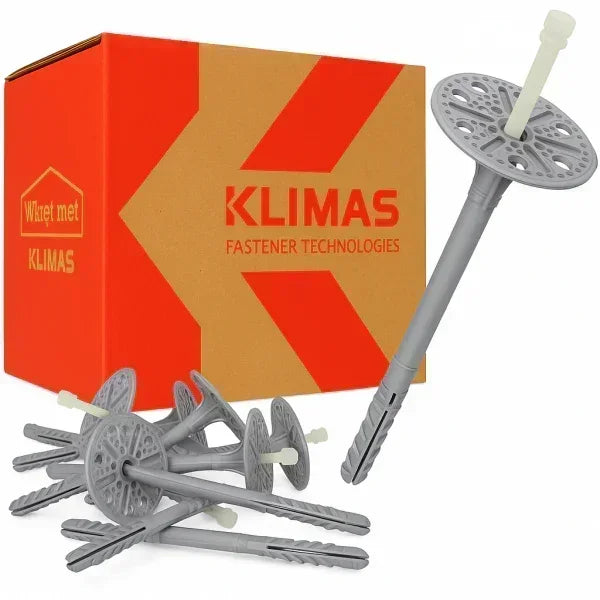
Insulation fixings are the mechanical half of the EWI specification. Renders World stocks 24 dedicated lines — nine LTX plastic-pin plug lengths from 70 mm to 220 mm, ten aluminium base track widths from 23 mm to 163 mm, plus spiral anchors, PVC discs, plug caps, hole cutters, and foam adhesive — matched to the board thicknesses held across the insulation range and ready for next-day UK dispatch.
What Insulation Fixings Do in a Render or EWI System
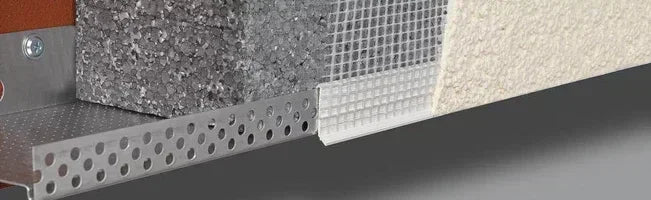
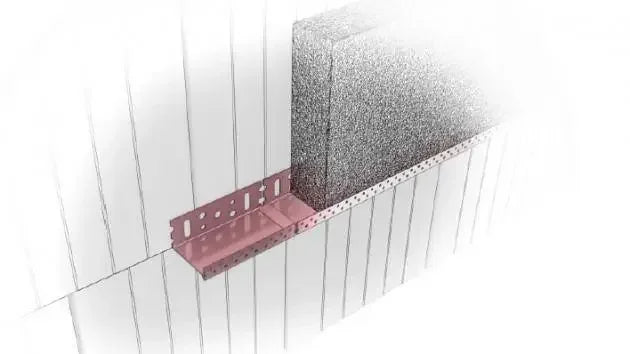
Insulation fixing accessories are the mechanical and alignment hardware that holds adhesive-bonded EPS, XPS, and mineral wool boards against wind loads, gravity, and thermal movement across a UK external wall insulation system, typically at 6–8 plugs per square metre under the relevant ETA assessment. Hammer-in plastic-pin plugs anchor boards into the substrate without creating thermal bridges, aluminium base tracks level the first course along the DPC, and finishing components keep the surface flush and render-ready. Fix the strategy at specification stage and the rest of the build-up follows cleanly.
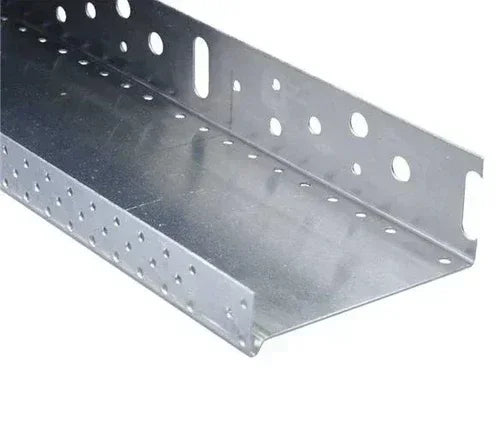
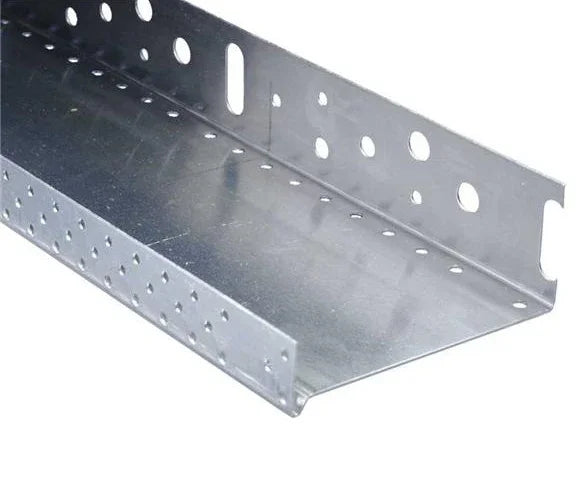
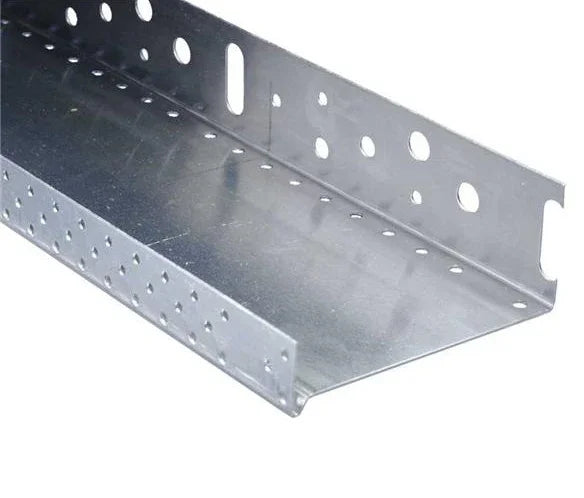
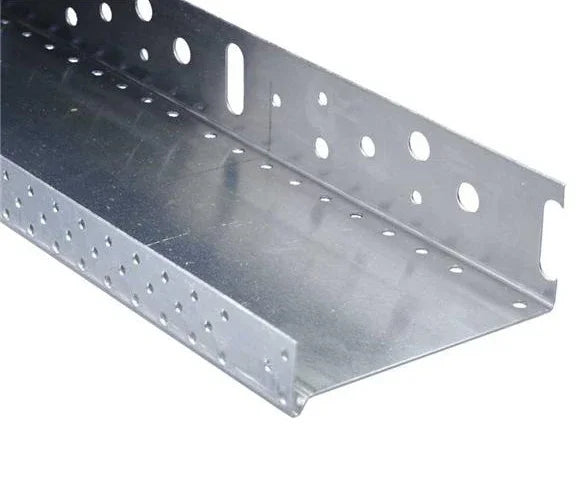
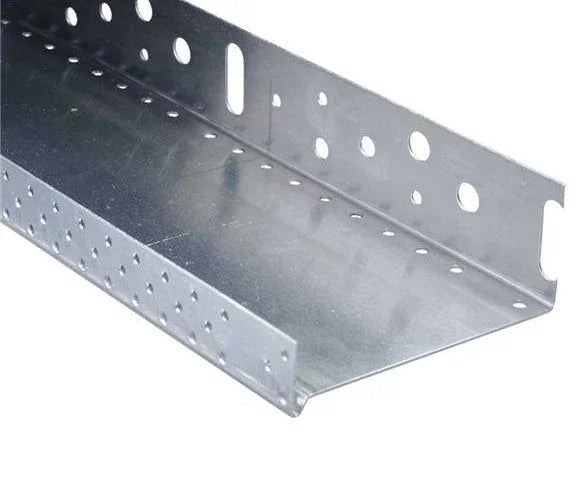
The Renders World range groups every fixing component into four families: LTX fixing plugs for board attachment, aluminium base tracks for the starter course, spiral anchors and PVC discs for ancillary and timber-frame applications, and finishing accessories for a clean render base. Each family is sized to match board thicknesses stocked elsewhere in the silo, so the spec writes itself once the insulation depth is settled.
What Makes Insulation Fixings Worth Specifying
Zero thermal bridging at fixing points: every LTX plug uses a plastic pin rather than a steel nail, so heat cannot short-circuit to the substrate. The U-value calculation stays accurate and the facade avoids the cold-spot pattern that betrays bridged fixings in damp UK weather.
One plug range across common UK substrates: the LTX expansion zone grips concrete, solid brick, lightweight aerated block, and hollow masonry, which keeps site stock simple on mixed-substrate properties such as Victorian terraces with later block extensions.
Precision thickness matching across 24 lines: nine plug lengths and ten base track widths cover every board from a 10 mm reveal strip to a 200 mm Passive-House panel, so improvised packers never enter the build-up.
Corrosion resistance at the splash zone: base tracks sit where rain splash and ground damp concentrate, and the aluminium profiles resist that exposure for the life of the system with no rust bleed onto finished render.
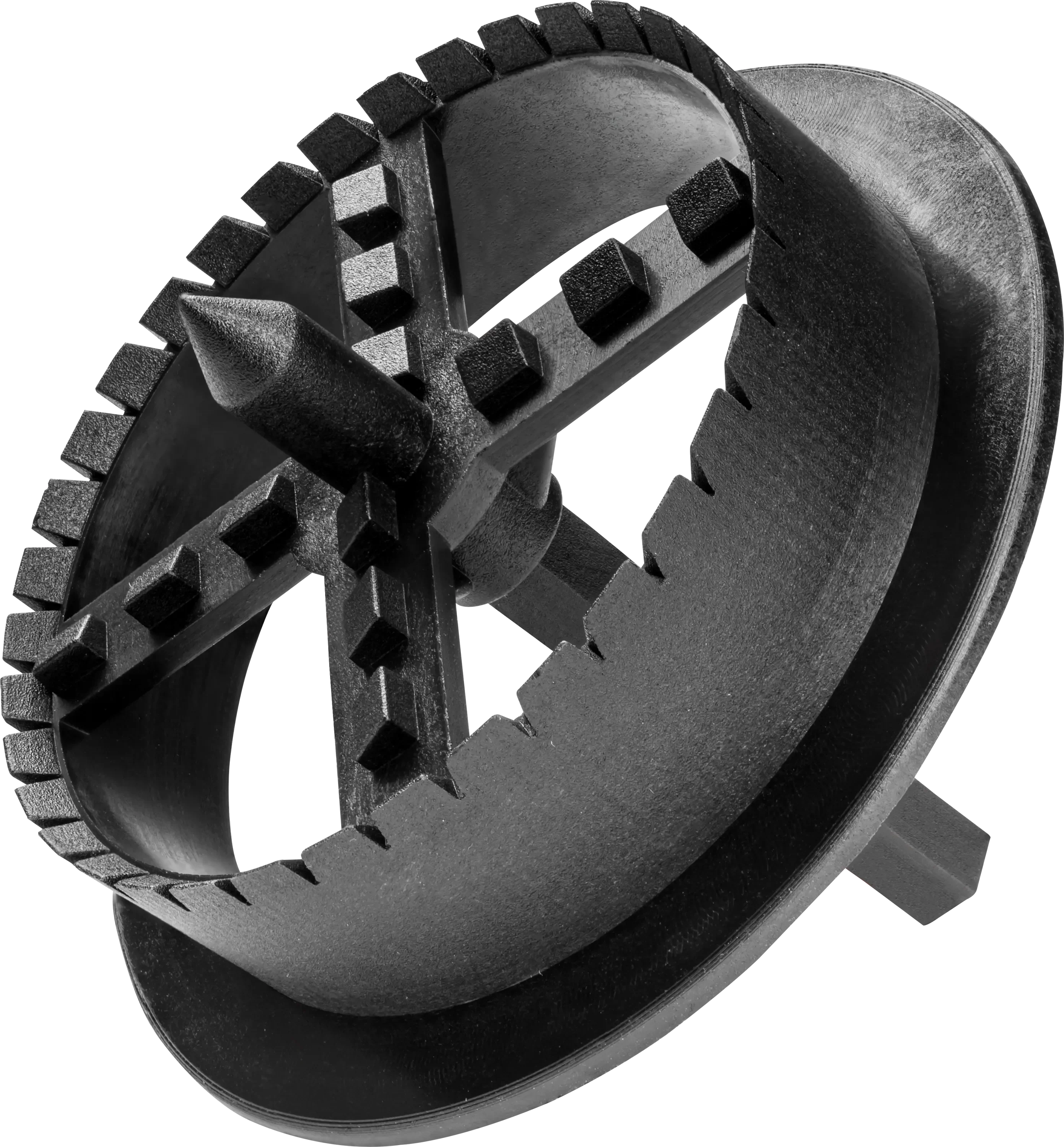
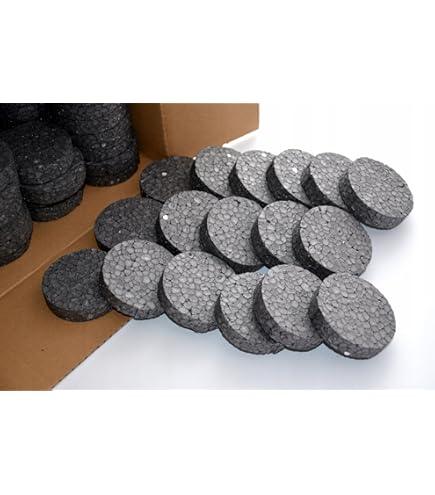
Render-ready surface after fixing: the graphite-EPS plug cap, paired with the dedicated hole cutter, sets each fixing head flush so the base coat lays flat — no hollows, no high spots showing through a dark finish.
Next-day dispatch on the full range: all 24 lines are held in stock, so a missed sundry on Monday's visit is back on the trestle by Tuesday morning rather than holding up the basecoat schedule.
Selection Guide — Find Your Fixing Plug or Base Track in 30 Seconds
Identify your board thickness in column one, read across to the matching plug length, and pair with the base track width on the same row. Standout spec confirms the right SKU for a domestic, retrofit, or Part L specification.
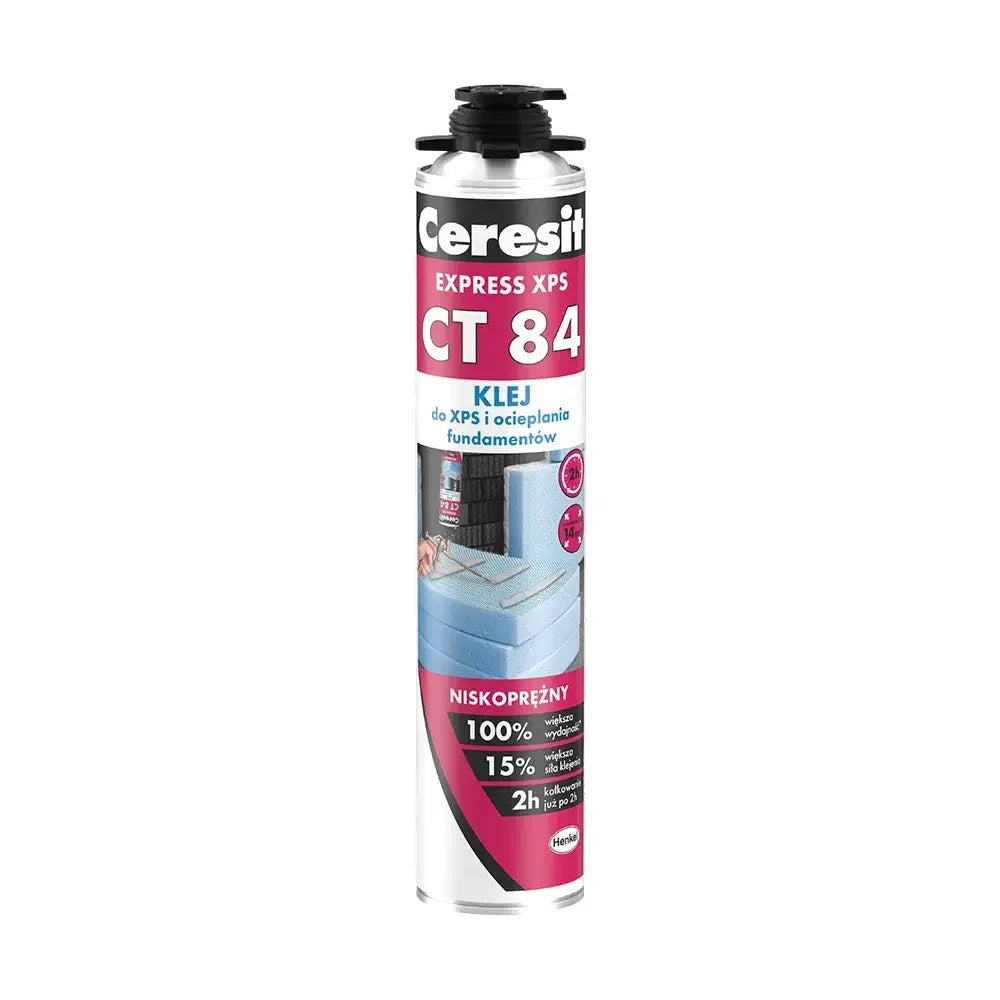
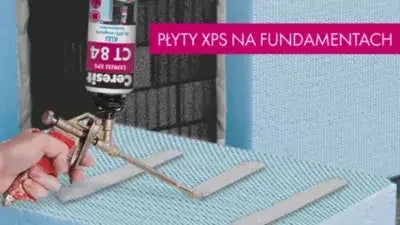
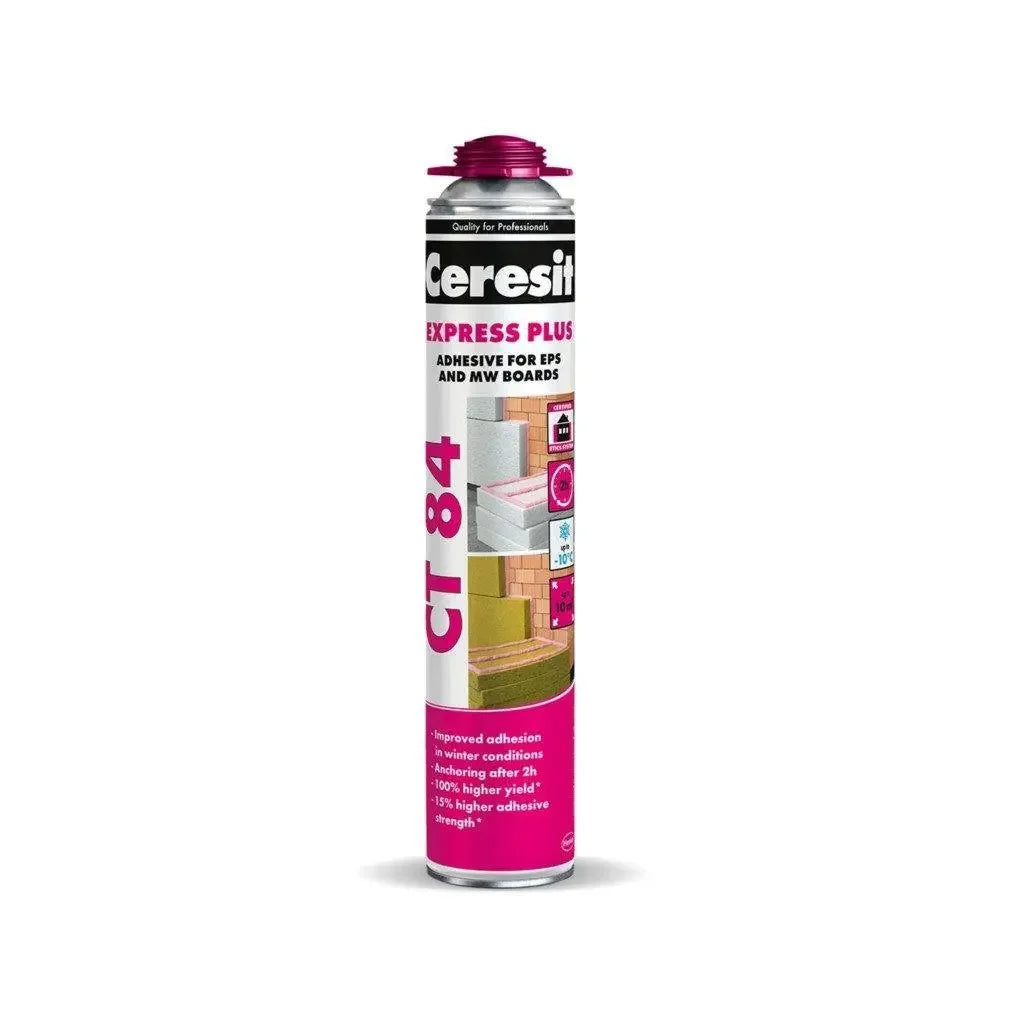
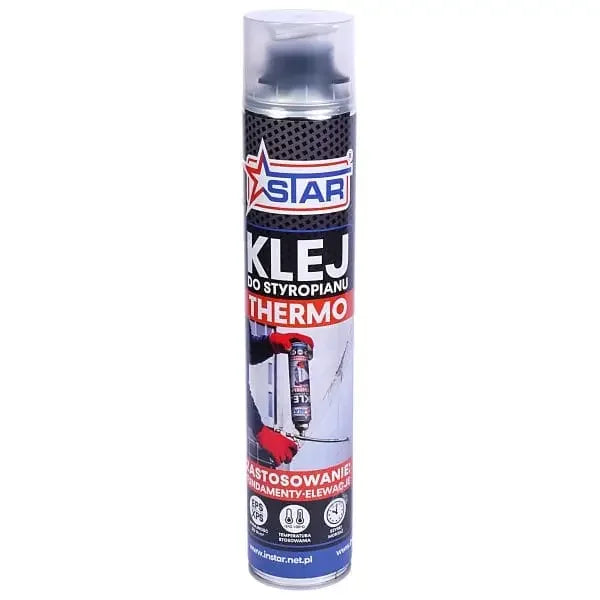
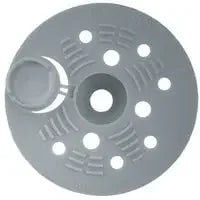
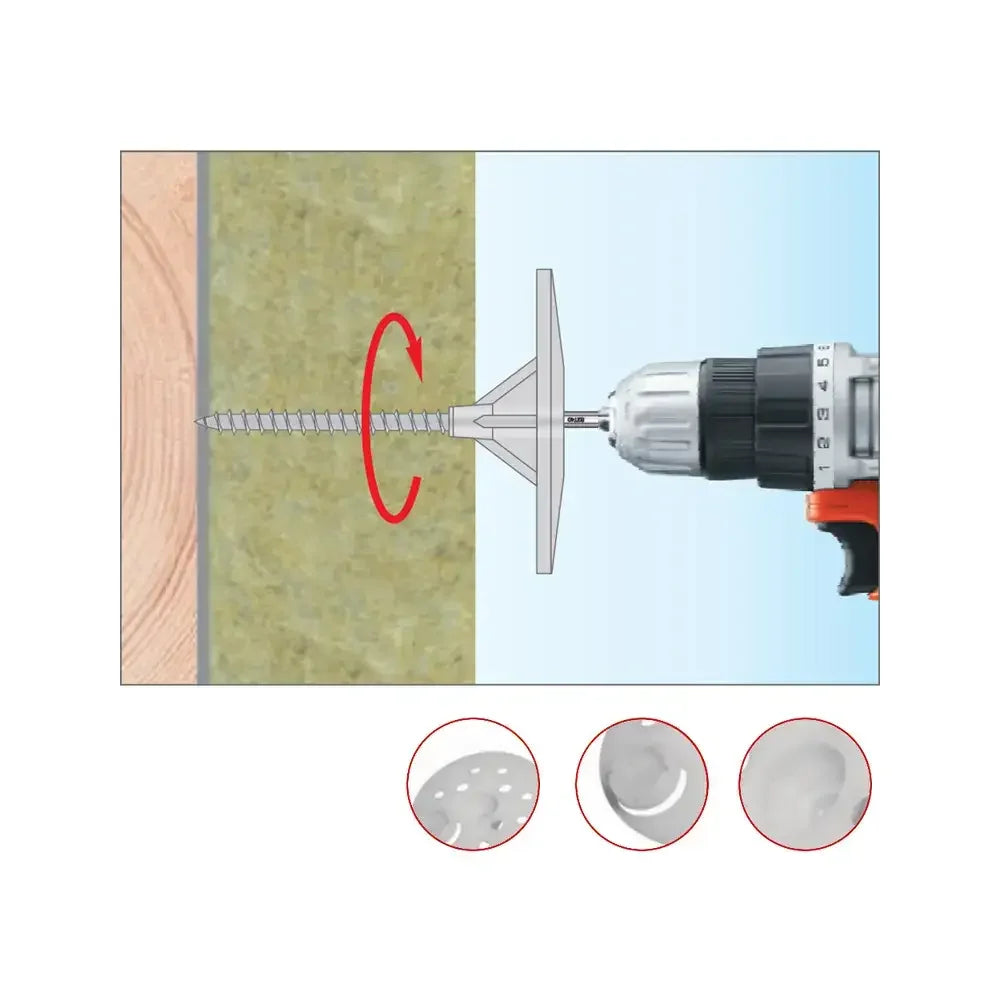
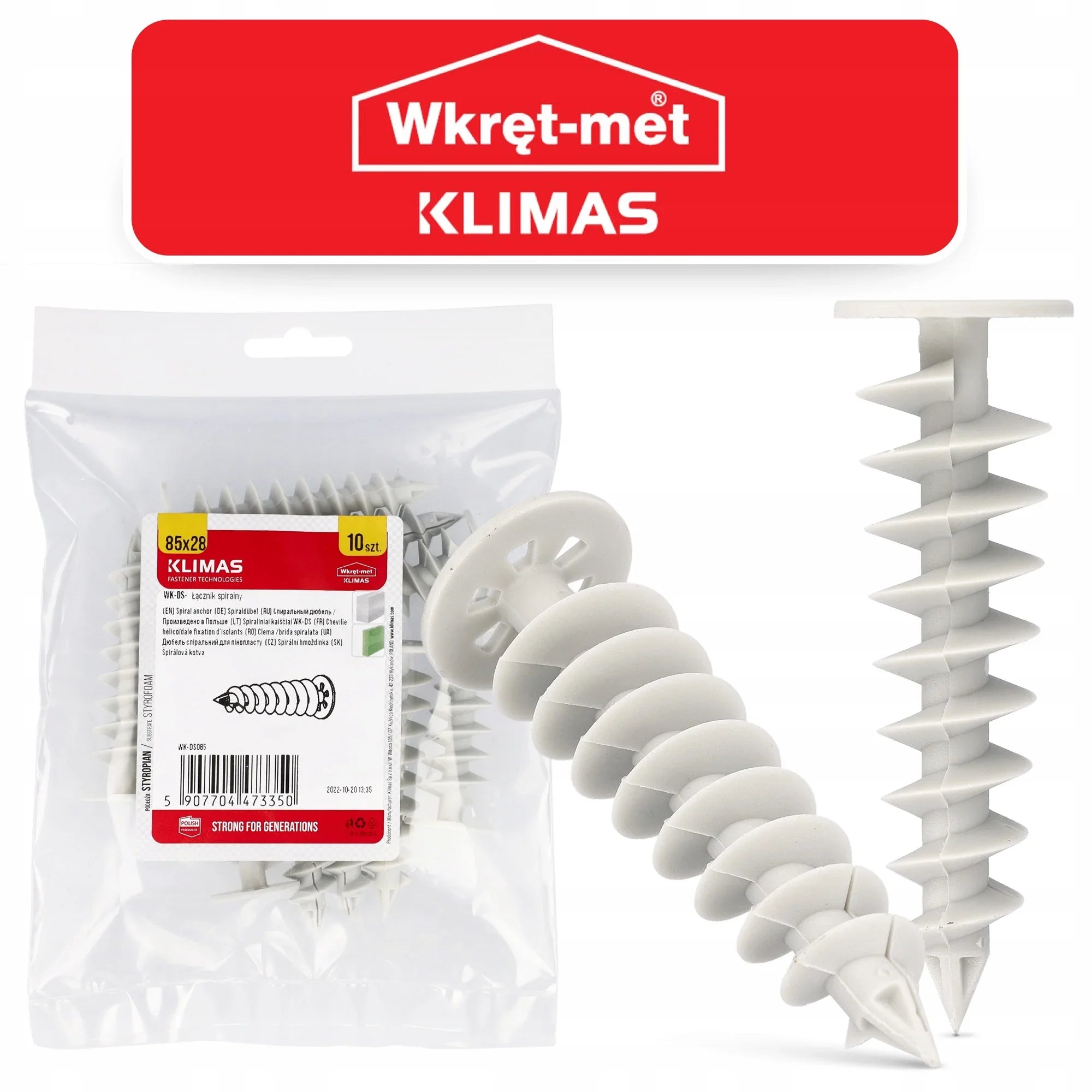
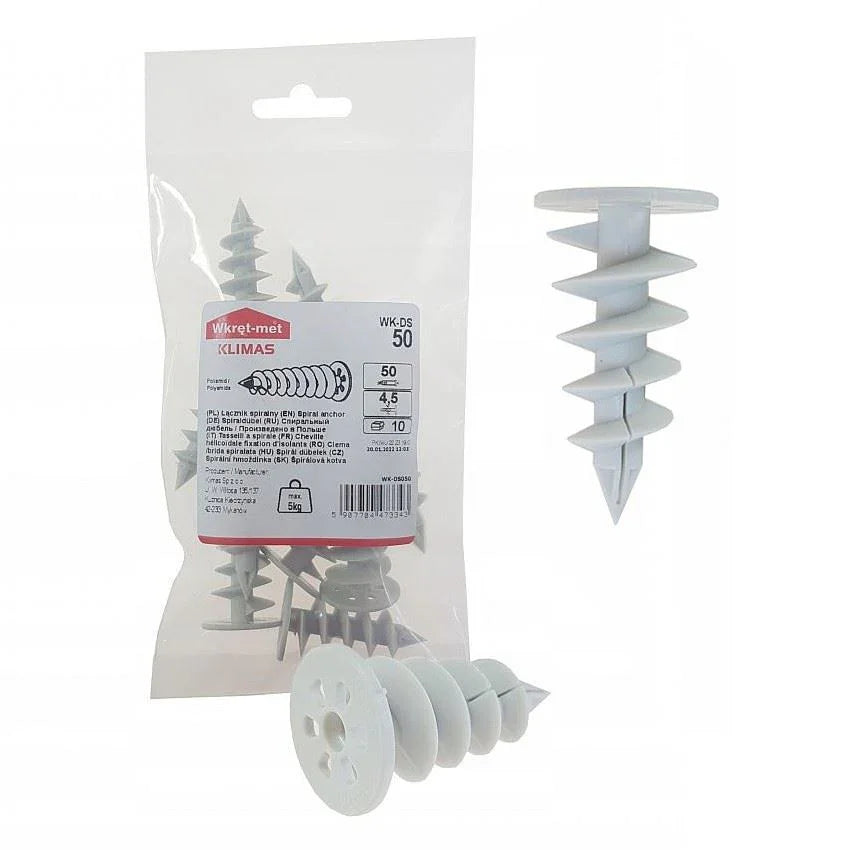
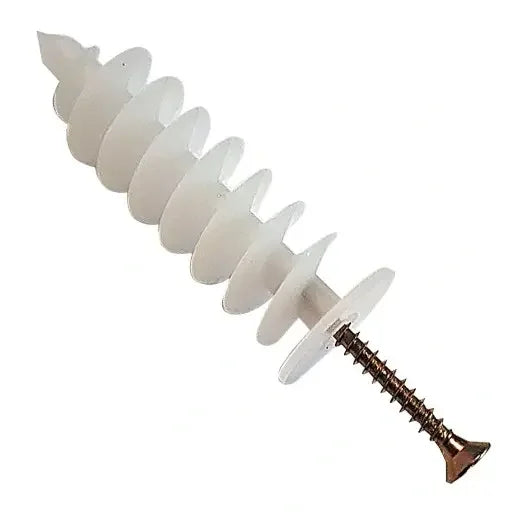
For ancillary hardware off the main table — spiral anchors for facade-mounted fittings, TD60 PVC discs for timber substrates, grey EPS plug caps, the hole cutter, and foam adhesive — browse the full product directory above. The principle stays constant: match the component to the board, the substrate, and the finish quality the project needs.
How Insulation Fixings Install in a Render or EWI System
The cleanest UK workflow runs in three phases. Level and fix the base track horizontally along the DPC line at roughly 300 mm centres, using packers to absorb substrate irregularities. Adhesive-bond the boards course-by-course off the track and allow them to cure. Then drill and hammer-fix the LTX plugs in a single pass, countersink each head, and seat a graphite EPS cap flush to the board face.
Plug embedment: minimum 25 mm into the substrate beyond the adhesive layer to achieve rated pull-out.
Drilling depth: around 10 mm deeper than embedment to clear masonry dust.
Density: 6 plugs/m² for EPS, 8 plugs/m² for mineral wool, increased at corners, parapets, and upper storeys.
Hollow substrates: disengage hammer action so the expansion zone grips the block shell without shock loading.
What UK Installers Do Differently With Fixings and Base Tracks
Three habits separate a render-ready elevation from one that needs remedial filling before basecoat. They are sequencing and tooling decisions, not technique secrets, and they compound across a full house.
Chalk-line the fixing pattern before drilling. Marking the 6-per-m² grid takes five minutes per elevation and keeps the plug caps in a regular array rather than scattered.
Rotate to a fresh masonry bit every 200–300 holes. A worn bit cuts an oversized, tapered hole that reduces pull-out resistance; a fresh bit costs less than one failed fixing test.
Level the base track with a laser rather than a spirit level. A rotary laser keeps the DPC line horizontal across returns and bay windows, and the whole stack of boards above benefits.
Order one pack of plug caps more than the calculation says. Caps get dropped or stepped on, and an extra 100 pcs avoids a half-day stop for a low-cost sundry.
Pre-fit heavy-duty base track on coastal and exposed elevations. The 1 mm aluminium gauge handles wind-driven rain and impact loading well at south-westerly UK exposures.
Is the Fixing Accessories Range Right for Your Project?
Standard EPS or graphite EPS retrofit, 10–200 mm boards: the LTX plug range, a matching aluminium base track, and graphite EPS caps form the complete specification — pick the Selection Guide row that matches your board thickness.
Mineral wool slab system at low-rise: the same LTX plugs are typically suitable at 8 plugs/m². Compatible Rockwool mineral wool slabs are stocked in matching thicknesses.
Foundation and below-DPC continuation: pair with XPS foundation boards where the fixing line runs down into the plinth zone.
Boards and fixings together: the graphite EPS insulation boards stock matching thicknesses for every plug length in the Renders World range, ready to pair on one order.
Full system on one PO: the EWI system bundles include fixings, boards, adhesive, mesh, and render finish priced per square metre — the simplest route when the spec is set and the schedule is tight.
FAQ — Fixing Specification, Installation, and Compatibility
How many fixing plugs do I need per square metre?
The typical starting point for EPS and XPS systems is 6 plugs per m², rising to 8 per m² for mineral wool to carry the slab's higher weight. Those figures apply to central facade zones; corners, parapets, eaves, and upper storeys carry additional wind suction and usually need a denser pattern, confirmed by a project-specific wind-load calculation under BS EN 1991-1-4. A 200-pack of LTX plugs covers roughly 25–33 m² at standard density, which keeps pack-quantity planning straightforward at quote stage.
Are plastic-pin LTX fixings suitable for mineral wool slabs?
Plastic-pin plugs perform reliably with mineral wool on standard low-rise domestic work, where slab weight and adhesive bond carry the primary load. For taller buildings, or projects where the fire strategy specifies non-combustible fixings throughout, steel-pin alternatives are typically called up — that decision rests with the system designer and follows the ETA assessment for the chosen build-up under current Approved Document B guidance.
How do I match plug length to board thickness?
The plug passes through the board, through roughly 10 mm of adhesive, and embeds at least 25 mm into the substrate. The Selection Guide above shows the standard pairing for every thickness from 10 mm reveal strips to 200 mm panels. Where substrate quality is uncertain — older solid-brick walls, for example — step up one plug length to guarantee embedment, and verify with an on-site pull-out test before committing to the full quantity.
When should I specify a heavy-duty 1 mm base track over the standard gauge?
The 1 mm aluminium heavy-duty tracks, available in 93 mm and 163 mm widths, suit exposed and coastal locations and any specification using mineral wool slabs above 100 mm, where mechanical and weather loading is higher. For sheltered urban domestic work with EPS boards up to 100 mm, the standard gauge performs well and keeps the budget tight.
How long do these fixings last, and how should they be stored on site?
LTX polyamide plugs carry a service life matched to the insulation system and are unaffected by normal UK site humidity; aluminium base tracks resist corrosion for the life of the facade. Keep plugs in their original tubs in a dry store, and lay or stand base tracks flat against a wall without heavy materials on top, since a kinked profile cannot be levelled on installation. Both components have effectively indefinite shelf life when stored dry.
What is the environmental footprint of these components?
LTX plugs are polyamide with a service life equal to the system and separate cleanly for plastics recovery at end-of-life demolition, while aluminium base tracks recycle through standard metals streams and graphite EPS caps through polystyrene recovery. The mechanical-fixing strategy contributes a small fraction of an EWI build-up's embodied carbon; the dominant variable remains the insulation board itself. Renders World holds the full range in matched thicknesses to keep specification and reordering simple.