
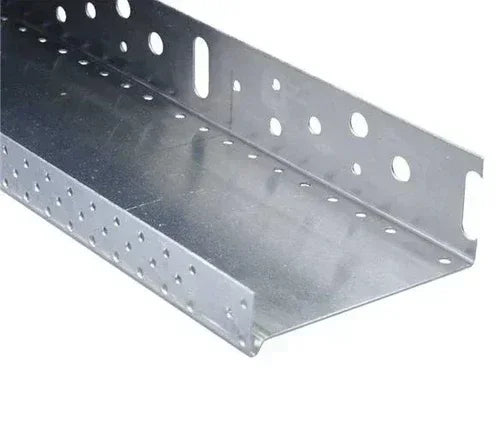
BASE TRACK 163mm 2.5m x 1.0mm Aluminium


Price:
Sale price£14.90

Shipping calculated at checkout

Stock:
Sold out

Pickup currently unavailable at Renders World Southampton

Description

Base Track 163 mm × 2.5 m × 1.0 mm Aluminium — Premium Heavy-Duty Starter Profile

Product Overview

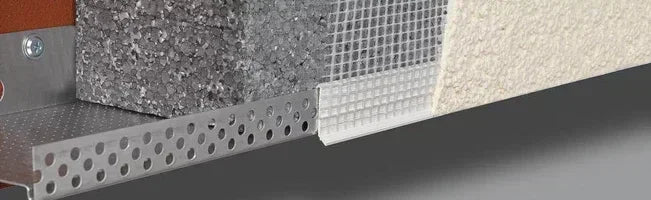
The Base Track 163 mm × 2.5 m × 1.0 mm Aluminium is the premium heavy-duty starter profile in the Renders World range, combining the widest channel dimension with the thickest gauge to support demanding EWI installations where both deep insulation and high structural performance are required. At 163 mm wide, the track accepts insulation boards of up to 160 mm — the thickness specified on Part L compliance builds, deep-renovation retrofits, and near-zero-energy facades. At 1.0 mm gauge, the aluminium alloy provides substantially greater bending resistance than the standard 0.6 mm profile, eliminating deflection under the higher dead loads that thick insulation boards impose on the base track across taller or wider elevations. Each 2.5 m length features the same integral drip edge and perforated ventilation web found across the range, and ships without pre-installed mesh — a clip-on mesh carrier attaches to the front edge for basecoat integration. It is part of the insulation fixing accessories range at Renders World.

Key Benefits

  • Maximum width and maximum gauge in one profile — the 163 mm × 1.0 mm specification addresses the most demanding point in the EWI envelope: thick insulation on tall or exposed facades where both channel depth and structural rigidity are non-negotiable.
  • Eliminates deflection under heavy board loads — 160 mm graphite EPS boards are significantly heavier per linear metre than thinner equivalents, and mineral wool slabs at this thickness are heavier still; the 1.0 mm gauge holds its profile across the full 300 mm fixing span without visible sag at the front lip.
  • Specified for system-certified assemblies — where the EWI system holder's fire test or structural test was conducted with a 1 mm gauge starter track at 160 mm as part of the tested build-up, this profile satisfies the certification without substitution or derogation.
  • Integral drip edge for deep build-ups — the formed lower lip projects beyond the wall face, shedding rainwater clear of the insulation system at a point where the 160 mm build-up depth makes base-zone moisture management particularly important.
  • Perforated web for ventilation — punched apertures along the horizontal shelf allow trapped moisture and vapour drive to escape from behind thick insulation, supporting long-term drying capacity at the base of deep wall assemblies.
  • Corrosion-resistant aluminium alloy — the natural oxide layer resists alkaline basecoat chemistry, prolonged moisture contact, and atmospheric exposure across the full service life of the system, matching the longevity expected from a high-specification EWI installation.

Technical Specifications

Property Value
Profile width 163 mm
Length 2,500 mm (2.5 m)
Material Aluminium alloy
Gauge (thickness) 1.0 mm (heavy-duty)
Finish Natural aluminium (mill finish)
Drip edge Yes — integral lower lip
Perforated web Yes — ventilation apertures
Pre-installed mesh No — clip-on profile required
Recommended fixing centres 300 mm
Suitable insulation thickness 150–160 mm boards
Corrosion resistance Inherent aluminium oxide layer

Application and Compatibility

This profile is specified where two requirements converge: thick insulation and heavy-duty structural performance. The primary application scenarios are multi-storey social housing blocks receiving deep-retrofit cladding at 150–160 mm insulation thickness, commercial and public-sector facades where system certification mandates a 1 mm gauge starter track as part of the tested assembly, and exposed coastal or upland sites where sustained wind pressure on a deep insulation build-up generates higher lateral loads at the base zone than a standard-gauge profile is designed to resist.

The 163 mm channel pairs directly with 150 mm and 160 mm graphite EPS boards from the EPS insulation boards collection, as well as mineral wool slabs at matching thicknesses where an A1 fire-rated insulation layer is part of the facade specification. On projects where 160 mm insulation is specified but normal domestic loading conditions apply — typically two-storey houses in sheltered locations — the standard 0.6 mm gauge 163 mm base track provides the same channel width at a lighter weight and lower cost. Where a heavy-duty gauge is needed at a narrower width for 90 mm boards, the 1 mm aluminium 93 mm base track covers solid-wall specifications that require enhanced structural performance.

Installation Notes

For the best result, establish the datum line around the full building perimeter using a laser level or total station — on multi-storey facades the accuracy requirements are tighter than on domestic projects because any deviation at the base compounds visually across several storeys of finished render. The track sits directly above the DPC, typically 150 mm above finished ground level. Pre-drill at 300 mm centres using a 6 mm masonry bit.

The 1.0 mm gauge aluminium requires aviation snips or a fine-tooth metal-cutting disc for clean cuts — standard single-pivot tin snips may distort the heavier material at the cut line. Mitre-cut at 45° on external corners and deburr all cut edges with a flat file before handling boards or mesh against the profile. Fix through into the substrate with anchors rated for the masonry type; on multi-storey projects, stainless-steel screws with high-load nylon plugs or resin anchors provide the pull-out resistance needed to support the combined dead load of 160 mm insulation plus basecoat and render.

Leave a 2–3 mm expansion gap between adjacent track lengths — at 1.0 mm gauge the thermal expansion forces are marginally higher than on the standard profile, so maintaining the gap is essential to prevent buckling in warm weather. Once the full track run is fixed and verified level, apply adhesive to the rear face of each board using a frame-and-dab pattern and seat it firmly onto the horizontal shelf. After the first course is bonded, attach the clip-on mesh profile to the front lip and embed the mesh into the basecoat layer. The insulation fixings installation guide covers complete step-by-step procedures.

Installer's Note

The 163 mm heavy-duty track is the profile you see on the larger jobs — housing-association retrofit blocks, school buildings, care homes — where the specification runs to 150 or 160 mm insulation and the system designer has signed off on a 1 mm gauge starter as part of the certification package. On these projects every component has to match the tested assembly, and swapping in a lighter-gauge track to save a few pounds per length is not an option. The stiffness is immediately obvious when you pick it up: a full 2.5 m length holds dead straight in one hand, whereas the 0.6 mm version at this width has a noticeable flex. That rigidity pays off on long, unbroken runs where any sag between fixings would telegraph through the render as a ripple line across the ground floor. The trade-off is cutting time — budget for a disc cutter on every corner and keep spare cutting discs on site, because 1 mm aluminium wears through a thin disc faster than you might expect.

Is This Product Right for Your Project?

  • Ideal for multi-storey deep-renovation facades — choose this 1 mm heavy-duty 163 mm base track when the project combines 150–160 mm insulation boards with multi-storey elevations, exposed-site loading conditions, or a system certification that mandates a 1 mm gauge starter profile as part of the tested assembly.
  • For domestic deep-renovation projects at standard loading — the standard 0.6 mm gauge 163 mm base track provides the same channel width for 150–160 mm boards at a lighter weight and lower cost, suitable for two-storey houses in sheltered locations where heavy-duty structural performance is not required.
  • For heavy-duty performance at narrower widths — the 1 mm aluminium 93 mm base track delivers the same thick-gauge rigidity for 90 mm solid-wall insulation boards on projects where the width requirement is lower but the structural specification remains elevated.
  • For companion fixings and installation accessories — browse the full insulation fixing accessories collection for mechanical fixing plugs sized to 150–160 mm boards, clip-on mesh profiles, spiral anchors, and countersinking tools.

Frequently Asked Questions

When is the 1 mm gauge essential rather than optional at 163 mm?

The 1 mm gauge becomes essential in three situations: when the EWI system certification was tested with a 1 mm starter track and substitution would invalidate the approval, when the building is three storeys or more and the cumulative dead load of 160 mm insulation exceeds the design capacity of the 0.6 mm profile, and when the site is classified as highly exposed under wind-loading assessments and the system designer specifies a heavier gauge to resist lateral pressure at the base zone. On standard two-storey domestic properties in sheltered locations, the 0.6 mm gauge is sufficient.

Does this track accept mineral wool slabs as well as EPS?

Yes. The 163 mm channel accepts any rigid insulation board at 150–160 mm thickness, including dual-density mineral wool slabs where an A1 fire-rated insulation layer is specified. Mineral wool is denser than EPS, so the dead load per linear metre is higher — the 1 mm gauge is particularly well suited to supporting mineral wool at this thickness, as the additional rigidity prevents deflection under the heavier board weight.

What is the weight difference between the 1 mm and 0.6 mm versions?

The 1 mm gauge profile weighs approximately 65–70% more per linear metre than the 0.6 mm version at the same channel width. In practical terms, each 2.5 m length is noticeably heavier but still manageable for a single installer. The additional weight has no impact on the finished system — once fixed to the wall, the track supports the insulation rather than the other way around. The weight difference is most relevant during transport and handling, particularly when ordering larger quantities for multi-storey projects.

Can I mix the 1 mm 163 mm track with standard-gauge tracks at narrower widths on the same building?

Yes — this is standard practice on deep-renovation projects where the main wall runs 160 mm insulation on the heavy-duty track while reveal and soffit details use thinner boards on standard-gauge narrower profiles. Transition between different gauges and widths at internal or external corners, where the change in plane and insulation thickness occurs naturally. Both gauges accept the same clip-on mesh profile, so the basecoat reinforcement layer bridges the transition without a change in mesh carrier.

You may also like

Recently viewed