EPS INSULATION BOARDS
11 products
Showing 1 - 11 of 11 products
How to choose
- Which part of the wall?Reveals and lintels: a thin 20 mm boardThe open wall: the thickness your U-value target needsPlinth and below ground: an XPS foundation board.
- How much room is there?Tight under eaves or against frames: 50 mm or 80 mmRoom for one deep layer: 200 mm. Every board is 1000 × 500 mm, two per m².
- What goes on with them?Board adhesive, fixings and reinforcing mesh for the base coat.
- Quick picksMost bought: EPS Graphite 10 mm for revealsDeepest layer: 200 mmKeep packs wrapped and out of the sun until fixing.
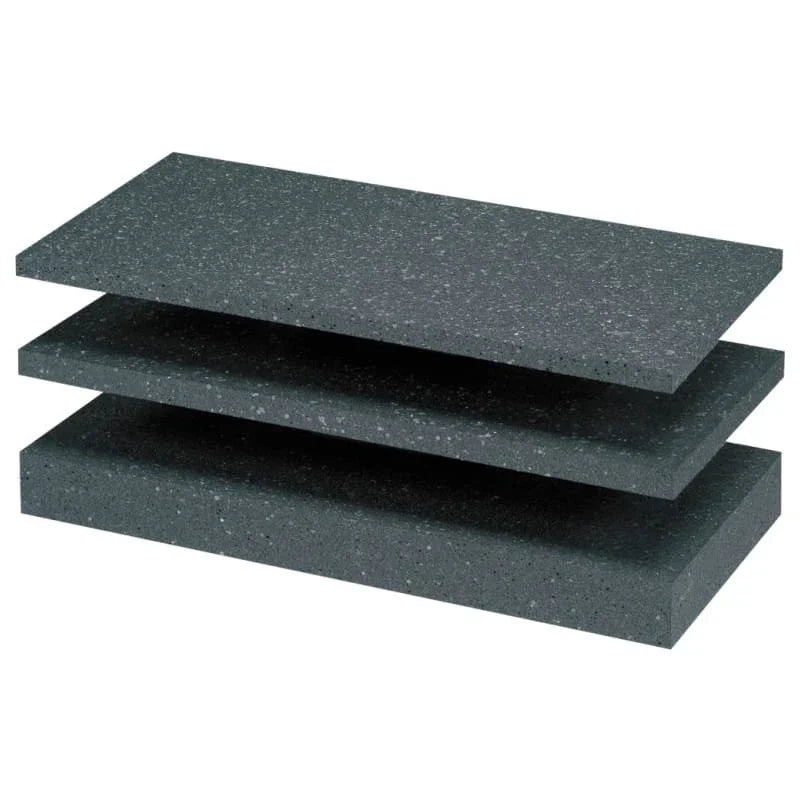
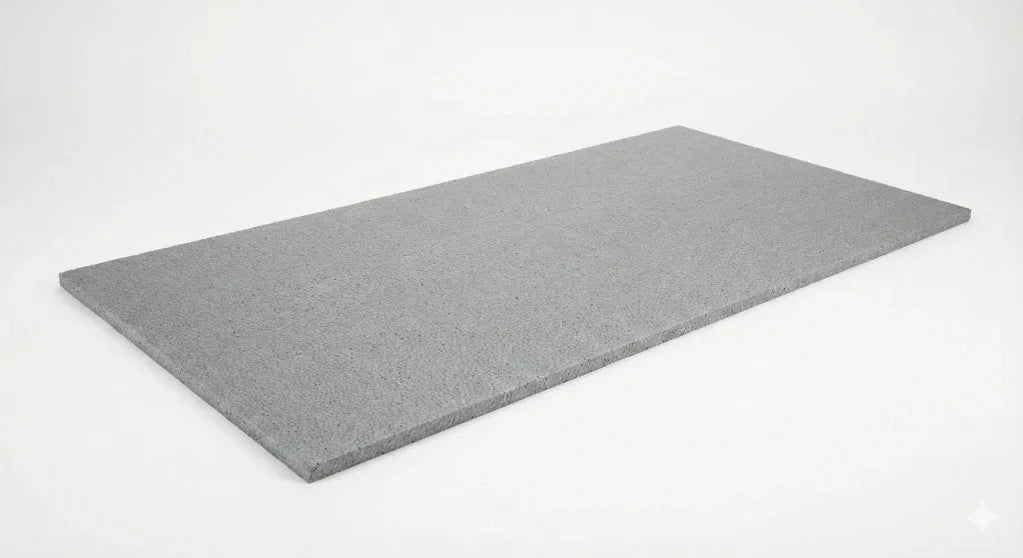
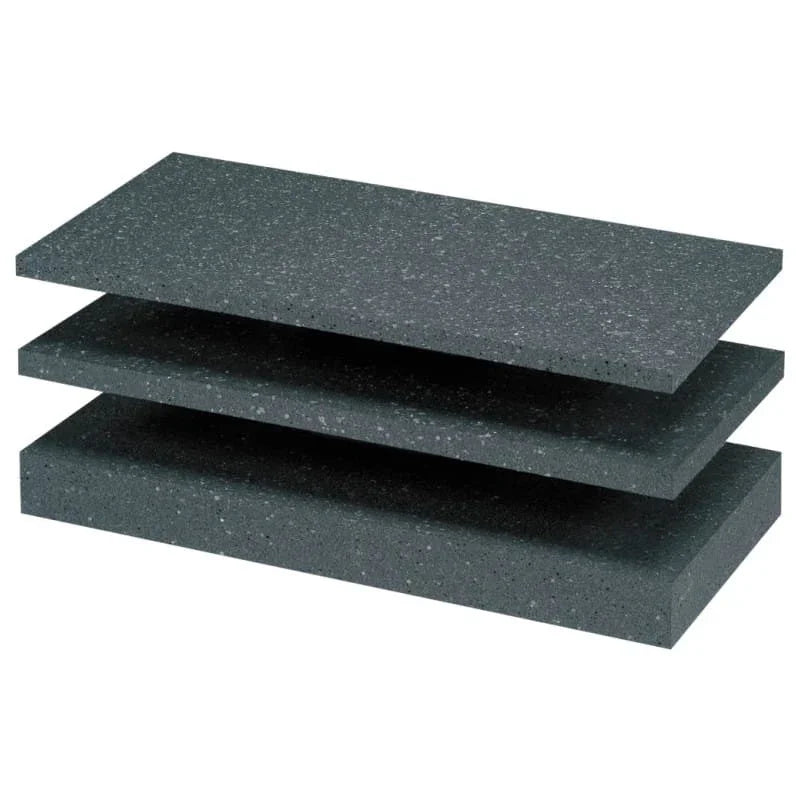
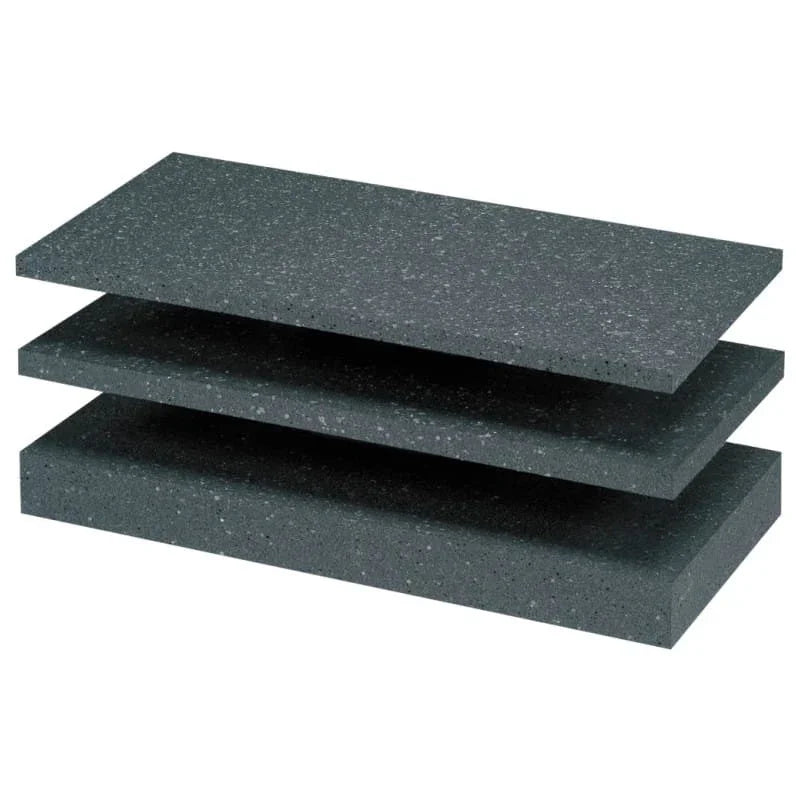
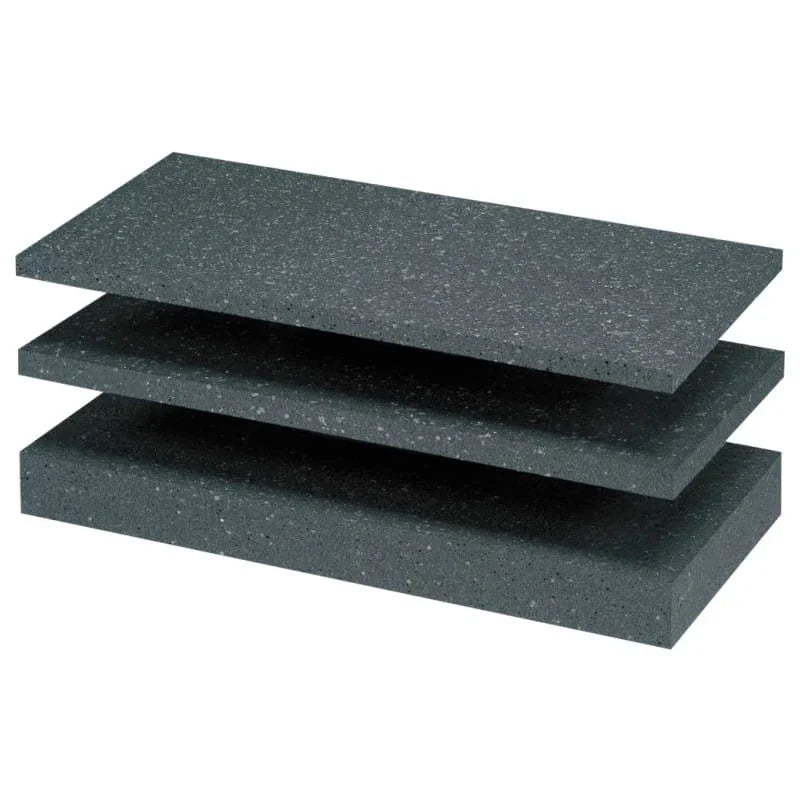
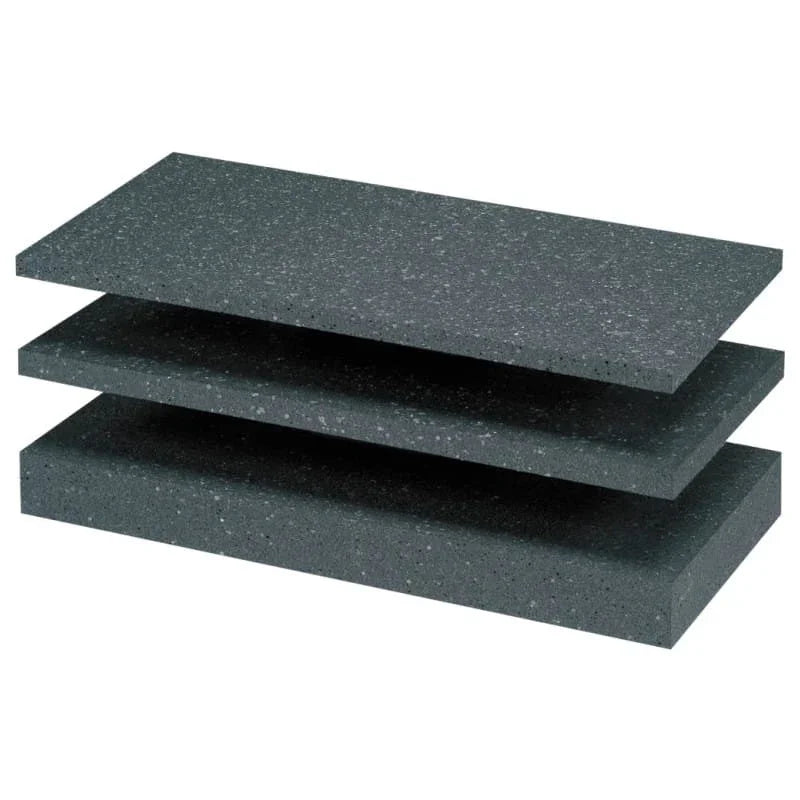
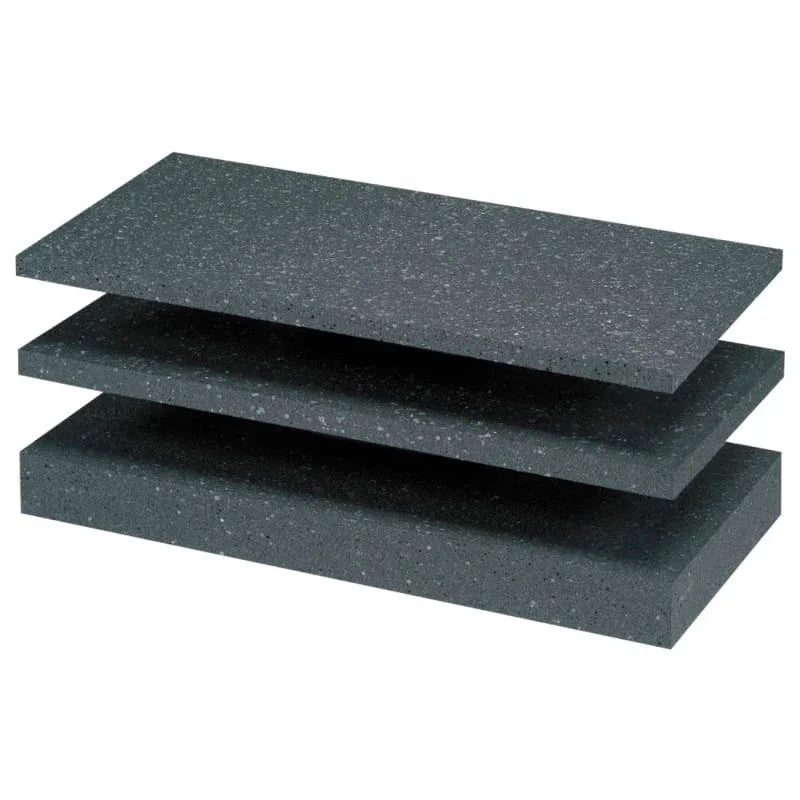
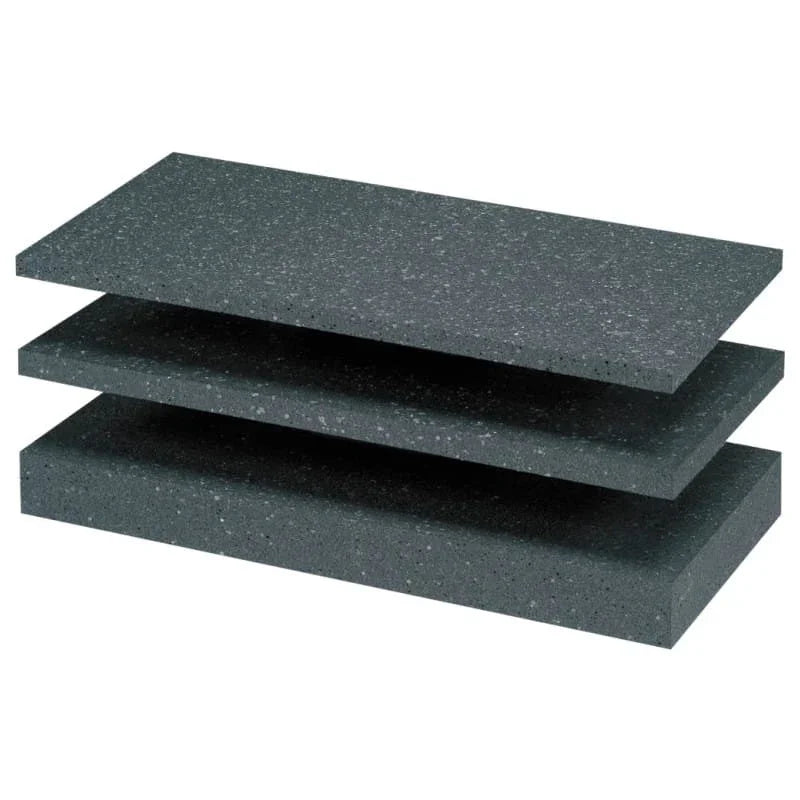
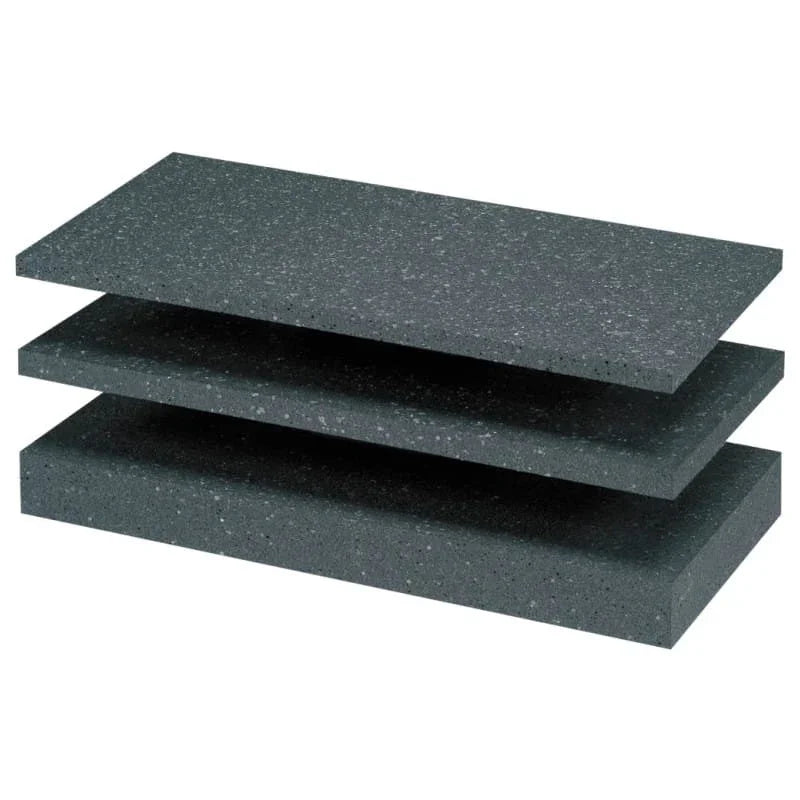
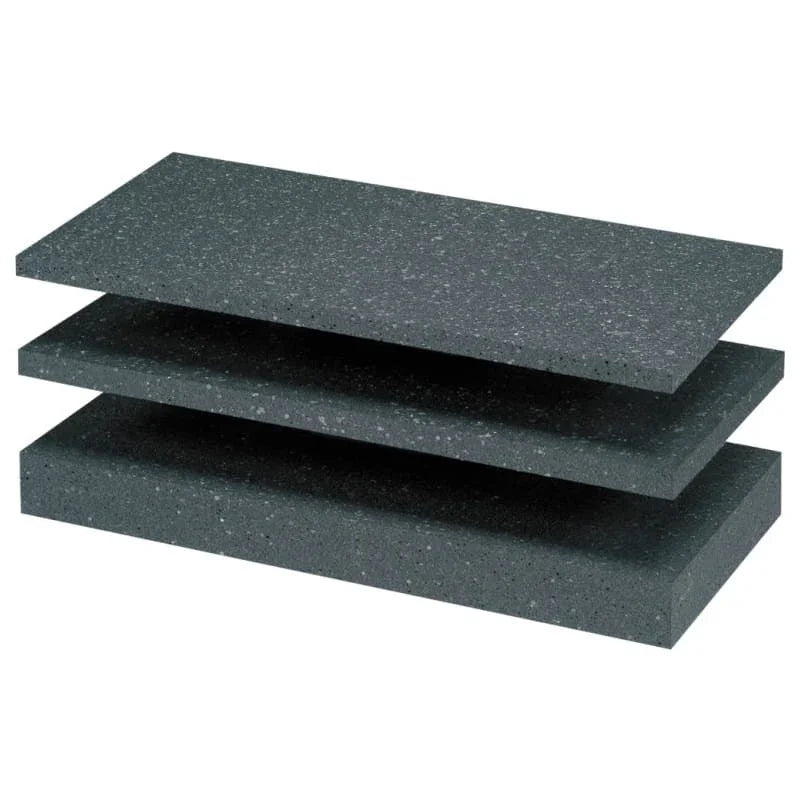
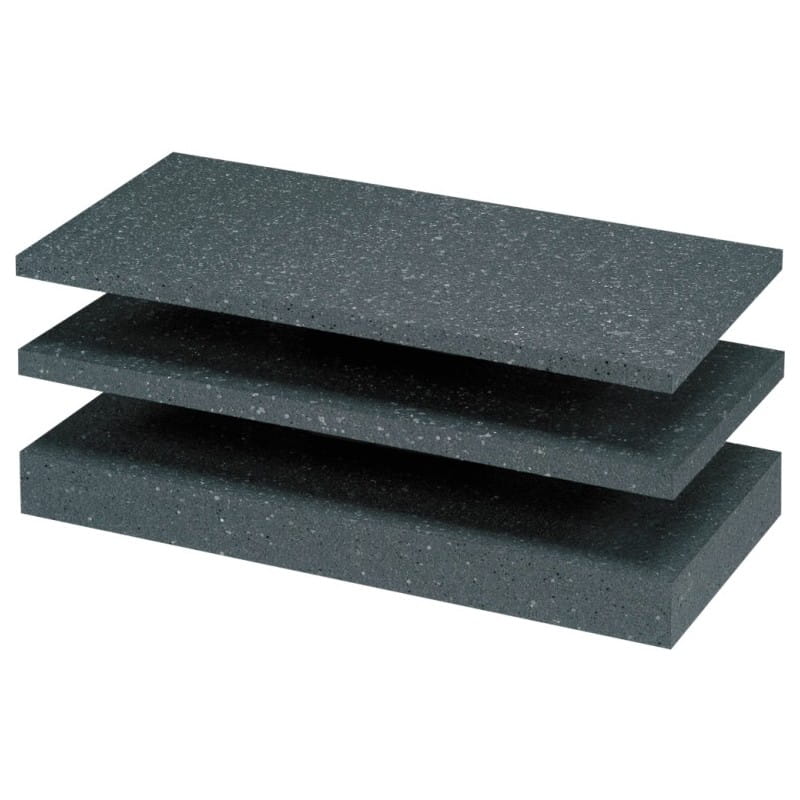
These EPS insulation boards are grey graphite polystyrene for walls that get insulated on the outside and finished with render. Every EPS board is 1000 × 500 mm, and Renders World stocks eleven thicknesses, from a 10 mm strip for window reveals to a 200 mm board for the deepest layer a wall can take. Pick the thickness, order the boards you need, and add the adhesive, fixings and mesh from the same external wall insulation range.
EPS Insulation Board Thicknesses, 10 to 200 mm
Every thickness of EPS insulation uses the same 1000 × 500 mm face, so two boards cover one square metre whichever depth you choose. The full pack holds fewer boards as the EPS gets thicker:
| Thickness | Board | Boards per m² | Boards per pack | Pack covers |
|---|---|---|---|---|
| 10 mm | EPS graphite 10 mm | 2 | ordered singly | |
| 20 mm | EPS graphite 20 mm | 2 | 30 | 15.00 m² |
| 30 mm | EPS graphite 30 mm | 2 | 20 | 10.00 m² |
| 50 mm | EPS graphite 50 mm | 2 | 12 | 6.00 m² |
| 80 mm | EPS graphite 80 mm | 2 | 7 | 3.50 m² |
| 90 mm | EPS graphite 90 mm | 2 | 6 | 3.00 m² |
| 100 mm | EPS graphite 100 mm | 2 | ordered singly | |
| 150 mm | EPS graphite 150 mm | 2 | 4 | 2.00 m² |
| 160 mm | EPS graphite 160 mm | 2 | 3 | 1.50 m² |
| 180 mm | EPS graphite 180 mm | 2 | 3 | 1.50 m² |
| 200 mm | EPS graphite 200 mm | 2 | 3 | 1.50 m² |
The thin end of the range wraps reveals, lintels and other tight spots where thick EPS would not fit; the thick end carries the main layer of EPS insulation on the open wall. Because the face size never changes, different thicknesses can sit side by side on one elevation and still line up.
Where the Boards Go
This EPS insulation is made for external wall insulation systems: bonded to the wall, fixed, then covered with a reinforced base coat and render. The same EPS also suits:
- Jambs, lintels and window reveals — thin EPS keeps the insulation running round every opening.
- Loggias and balconies — insulated with the same EPS as the rest of the wall.
- Light-dry insulation — behind cladding, on stud walls, in enclosed and ventilated slots of cavity walls and in expansion joints.
They bond to concrete, to cement and cement-lime plasters, to rough brick, block and hollow-block walls, to other ceramic and silicate masonry, and to cellular concrete. Plinths, foundation walls and anything below ground stay damp for long periods, so that part of the wall takes a foundation board from the XPS foundation boards range instead.
Why Grey Graphite Boards
- Thinner for the same result — graphite is added to the expanded polystyrene in production and improves the insulation, so graphite EPS reaches a given thermal resistance with less thickness than plain white EPS.
- Declared conductivity — from 20 mm up this EPS insulation is declared at λD ≤ 0.031 W/mK, the figure your designer puts into the wall calculation.
- One board size across the range — 1000 × 500 mm at every thickness, which keeps cutting simple and lets reveal strips and field boards share the same courses.
- Tight tolerances — thickness within ±1 mm, length and width within ±2 mm, squareness within 5 mm per metre and flatness within 5 mm, so joints close without packing.
- Strong enough for the system — bending strength of at least 100 kPa (BS 100) and tensile strength across the faces of at least 100 kPa (TR 100), the properties that let a board survive handling and hold its bond.
- Stable once fixed — dimensional stability within 0.2 % in normal conditions.
- From one counter — Renders World sends orders out the same day when the EPS is in stock, and the adhesive, fixings, mesh and render come from the same Southampton shop.
How to Fix the Boards
- Get the wall ready. It must be sound, stable, even and frost-free, with dust, dirt, lime, oil, grease, wax and old emulsion or oil paint taken off. Prime over-absorbent walls, weak plasters and rough cellular-concrete or cinder-block walls, and fill large hollows with a levelling mortar first.
- Choose the adhesive. Cement adhesive mortars and polyurethane adhesives both suit graphite EPS; the adhesives and basecoats for insulation boards range has both.
- Bond with a bead and patches. Run a continuous strip at least 3 cm wide round the edge of each board and add six to eight patches 8–12 cm across in the middle. The adhesive should cover at least 40 % of the board, about 60 % once pressed on, and stay no thicker than 10 mm under it. On an even, smooth wall the adhesive can go over the whole board with a notched trowel instead, 2–5 mm thick after fixing.
- Fix mechanically. Add plugs from the insulation fixing accessories range.
- Sand, dust, then base coat. Before the base coat the EPS must be clean, even and stable. Lightly sand graphite boards and dust them off, then bed fibreglass mesh into the base coat.
Where you are unsure how well the old wall will hold, stick eight to ten 10 × 10 cm cubes of EPS to it in different places and pull them after three days. If a cube tears within itself, the wall is fine; if it comes away with the adhesive or the surface, the wall needs a different fixing approach set out by the designer.
On Site: Sun, Weather and Solvents
- Keep the packs out of the sun. Leave the EPS in its original wrapping, under cover, until it goes on the wall. Direct sunlight can warp graphite EPS.
- Never fix hot insulation. Shade the EPS while they go up and while the adhesive takes its first set; insulation that heats up can pull away from the adhesive.
- Clean off the yellow film. A long spell in daylight can leave a yellowish tarnish on the face. Remove it before the base coat goes on.
- Work in dry, calm weather. Cover the scaffold, and stop in snow, rain or strong wind.
- Keep solvents away. Acetone, nitro thinners, benzene and other organic solvents destroy polystyrene, so keep them and the products that contain them off the EPS.
Graphite EPS, Mineral Wool or a Foundation Board?
- Graphite EPS insulation — for the main insulated wall above ground, where the project accepts insulation with reaction to fire class E.
- Mineral wool insulation — for walls where the fire strategy or the designer calls for a mineral core instead of polystyrene.
- A foundation board — for the plinth, foundation walls and work below ground, from the XPS foundation range linked above.
The thickness itself comes from the wall calculation, not from habit, so settle the U-value target for the whole wall before you choose the insulation thickness.
FAQ — Thickness, Fixing and Ordering
How many boards do I need?
Two boards per square metre at every thickness. Measure the wall, take off the openings, add a margin for cuts round windows and doors, then double the area to get the number of boards. A full pack of 50 mm boards covers 6.00 m², of 150 mm boards 2.00 m², and of 160, 180 or 200 mm boards 1.50 m²; the 10 mm and 100 mm thicknesses are ordered singly.
Can I mix thicknesses on one wall?
Yes. Every board is 1000 × 500 mm, so a 20 mm strip round a reveal and a 150 mm board on the open wall share the same courses. Which main thickness the wall needs comes from its U-value target, worked out for the whole build-up in the U-value and insulation thickness guide.
Which adhesive suits graphite boards?
Cement adhesive mortars or polyurethane adhesives. Keep anything with organic solvents away from the EPS, and lightly sand and dust the face before the base coat.
Can EPS go up in hot sun?
Not while they are heating up. Shade the boards during fixing and while the adhesive sets, keep the packs wrapped and out of direct sun, and stop work in rain, snow or strong wind.
What fire class are the boards?
The boards carry reaction to fire class E. That is the class of the board itself; how the finished wall performs depends on the whole system, and the fire strategy belongs to the project's designer.
How accurate are the boards?
Thickness is held within ±1 mm, length and width within ±2 mm, squareness within 5 mm per metre and flatness within 5 mm, so the courses close tight and the base coat has small joints to bridge.
How are board orders delivered?
Renders World processes orders the same day when the stock is there. Pallets go next day, or in two business days on the economy option, and the delivery cost is quoted by the team after you order. Every delivery is kerbside. You can also collect from the Southampton counter, Monday to Friday 7am to 5pm and Saturday 7am to 12pm.