
Description
Mechanical fixings driven flush with the insulation face still leave a problem behind them — a small cold spot at each plug head and a slight surface unevenness that telegraphs through any thin-grain render finish. Countersinking the fixings and capping the recesses solves both at once. The Grey EPS Plug Caps in the insulation fixing accessories range are the standard finishing component for that step on graphite EPS facades.
What Grey EPS Plug Caps Do Between Mechanical Fixing and Basecoat
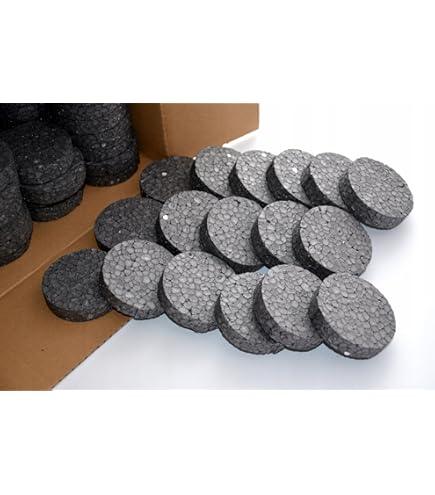
Grey EPS Plug Caps are 67 mm diameter, 17 mm thick graphite-enhanced polystyrene discs that seat into countersunk fixing recesses to cover mechanical fixing plugs, eliminate the thermal bridge at every fixing point, and restore a flat insulation surface ready for the basecoat layer. The graphite-enhanced EPS matches the thermal conductivity of modern graphite insulation boards, so the cap closes the bridging path without creating a new performance gap in the insulation plane.
Sequence-wise the cap sits at the third step of the fixing workflow. Mechanical plug driven flush, recess cut by the countersinking tool around the plug head, cap bonded into the recess. From that point onwards the facade reads as a continuous insulation surface — no exposed plug heads, no surface bumps under the basecoat, no circular marks pulling through a 1.5 mm render grain six months after handover.
Why Trade Specifiers Choose Grey EPS Plug Caps for Capped Facades
- Graphite-enhanced EPS for thermal continuity: Cap conductivity matches the surrounding insulation board, eliminating the localised thermal bridge that an uncapped fixing leaves at every plug head across the facade.
- 67 mm diameter matched to the standard countersink tool: The cap is sized to seat into the recess produced by the EPS Styrofoam and Wool Hole Cutter, creating a matched cap-and-cutter system rather than a generic fit.
- 17 mm cap thickness in a 20 mm recess: The 3 mm depth allowance accommodates a PU foam or basecoat adhesive bed behind the cap, holding it firmly in place at flush or fractionally below the board face.
- Flat board surface under basecoat: Capping at 6–8 fixings per m² removes dozens of raised points per elevation, which prevents the regular circular pattern that uncapped fixings leave visible through thin-grain render finishes on dark colours.
- Visible quality-control marker: Grey caps on white EPS boards stand out at a distance, making the pre-basecoat walk-round a one-glance inspection — any missed fixing is immediately obvious.
- 100-piece trade pack matched to one elevation: One bag covers approximately 12–17 m² of insulated facade at standard fixing density from the graphite EPS insulation range, lining up cleanly with one typical domestic wall section.
Technical Specifications — Grey EPS Plug Cap Data Sheet Highlights
| Property | Value |
|---|---|
| Cap diameter | 67 mm |
| Cap thickness | 17 mm |
| Material | Graphite-enhanced expanded polystyrene (grey EPS) |
| Colour | Grey |
| Compatible recess | 67 mm diameter × 20 mm depth (standard EPS hole cutter) |
| Compatible insulation | EPS boards — white and graphite |
| Pack quantity | 100 pcs |
| Typical fixing density | 6–8 per m² |
| Coverage per pack | Approx. 12–17 m² at standard density |
| Adhesive (separate) | PU foam adhesive or basecoat mortar |
How the Caps Install Into a Countersunk Fixing Recess
The capping step runs after the mechanical fixings have been driven and the recesses cut. With every fixing head exposed inside a 67 mm × 20 mm countersink, the capping sequence per fixing takes roughly fifteen seconds. Apply a thin bead of PU foam adhesive or a small dab of basecoat mortar to the rear face of the cap, press the cap into the recess, and seat it firmly with palm pressure until it sits flush with the surrounding board face.
The 3 mm difference between the 17 mm cap thickness and the 20 mm recess depth is intentional — it leaves room for the adhesive bed without forcing the cap above the board plane. A cap pushed proud of the board face is the single most common installation error: the bump telegraphs through every layer above it, from basecoat to mesh to render finish, and shows as a raised circle under raking sunlight after handover.
- Adhesive bed: PU foam (expands to fill, fast cure) or basecoat mortar (rigid bond, slower cure) — both deliver equivalent long-term holding.
- Seating depth: Flush with the board face, or 1–2 mm fractionally below — never proud.
- Cure window: Caps bonded in the morning are typically ready for basecoat application by the afternoon on a normal site day.
- Coverage check: Walk the full elevation before basecoat — grey caps on white EPS make missed fixings obvious; on graphite EPS the blend means closer inspection but no exposed heads should remain.
For the broader context of how fixings, recesses, and caps sit within the full EWI build-up, the complete EWI fixings installation guide for UK projects takes the sequence end-to-end. To work out the cap quantity from the fixing schedule before ordering, the fixing pattern and spacing calculation method sets out the per-m² counts the capping schedule then matches.
Installation Notes — Adhesive Choice, Seating Depth, Cure Timing
Adhesive choice on a capping run usually follows what is already mixed and open on site. PU foam adhesive expands slightly as it cures, which fills any minor irregularity in the recess wall and locks the cap in place within minutes. Basecoat mortar produces a rigid bond, cures more slowly, and has the practical advantage of using the same material that will overlay the cap during the next stage — there is no chemistry mismatch between the bond layer and the basecoat above it. Both methods hold for the service life of the insulation system; the choice rarely changes the outcome.
Seating depth is the discipline that separates a clean capping run from a remedial one. Press each cap home until palm pressure no longer moves it inwards, then check the cap face against a straight edge laid across the surrounding board surface. Flush with the board is correct. One to two millimetres below flush is also acceptable — the basecoat fills the slight recess without showing through. Anything proud of the board face needs to come back out, get the excess adhesive trimmed off the back, and go in again. Spotting the proud cap before the adhesive cures takes two minutes; spotting it after the render goes on is a remedial trip.
Cure timing depends on the adhesive and the weather. PU foam reaches handling strength within minutes and full cure within an hour under typical UK site temperatures. Basecoat mortar bonds in two to four hours depending on humidity and air temperature. Walking the elevation an hour after the last cap goes in confirms that nothing has shifted before the basecoat application begins.
What UK Installers Do Differently With Plug Caps
Capping is straightforward when sequenced correctly and easy to get wrong when rushed. Four habits separate a clean capped facade from one that needs filler work before render day.
- I always order one bag more than the calculation says. Caps split occasionally during seating, recesses sometimes need a second attempt after a poor first cut, and running short mid-elevation means either leaving fixings exposed overnight or stopping the programme. The extra bag costs less than half an hour of site time.
- I always check seating with a straight edge, not just by eye. A 1 mm proud cap looks acceptable from arm's length but shows as a raised circle when raking sunlight hits the rendered facade six months later. A short straight edge laid across the cap and two neighbouring board points takes two seconds per fixing.
- I always cap a full elevation in one session. Stopping halfway and coming back the next day means matching adhesive batches, fighting partial cure times, and walking the elevation twice for the QC pass. One person can typically cap a 25 m² elevation in an hour once the recesses are cut.
- I always do the QC walk before any basecoat material comes off the trestle. Spotting a missed fixing before the basecoat goes on means thirty seconds with a cap; spotting it after means cutting through cured basecoat to access the fixing. The pre-basecoat walk is non-negotiable on every project.
Is the Grey EPS Plug Cap Right for Your Project?
- For any mechanically fixed EPS insulation facade: Specify Grey EPS Plug Caps wherever fixings are driven into white or graphite EPS boards and a flush, thermal-bridge-free finish is required under the basecoat and render layers.
- For matched countersinking and capping: Pair the caps with the EPS Styrofoam and Wool Hole Cutter — the 67 mm cutter and 67 mm cap form a sized system that delivers a consistent recess and a flush cap on every fixing across the facade.
- For mineral wool insulation systems: The grey EPS material is sized for EPS board geometry. Mineral wool slabs from the Rockwool mineral wool range typically use a different capping approach — cap selection follows the EWI system designer's specification on those builds.
- For complete fixing scheduling: Browse the full fixing accessories collection for LTX plugs, base tracks, spiral anchors, and PVC discs that complete the mechanical fixing specification alongside the cap quantity.
- For trade-account ordering and quantity planning: Pair cap quantities with the matching primary fixing count on a single PO from the fixing accessories range — Renders World's specification desk can size the cap schedule against the per-m² fixing density before you commit to volume.
FAQ — Plug Cap Coverage, Compatibility, Ordering
How many bags of caps do I need for a typical semi-detached house?
A three-elevation semi-detached property with roughly 60–80 m² of insulated wall area carries 360–640 fixings at the standard density of 6–8 per m². That works out to four to seven 100-piece bags of caps. Ordering one extra bag per project covers any caps that split during seating or recesses that need a second attempt, which avoids a delivery delay mid-elevation.
Can I use these grey caps on white EPS boards?
Yes — the 67 mm diameter and 17 mm thickness fit the standard countersunk recess regardless of board colour. The grey caps stand out visually against white EPS, which is actually an advantage for the pre-basecoat quality-control walk: any missed fixing is obvious at a glance. The thermal-bridging benefit is identical on both board types because the cap closes the conductive path at each fixing point regardless of the surrounding board grade.
What adhesive is best for bonding the caps?
A small dab of PU foam adhesive or a thin spread of the basecoat mortar that will overlay the caps anyway. PU foam expands slightly to fill any irregularity between cap and recess wall and cures within minutes. Basecoat mortar gives a rigid bond, cures over a few hours, and avoids any chemistry mismatch between the bond layer and the basecoat above it. Both deliver equivalent long-term holding — site practice usually determines which is used.
Are these caps a requirement or an optional finishing step?
Capping is required by many EWI system certifications as part of the tested assembly, so on certified system installations the step is non-negotiable. Beyond certification, capping delivers two practical wins on every project: it eliminates the thermal bridge at every fixing point and produces a flat surface that the basecoat and render cover without visible marks. On any specification calling for a thin-grain or dark-colour render finish, capping is effectively mandatory for visual quality.
Should the cap sit flush or slightly below the board face?
Flush with the board face is correct, and 1–2 mm fractionally below is acceptable — the basecoat fills a small recess without showing through to the render layer. A cap proud of the board face is the failure mode to avoid: even a 1 mm raised cap shows through the basecoat, mesh, and render as a circular mark visible under raking light. Spot-check seating with a short straight edge against the surrounding board before the adhesive cures.
Will the caps fit if the recess is cut a little deeper than 20 mm?
Minor over-depth of 1–3 mm beyond the nominal 20 mm is recoverable by using slightly more adhesive behind the cap to take up the extra space. Beyond that the cap sits too far below the board face and the basecoat fill becomes excessive — the cleaner approach is to recut the recess at the standard depth and discard the over-cut, rather than building up the adhesive layer to compensate.
Do the grey caps blend visually with graphite EPS boards?
Yes — the graphite-enhanced material colour is closely matched to standard graphite EPS boards, so the capped surface reads as one continuous insulation plane to the eye. The flip side is that pre-basecoat QC requires a closer inspection on graphite boards than on white boards, where the grey-on-white contrast highlights any missed fixing immediately. Both work; the inspection method just changes.
What happens to the caps at end of life?
Graphite EPS recycles through standard polystyrene recovery streams when the EWI system is eventually stripped at end-of-life demolition or refurbishment. The caps separate from the underlying mechanical fixings during the strip-out and go through the polystyrene stream with the bulk of the insulation board. Embodied carbon contribution per cap is small relative to the board and render layers it sits between.

