
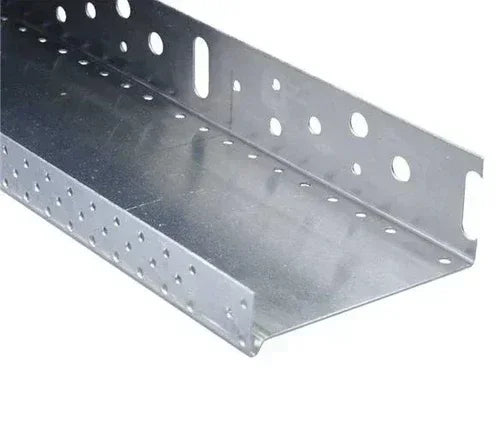
BASE TRACK 33mm 2.5m


Price:
Sale price£6.00

Shipping calculated at checkout

Stock:
In stock

Pickup available at Renders World Southampton

Usually ready in 2 hours

Description

At 33 mm channel width, this base track is the precision shelf for 30 mm insulation boards — wider than the slim 23 mm reveal profile, narrower than the 53 mm main-facade entry track. It is the size that handles every lintel head, soffit return, and secondary thermal-bridge layer on a typical UK retrofit, plus the deeper reveal details where 20 mm boards do not deliver the U-value target. Integral drip edge, 0.6 mm corrosion-resistant aluminium gauge, 2.5 m length.

What the 33 mm Base Track Does in a UK EWI System

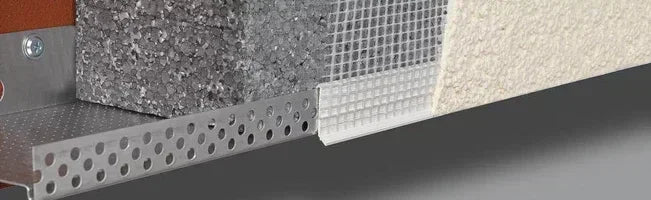
The 33 mm base track is a 2.5-metre aluminium starter profile sized to anchor 30 mm insulation boards in UK external wall insulation systems, with a 0.6 mm aluminium gauge, integral drip edge, and clip-on mesh-carrier compatibility on the front lip. It is the second-narrowest profile in the insulation fixing accessories range and the track specified wherever 30 mm EPS or XPS boards close lintel heads, soffit returns, deeper reveal details, and secondary thermal-bridge interruption layers around openings.

Its commercial position is the mixed-thickness retrofit: the main facade runs 80 mm, 100 mm, or 150 mm boards anchored on a wider track, while every detail area around windows, doors, and roof junctions calls for 30 mm closures on this narrower channel. Without it, an installer either oversizes those details and loses sight-line clearance at openings or has to bond slim boards without a proper starter shelf — neither of which produces the clean finish the rest of the system delivers.

What Makes the 33 mm Base Track Worth Specifying

  • Precision Channel for 30 mm Boards: The 33 mm width gives 30 mm EPS or XPS boards a 3 mm clearance margin — enough room for adhesive application and seating tolerance without leaving the board loose in the channel. Wider tracks point-load the board on the lip; narrower tracks force the board to project. The 33 mm channel sits in the right place.
  • Integral Drip Edge at the Base: The lower lip extends slightly beyond the wall face, directing rainwater clear of the insulation base rather than letting it track behind the boards. On exposed elevations, that geometry is the difference between a wall base that stays dry and one that develops basecoat erosion over the first few winters.
  • Corrosion-Resistant Aluminium Alloy: The natural aluminium oxide layer protects the profile against prolonged moisture contact, the alkaline chemistry of basecoat and adhesive, and atmospheric exposure at the lowest point of the wall assembly — exactly where corrosion failures most commonly show up on lesser-grade starter profiles.
  • Mixed-Thickness Retrofit Workhorse: On any retrofit where the main wall and detail areas use different board thicknesses — which is most retrofits — the 33 mm track handles the 30 mm closures around lintels and soffits while the wider main-wall track carries the primary facade. A van running ten lengths of 33 mm alongside the primary profile finishes every detail area without a return trip.
  • Compatible With Standard EPS and XPS at 30 mm: Works with 30 mm boards from the EPS insulation boards range and 30 mm XPS foundation boards for below-DPC plinth detailing where the track doubles as a moisture-break shelf at the DPC line.
  • True Horizontal Datum Across the Elevation: A well-fixed 33 mm track at every lintel, soffit, and reveal sets a consistent reference line that ties the entire insulation system together visually. When the datum holds across all detail areas, the elevation reads as one continuous installation rather than a patchwork of separate jobs.

Technical Specifications — 33 mm Base Track Data Highlights

Parameter Value
Profile Width 33 mm
Length 2,500 mm (2.5 m)
Material Aluminium alloy
Gauge (Thickness) 0.6 mm
Finish Natural aluminium (mill finish)
Drip Edge Yes — integral lower lip extending beyond wall face
Pre-installed Mesh No — clip-on mesh-carrier profile required
Recommended Fixing Centres 300 mm
Suitable Insulation Thickness 30 mm boards
External Corner Detail 45° mitre cut both sides
Recommended Expansion Gap 2–3 mm between adjacent lengths
Recommended Fixing 6 mm masonry bit · wall plug + screw
Corrosion Resistance Inherent aluminium oxide layer

How the 33 mm Base Track Installs in a Render or EWI System

The 33 mm base track enters the EWI build-up at the start of every detail area requiring 30 mm boards — lintel heads, soffit returns, deeper reveal linings, and any secondary insulation layer at junctions. The installer marks a continuous level datum line around the relevant perimeter, typically aligned with the main-wall base-track height for main facade runs and with the lintel or soffit underside for opening details. The track is pre-drilled at 300 mm centres using a 6 mm masonry bit, then fixed to the substrate with wall plugs and screws rated for the masonry type, with a 2–3 mm expansion gap left between adjacent lengths and a 45° mitre cut at every external corner.

Once the track is set, adhesive is applied to the rear face of each 30 mm insulation board and the board is seated firmly into the channel so it rests squarely on the horizontal shelf. The clip-on mesh-carrier profile then snaps onto the front lip, carrying fibreglass mesh into the basecoat layer above. The step-by-step installation guide for insulation fixings covers each stage of substrate assessment and mechanical anchorage, and the fixing pattern and spacing calculation guide sets out the layout method for the main board courses above the track aligned with ETAG 014 wind-load categories.

Installation Notes — Mitre Corners, Mixed-Thickness Transitions, Drip-Edge Detailing

Mitre corners are the discipline that separates a clean base-track installation from a competent one. At every external corner, both meeting lengths should be mitre-cut at 45° to produce a continuous drip-edge geometry around the corner without a vertical step or a butted joint. Butting the ends square produces a visible discontinuity in the drip line and creates a moisture trap at the corner — the mitre takes a few seconds extra per corner and removes the issue permanently.

Mixed-thickness transitions are the second discipline specific to the 33 mm profile. Where the 33 mm track ends and the wider main-wall track begins — typically at the corner of a lintel return where the 30 mm closure meets the 80 mm or 100 mm main facade — both tracks should align at the same datum line on the lower lip, with the difference in channel width absorbed in the vertical face of the profile. This keeps the drip-edge line continuous around the elevation and avoids a stepped shadow that becomes visible under raking light on the finished render.

Drip-edge detailing closes the install. The integral drip lip should be inspected after fixing to confirm it projects clear of the wall face and is not deformed by tight fixing pressure or rough handling. A deformed lip channels water sideways rather than dropping it clear, defeating the whole purpose of the geometry. On exposed elevations where splash-back from ground level is significant, pairing the drip edge with a bellcast bead above the track provides a second line of moisture management — the two details complement rather than duplicate each other.

What UK Installers Do Differently With the 33 mm Base Track

  • Keep ten lengths on the van as standing stock: Across mixed-thickness retrofit work, the 33 mm profile turns over faster than any single main-wall track because every opening on every job needs it. A ten-length running stock means lintel and soffit closures get finished in the same site visit as the main facade rather than waiting for a return trip.
  • Cut every external-corner mitre with a mitre box and tin snips: Freehand mitre cuts on 0.6 mm aluminium produce inconsistent angles that show up as gappy corners after basecoat goes on. A small aluminium mitre box and standard tin snips deliver clean 45° cuts every time at no time penalty beyond the first cut of the day.
  • Set the datum line for detail areas from the main-wall track, not from the structural opening: Transferring datum from the structural lintel or sill produces small offsets at every opening because structural openings vary slightly across an elevation. Projecting the main-wall datum across all openings with a laser keeps the visible base-track line consistent across the finished facade.
  • Inspect every drip lip before basecoat: A drip lip that has been knocked flat during installation or board insertion stops working as drip geometry. Walking the track run with a finger along the lip before basecoat goes on catches the dozen or so deformations a typical elevation accumulates during install — a few seconds of bending back per defect.
  • Schedule lintel-head closures for end-of-day work: The 33 mm closures at lintel heads sit at working height for a person on a small platform or step-up and produce excellent finished detail work when handled at the unhurried end of a day rather than squeezed into the morning rush of main-facade board placement.

Is the 33 mm Base Track Right for Your Project?

  • Choose the 33 mm base track if you are anchoring 30 mm EPS or XPS boards at lintel heads, soffit returns, deeper reveal linings, or secondary thermal-bridge interruption layers around openings — the closure thickness used on most UK retrofit and new-build EWI work where main-facade boards are thicker.
  • Stepping down to slim reveal boards (10–20 mm)? The 23 mm base track at 2.5 m length is the thinnest profile in the range and the precise channel width for window reveals, door reveals, and tight junction detailing where 20 mm or thinner boards are specified.
  • Stepping up to main-wall facade insulation (50 mm)? The 53 mm base track at 2.5 m length matches 50 mm boards on standard domestic EWI specifications and is the most common main-wall track on enhanced-baseline UK projects.
  • Need wider tracks for thicker main-wall builds? The full range of base tracks and mechanical fixings extends to 163 mm channel width for deep-renovation and Passive House insulation thicknesses — pair the 33 mm closure with the matching main-wall track at the same datum line.

FAQ — 33 mm Base Track Compatibility, Substrates, Ordering

Does the 33 mm channel only accept exactly 30 mm boards?

The 33 mm channel is sized specifically for 30 mm boards with a 3 mm tolerance for adhesive application and seating. Boards thinner than 28 mm sit loose in the channel and need shimming to hold position during adhesive cure; boards thicker than 30 mm point-load the channel lip and either project beyond the track or refuse to seat fully. For 10–20 mm reveal boards use the 23 mm track; for 50 mm main-wall boards use the 53 mm track.

Can the 33 mm track be used below the damp-proof course?

The standard installation position is directly above the DPC, but the track can serve as a moisture-break shelf at the DPC line on plinth and foundation work where 30 mm XPS foundation boards continue the insulation below ground level. The boards below the track are adhesive-fixed directly to the substrate, with the track providing a defined transition line between above-grade and below-grade insulation rather than a structural shelf below it.

Does the integral drip edge replace the need for a bellcast bead?

The integral drip edge manages incidental rainwater at the base of the insulation system and is sufficient on sheltered elevations or where the track sits well clear of ground-level splash-back. On exposed elevations, low-set tracks, or projects near ground level with significant splash-back risk, pairing the drip edge with a bellcast bead provides a second line of moisture management above the track — the two details complement each other rather than substituting one for the other.

What fixing type works for different substrate materials?

On standard clay or concrete brick and dense concrete block, a nylon frame plug with a countersunk screw at 300 mm centres provides reliable anchorage. On lightweight aggregate block or autoclaved aerated concrete, use a longer plug with greater embedment depth and rotation-only drilling mode to preserve the block's internal structure. On stone substrates, pre-drill with a masonry bit matched to the chosen plug diameter and check each fixing for tightness before loading the track with insulation board weight.

How are external corners handled with the 33 mm track?

Both meeting lengths should be mitre-cut at 45° to produce a continuous drip-edge geometry around the external corner without a butted joint or vertical step. A small aluminium mitre box and standard tin snips give consistent 45° cuts on 0.6 mm gauge aluminium. The mitre takes a few seconds extra per corner and prevents the moisture-trap and visible discontinuity that square-butted ends produce — particularly visible on south-facing corners under direct afternoon sunlight.

How much 33 mm track does a typical retrofit need?

For mixed-thickness retrofit work, calculate the total linear length of all lintel heads, soffit returns, and reveal linings that use 30 mm closures. On a four-bed semi-detached with eight openings averaging 2.5 m of perimeter detail each, the requirement is roughly 20 linear metres, or eight 2.5 m lengths. Adding two lengths as cutting and waste reserve produces a sensible order figure. Soffit return depths and lintel projection vary by building type, so a take-off from the elevation drawings produces the most reliable quantity.

You may also like

Recently viewed