


Description
The 103 mm profile sits in the middle of the base-track ladder, one step above the solid-wall width and one step below the deep-retrofit width. What follows separates the figures a fetched document actually supports from the ones the naming convention only implies.
What the 103 mm Channel Is Sized to Carry
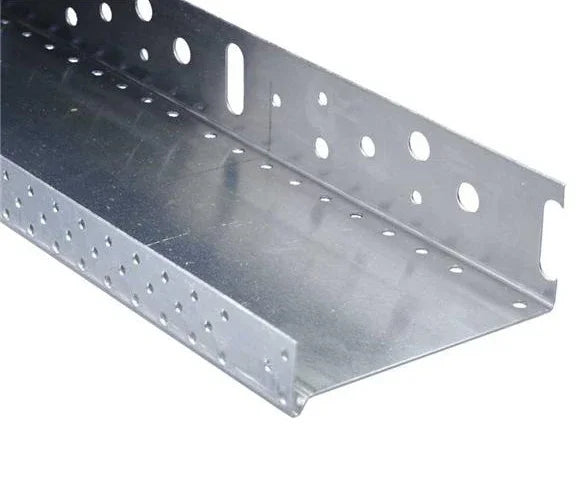
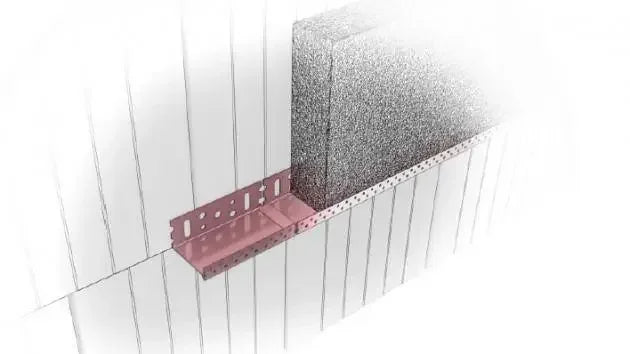
Base track 103mm 2.5m is the starter profile levelled above the DPC to carry a 100 mm graphite EPS board, which declares a thermal resistance of 3.10 m²K/W under EN 13163:2012+A1:2015. That resistance belongs to the board rather than to the profile — what the track contributes is geometry, holding the bottom edge of the first course to a single line and giving basecoat and render a defined stop at the plinth. Renders World holds it on the matched insulation fixing accessories shelf, so the channel and the plugs above it are settled in one order.
The situations where this width earns its place are all about the base line rather than the wall above it.
- A first datum on a solid-wall or cavity retrofit, where the base height is being set for the first time and every course above will inherit it.
- Elevations that change build-up depth, where a narrower channel serves reveals and returns while the datum stays continuous around the building.
- Work tied to an existing DPC, where the render stop has to meet a fixed height rather than a convenient brick course.
- Phased terrace and semi-detached programmes, where the value of a levelled track is a reference that survives between site visits.
Figures on File for a 100 mm Base Course
| Parameter | Value | Scope |
|---|---|---|
| Named channel width | 103 mm | Product designation, not a measured dimension |
| Named length | 2.5 m | Product designation |
| Declared thermal resistance at 100 mm | 3.10 m²K/W | EPS 032 Fasada Extra board; declared row, not thickness ÷ λ |
| Declared thermal conductivity | λD 0.032 W/mK | EPS 032 Fasada Extra graphite EPS board |
| Reaction to fire | Class E | EPS 032 Fasada Extra board alone, never a rendered build-up |
| Profile gauge, material and finish | Not published | No profile document retrieved this session |
| Channel-to-board fit | Not published | Naming convention; confirmed physically on site |
| Fixing centres for the profile | Not published | No profile instruction sheet retrieved this session |
Declared resistance is the figure worth quoting because it is the one the manufacturer stands behind, and dividing thickness by conductivity returns a slightly different answer that appears on no document. A whole-wall U-value is a build-up calculation rather than a property of a board or a channel width, and the U-value and thickness calculation method owns that sum.
One purchasing instruction comes out of the board card itself: its resistance table prints the same value in the 110 mm and 120 mm cells, so a step up from this width is worth confirming in writing with the order rather than read off that row. At 100 mm the figure is unaffected.
Why UK Installers Fit the Starter Profile Before Anything Else
- One datum, levelled once — the cheapest accuracy on a job is the base line, and boards, beads and sills above inherit it whether it was set carefully or not.
- Chosen against the board in front of you — the profile is named for its channel rather than a system code, so selection is a measurement rather than a compatibility lookup.
- The load path above it is a manufacturer table — plug length and count are published figures, not rules of thumb, and the plug length calculation method works the substrate side through before the first board is bonded.
- Gauge is a separate question from width — the range also carries profiles named for a heavier 1.0 mm gauge, so a specification calling out starter-rail thickness is answered by the named member instead of by this one.
- A 2.5 m module keeps the take-off simple — every length in the ladder is identical, so ordering against measured runs stays straightforward arithmetic.
How to Install the Track, Then Bond the First Course
All of this happens before a bag of adhesive is opened, and the order matters more than the technique. A datum set twice is a datum set wrong once.
- Establish one datum and project it — set the base line above the DPC with a laser, carry it to every elevation from that single reference rather than transferring by spirit level, and snap a chalk line so the height survives until boarding starts.
- Check the channel against the actual board — offer up an off-cut with its adhesive bed allowed for, and confirm it seats squarely on the shelf rather than riding the lip.
- Dry-run the lengths before drilling — laid end to end along the chalk line, they show a fixing point landing on a movement joint or a service penetration while it is still a pencil mark.
- Fix to the profile's own instructions — drill diameter, plug type and fixing centres come from those instructions or the system designer for the substrate in question, confirmed on the first length rather than carried from the last job.
- Keep the run continuous at corners and leave the movement allowance those instructions call for, so the base reads as one line around the building.
Once the run is verified level, boards are bonded off the shelf and the reinforcement detail the render system calls for is set at the base edge. The first-day base track and datum method covers levelling in full, and the EWI fixings installation sequence picks the elevation up from the first bonded course.
Plug Length and Count Above a 100 mm Base Course
The fastener schedule is a manufacturer table, and the LTX-10 data sheet publishes it directly: length equals board thickness, plus adhesive and any old plaster, plus 30 mm anchorage into the structural substrate.
| Plug length | New build, 10 mm adhesive | Over 20 mm existing plaster |
|---|---|---|
| 120 mm | 80 mm board (60 mm in aerated concrete) | 60 mm board (40 mm) |
| 140 mm | 100 mm board (80 mm in aerated concrete) | 80 mm board (60 mm) |
| 160 mm | 120 mm board (100 mm in aerated concrete) | 100 mm board (80 mm) |
The step that catches buyers out is the retrofit column. A 100 mm board on a wall keeping 20 mm of old plaster takes the 160 mm plug, not the 140 mm one that suits 100 mm on bare masonry — two lengths apart, on the same board thickness.
Recessing the collar with a cutter moves every row up one step. On count, the same sheet recommends a minimum of six fasteners per m² in the field of a wall and eight per m² in corner zones below 15 m, and states plainly that the recommendation does not replace the thermal insulation design. Those figures cover EPS and XPS boards only, and the fixing pattern and spacing method turns a wind zone and a building height into a real count, with the whole ladder of lengths on the starter tracks, plugs and discs shelf.
How the 103 mm Compares With the Standard Ladder
Renders World holds seven standard widths, and the table compares them on the only property these names declare — channel width at a common 2.5 m length.
| Profile | What the name declares | Where it sits |
|---|---|---|
| 23, 33 and 53 mm profiles | 23 / 33 / 53 mm, 2.5 m | Reveals, soffits and thin build-ups |
| 83 mm channel profile | 83 mm, 2.5 m | Two steps down from this width |
| 93 mm channel profile | 93 mm, 2.5 m | One step down; also stocked in a heavier gauge |
| 103 mm profile (this product) | 103 mm, 2.5 m | Middle of the ladder |
| 163 mm channel profile | 163 mm, 2.5 m | Widest standard member; no profile between the two |
Because nothing is stocked between 103 mm and 163 mm, a deeper build-up steps straight to the wide channel with the slack taken up behind the board. Where one elevation runs deeper than another, transition at an external corner so the change in plane absorbs the dimensional step under the basecoat.
Choosing and Ordering the 103 mm Base Track
- Measure the board, then pick the channel — take the thickness at the base course, allow for the adhesive bed, and choose the channel that seats it without slack. The order line then reads base track 103mm 2.5m, one length per 2.5 m of base line plus corner allowance.
- Work the length count as arithmetic — a 14 m base line gives 14 ÷ 2.5 = 5.6, so six lengths cover it, with one more worth carrying where corners are mitred.
- Order the boards on the same delivery — pairing the track with graphite EPS insulation boards keeps datum, channel and first course consistent.
- Where the specification calls for a stone wool layer, Renders World stocks Rockwool mineral wool insulation slabs; the declared class for those slabs comes from their own declaration of performance, and the fixing schedule from the system designer.
- Price and stock — no commercial field was readable for this SKU this session, so no figure is stated here; both are confirmed on the live listing or at order. Site-wide, orders are processed the same day where stock is available, with courier delivery next working day on express or two business days on economy, kerbside.
FAQ: Channel Fit, Quantities and Application Limits
How many lengths does a run need?
Divide the measured base line by 2.5 m and round up. An 18 m perimeter gives 18 ÷ 2.5 = 7.2, so eight lengths cover it, and a ninth is worth carrying where external corners and bay returns are cut. Measuring each elevation separately beats one perimeter figure, because the offcuts fall differently on every wall.
Which plug length suits a 100 mm board above this track?
On bare masonry with a 10 mm adhesive bed, the manufacturer table gives the 140 mm plug for a 100 mm board; where 20 mm of old plaster is staying, the same table moves to 160 mm. Both figures assume 30 mm anchorage into the substrate, and holes in hollow or aerated blocks are drilled without impact so the pull-out resistance is preserved.
How does this width differ from the 93 mm and 163 mm profiles?
Only by channel width, as far as any document here states. All three share the 2.5 m length; the 93 mm sits one step down, the 163 mm is the widest standard member, and the 93 mm and 163 mm widths are additionally stocked in profiles named for a heavier 1.0 mm gauge for exposed or multi-storey work.
Can the channel carry mineral wool slabs?
Geometrically the channel takes any rigid slab that fits it, and wool is commonly bedded off a starter profile. What does not transfer is the fastener schedule: the LTX-10 sheet names EPS and XPS only, so plug type, length and count for a wool build-up are specified by the system designer against that system's own assessment, and the slab's reaction-to-fire class is read from its declaration of performance rather than from this page.
Does a 100 mm board on this track satisfy Building Regulations?
Compliance is a whole-wall calculation and never a property of one board thickness or one channel width. The U-value calculation for wall insulation thickness sets out the method, and the target for a particular project is confirmed by the assessor working on it. A deeper build-up also moves the facade line past existing sills, so sill projection is measured on site before the base line is fixed.
Technical Documentation Fetched This Session
- EPS 032 Fasada Extra technical card, no. W32FE — declared resistance per thickness, λD and reaction to fire for the board carried by this channel.
- Klimas LTX-10 fastener product data sheet — selection table, anchorage depths and fastener-count recommendation for the courses fixed above the track.