


Description
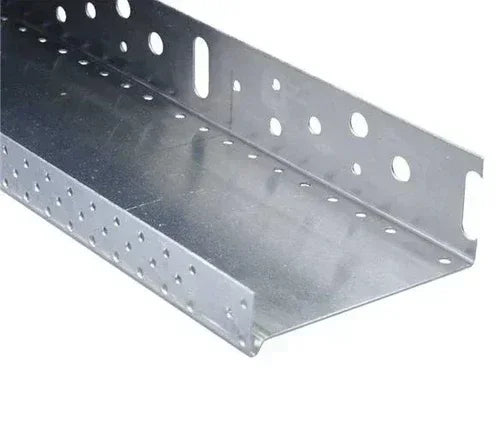
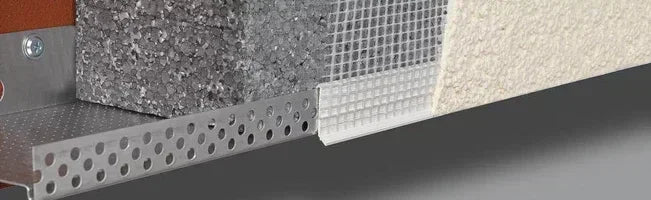
The base track 93mm 2.5m is the aluminium starter profile that sets the bottom line of an insulated wall. Sold in 2.5 m lengths, it is fixed level along the base before the first board is bonded, carries that first course, covers the lower edge of the insulation and sheds rain off the facade through a drip on its front. Renders World stocks it beside the other EWI plugs, fixings and starter tracks.
Where the Base Track 93mm 2.5m Is Used
The maker, PROFIGIPS of Poland, calls this part a plinth profile or starter trim, code AC, and produces each width to suit a given thickness of polystyrene or mineral wool board. The 93 mm width sits one step above the 83 mm track and one below the 103 mm, for walls insulated with a board too thick for the narrower widths.
Typical jobs:
- older solid-wall houses being wrapped in insulation and render;
- new homes finished with an insulated render system;
- terraces where each house is boarded separately but the base line has to run through.
Why Fit the 93 mm Track First
- It decides the line. Every board, bead and window sill above follows the level the track is fixed to, so it goes on before anything else.
- It suits the board. The maker matches the width to the board thickness; with the right width, the first course sits square from the start.
- It sheds water. The aluminium profile has a drip along the front edge, so rain running down the render drops clear of the base.
- It guards the edge. The bottom of the insulation is the part closest to the ground and the most easily damaged; the profile covers it.
- It comes by the carton. PROFIGIPS packs this width 20 lengths to a carton, 50 m of track, and 3,400 lengths to a pallet.
93 mm Base Track Specification
| Property | Value |
|---|---|
| Product | Plinth profile (starter trim), code AC |
| Maker | PROFIGIPS Sp. z o.o., Poland |
| Material | Aluminium |
| Width | 93 mm |
| Length sold | 2.5 m (also made in 2.0 m) |
| Front edge | Drip against rainwater run-off |
| Insulation | Polystyrene (EPS) or mineral wool |
| Carton | 20 lengths (50 m) |
| Pallet | 3,400 lengths |
| Declaration | PN-EN 13658-2:2009 (declaration 01/2023) |
Setting Out the 93 mm Track
Start with a test: push an off-cut of your insulation board into a length of the base track 93mm 2.5m. It should sit in the channel firmly, with no gap behind it and no need to force it. Then set out the run:
- Mark a single level line round the building, taking it round every corner.
- Fix each length to the line with fixings that suit the wall, and keep the front edges straight from one length to the next.
- Push a clip-on profile onto the front of every length. Its drip nose and glass-fibre mesh wing run up the face of the board and are bedded into the base coat; the shop recommends the same number of clip-on profiles as tracks.
Site Notes
Check three things before the first board goes on.
- the base line runs above the damp-proof course, so neither the track nor the boards bridge it;
- the lengths have been stored flat — a bent length will not give a straight line;
- the line closes level after going all the way round the building.
The boards for the first course are on the EPS insulation boards and mineral wool shelves, and the starter track guide for external wall insulation walks through the first day on site.
Two 93 mm Tracks in the Shop
Renders World stocks two tracks of this width:
- the base track 93mm 2.5m described above — the PROFIGIPS AC aluminium profile with a drip;
- the 1 mm gauge 93 mm track, sold by its stated sheet thickness of 1 mm.
Choose the 1 mm track when your specification asks for that sheet thickness; otherwise both do the same job at the base of the wall.
Choosing the Width and Placing the Order
All the tracks are 2.5 m long; only the width changes. Match it to the board at the base.
| Track | Width | Length | Maker's carton |
|---|---|---|---|
| 23 mm base track | 23 mm | 2.5 m | — |
| 33 mm base track | 33 mm | 2.5 m | 20 |
| 53 mm base track | 53 mm | 2.5 m | 20 |
| 83 mm base track | 83 mm | 2.5 m | 20 |
| 93 mm base track (this track) | 93 mm | 2.5 m | 20 |
| 103 mm base track | 103 mm | 2.5 m | 20 |
| 163 mm base track | 163 mm | 2.5 m | 10 |
For the quantity, take the length of wall in metres, divide by 2.5 and round up, then add a length for corners and offcuts. A 22 m house front: 22 ÷ 2.5 = 8.8, so nine lengths plus one spare.
Ordering, Delivery and Collection
- Dispatch: the same day when the tracks are in stock.
- Delivery: the team gets in touch after the order with the most cost-effective option. Parcels up to 25 kg go next day; pallets next day, or within two business days on the economy service. Deliveries are kerbside.
- Collection: from the Renders World counter, Unit 9A, Central Trading Estate, Southampton SO14 5JP — Monday to Friday 7am to 5pm, Saturday 7am to 12pm.
Unused tracks in their original condition can be returned within 14 days; see cancellations and returns. Each length of the base track 93mm 2.5m covers 2.5 m of wall, and a full carton covers 50 m.
FAQ — 93 mm Base Track
Will my boards fit the 93 mm channel?
Test with an off-cut. A board that sits firmly in the base track 93mm 2.5m is the right match; a loose one needs the 83 mm track, and one that will not go in needs the 103 mm.
How many lengths are in a carton?
Twenty lengths, or 50 m of track. You can also buy single lengths.
What is the difference between this track and the 1 mm 93 mm track?
Both are 93 mm wide and 2.5 m long. The 1 mm track is sold by its 1 mm sheet thickness; this one is the PROFIGIPS AC aluminium profile with a drip.
Can I use it with mineral wool?
Yes. PROFIGIPS makes these starter profiles for polystyrene or mineral wool insulation.
Is there a declaration of performance?
Yes: PROFIGIPS national declaration of performance 01/2023, issued under PN-EN 13658-2:2009.
Technical Documentation for the 93 mm Base Track
- PROFIGIPS plinth profile (starter trim) — product page — widths, lengths, cartons and pallets for the AC range.