CORNER BEADS
14 products
Showing 1 - 14 of 14 products
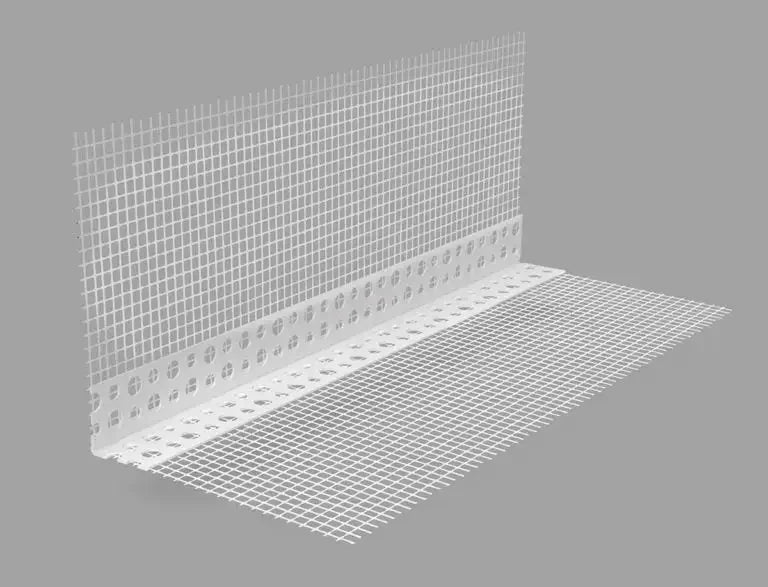
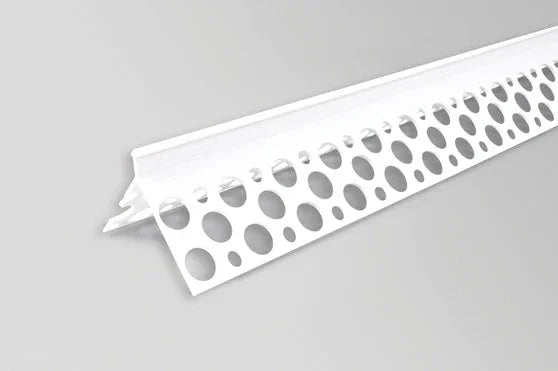
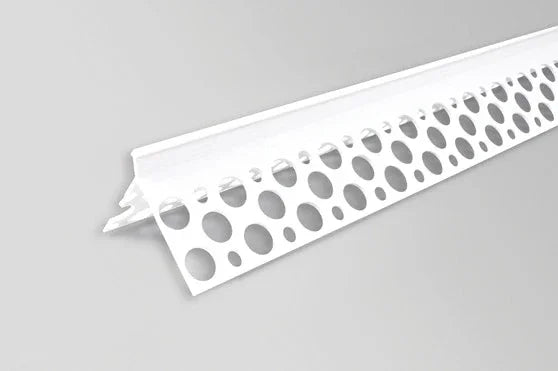
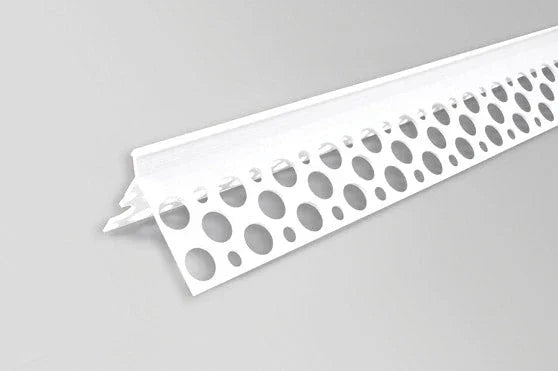
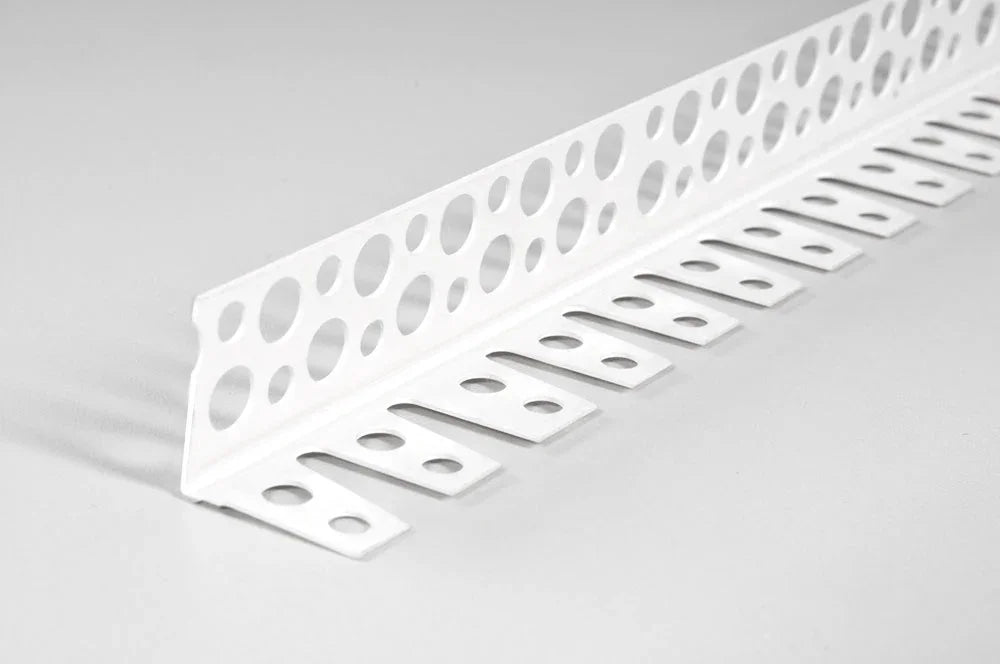
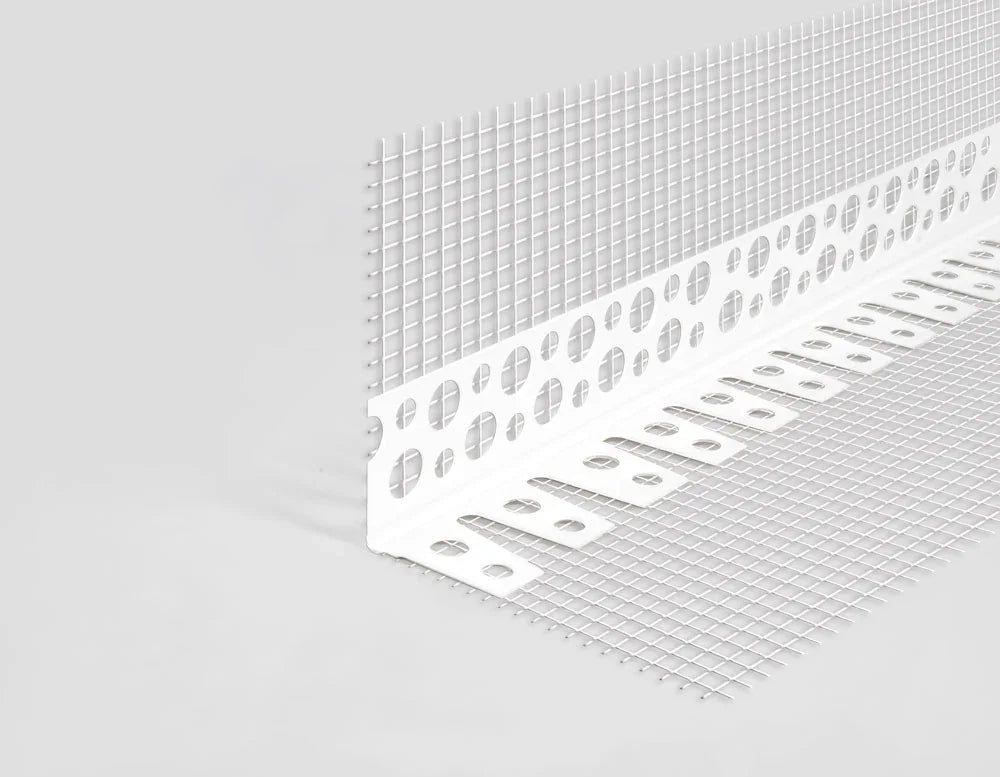
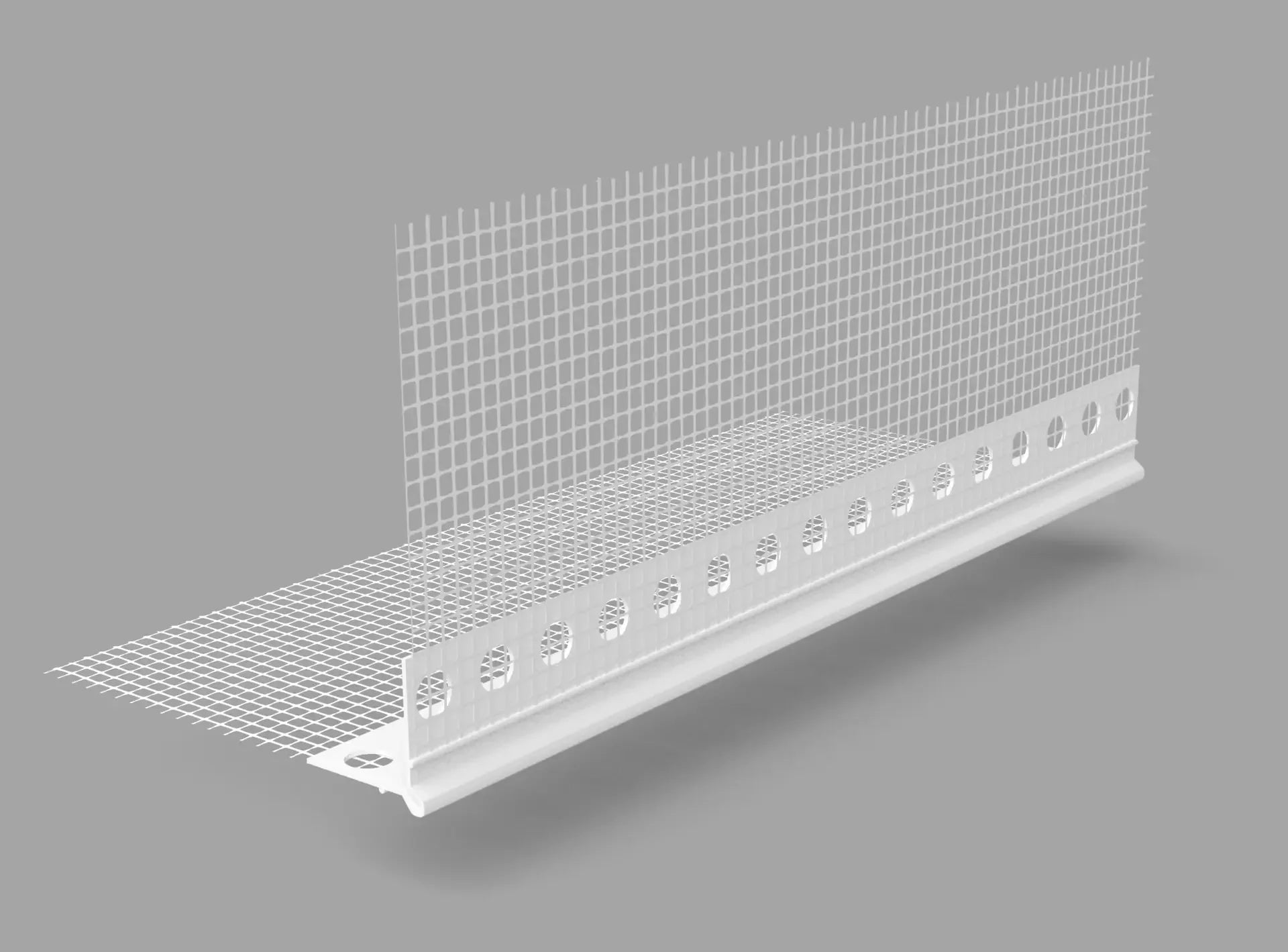
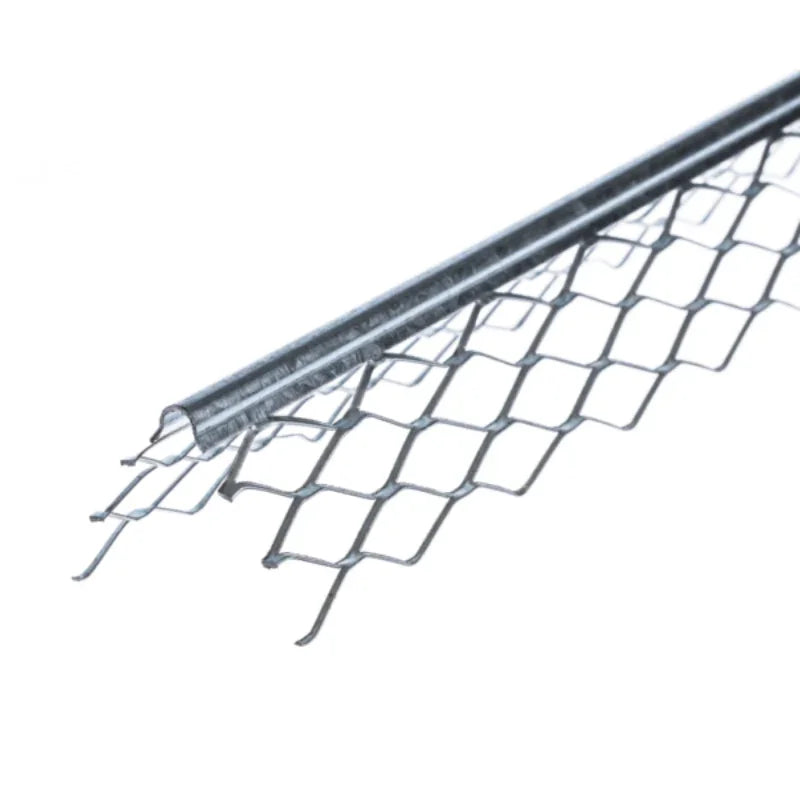
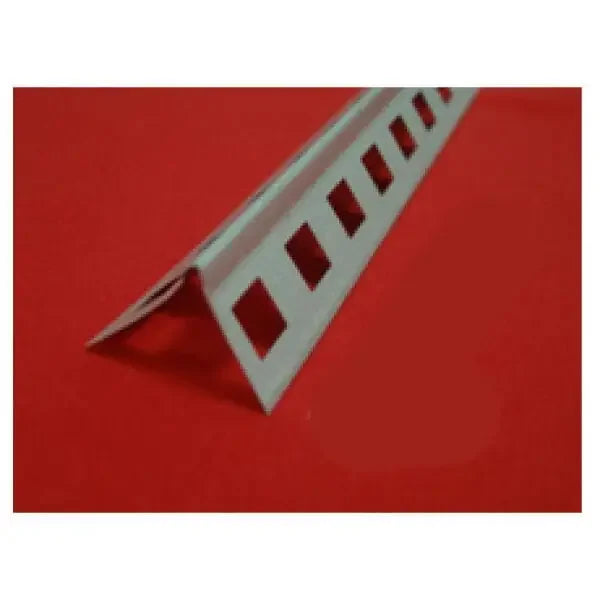
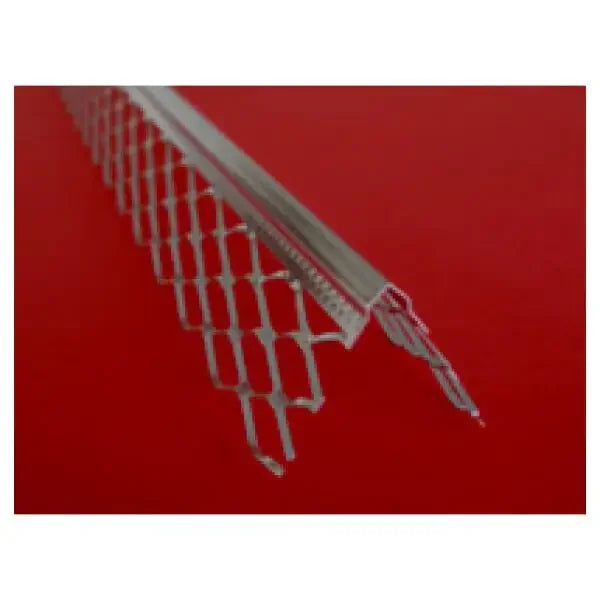
Renders World stocks fourteen render corner bead variants — coextruded PVC with alkali-resistant mesh wings, no-mesh depths from 6 to 15 mm, rigid aluminium, and arched profiles — covering every external angle on UK thin-coat render and EWI facades, matched to render depth, substrate, and exposure.
Where Render Corner Beads Perform Best — UK Corners and Substrates
For UK thin-coat render and external wall insulation work, a render corner bead is the rigid profile embedded into the wet basecoat at every external 90° angle, doing three jobs at once: a depth gauge for uniform basecoat thickness, an impact shield at the arris that takes roughly 80% of a wall's accidental knocks, and — on mesh-wing variants — a reinforcement bridge into the field mesh. This range sits within the wider render beads and mesh hub, so you can match a corner profile to the rest of the detailing set in one pass.
The fourteen profiles cover every external corner condition on a typical UK programme: vertical corners on EWI elevations, curved reveals around arched heads, high-traffic ground-floor commercial faces, and wet-plaster angles where a different material logic applies. Substrates run from EPS and graphite EPS through XPS, mineral wool, and render carrier board. The right corner bead is rarely the cheapest — it's the one matched to render depth and exposure, and the difference shows under raking light within the first season.
Why Trade Specifiers Choose Render Corner Beads
- Permanent impact protection at the arris — hardened PVC and aluminium cores absorb mechanical loads at the most exposed point of every elevation, protecting the finish across a 25-year service life.
- Corrosion-free in alkaline basecoats — PVC stays chemically inert at the high pH cementitious basecoats reach during cure, avoiding the oxide-staining risk that telegraphs through light silicone finishes.
- Factory-bonded alkali-resistant mesh wings — on mesh variants, 100 mm wings tie straight into the field Ceresit CT325 160 g/m² fibreglass mesh, removing on-site mesh-patching at every corner.
- Depth range from 4 mm to 15 mm — profile depths span the full UK render spectrum, from thin-coat silicone over insulation through to traditional sand-and-cement and heavy mineral systems.
- UK-climate-rated, UV-stable formulations — the visible uPVC arris resists embrittlement and discolouration through decades of exterior exposure, including coastal and wind-driven rain zones.
Selection Guide — Find Your Corner Bead in 30 Seconds
Identify your render system or corner condition, read across to the matched profile, and check the standout spec to confirm fit with your basecoat depth and exposure.
| Render System or Corner Condition | Recommended Profile | Standout Spec |
|---|---|---|
| EWI and thin-coat silicone external corners | Corner PVC Bead with Mesh 2.5m | 145 g/m² wings · 2,500 mm · coextruded |
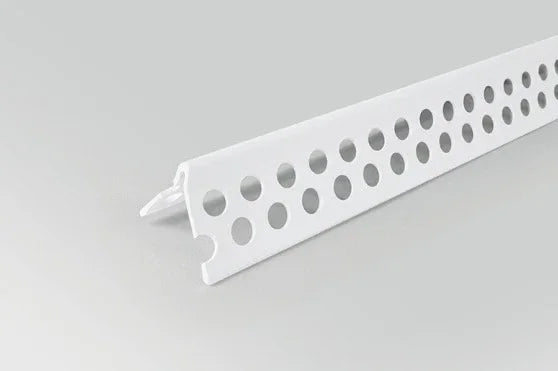
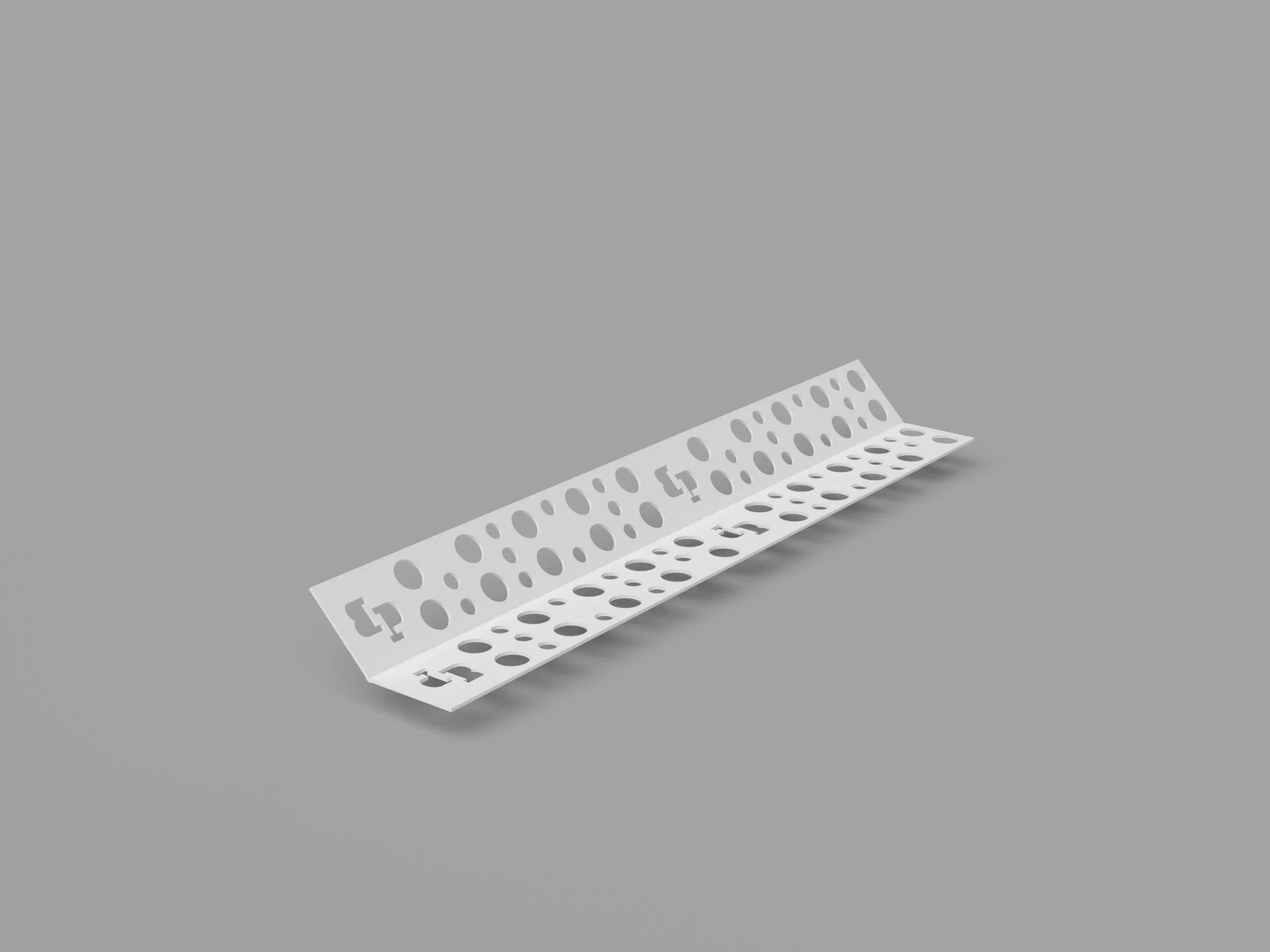
| Medium-coat traditional sand-cement | 6 mm PVC Corner Bead No Mesh | 6 mm · 2.5 m · alkali-resistant |
| Thick-coat EWI, heavy mineral finishes | 10 mm PVC Corner Bead No Mesh | 10 mm · 2.5 m · UV stable |
| Maximum-depth insulated render systems | 15 mm PVC Corner Bead No Mesh | 15 mm · 2.5 m · heavy EWI |
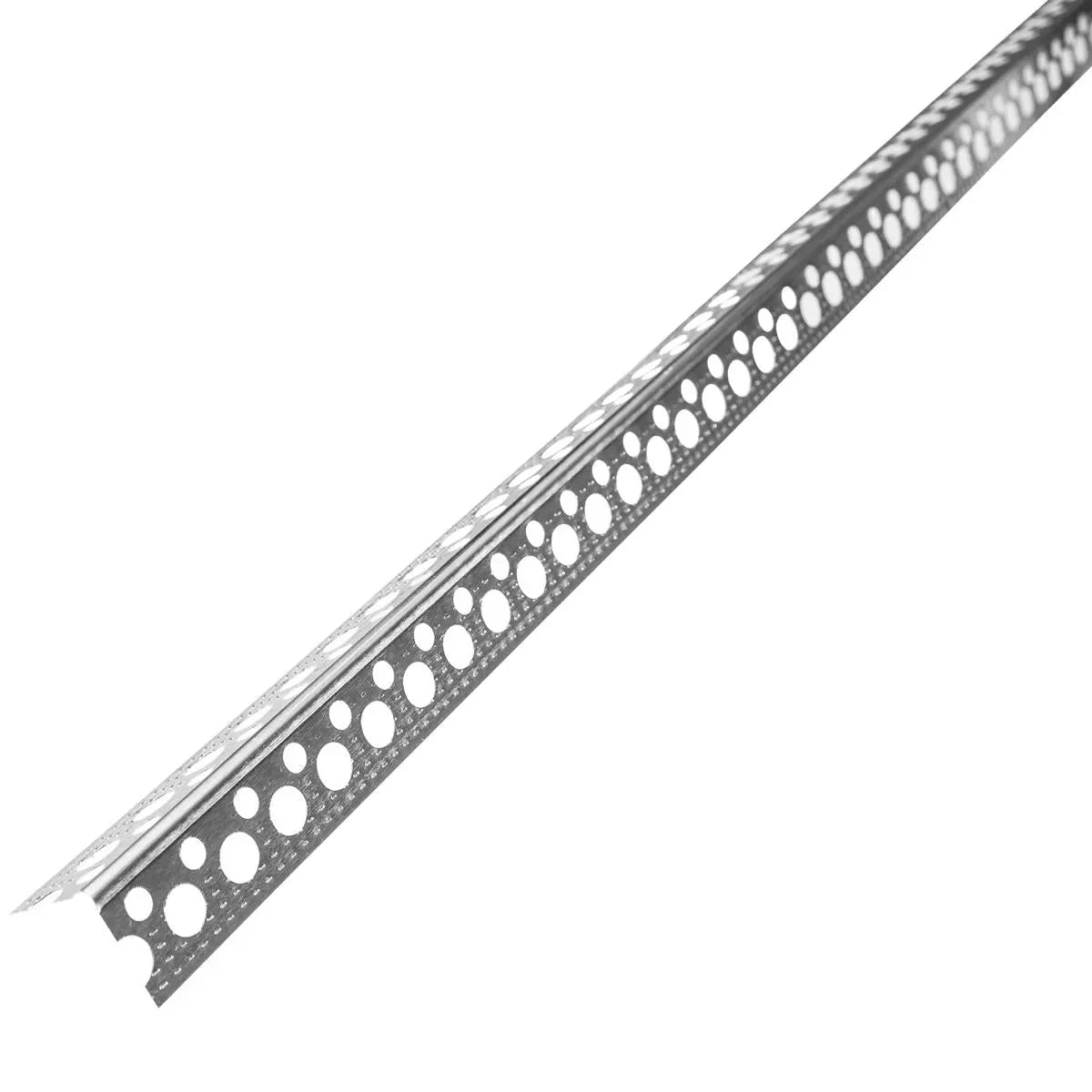
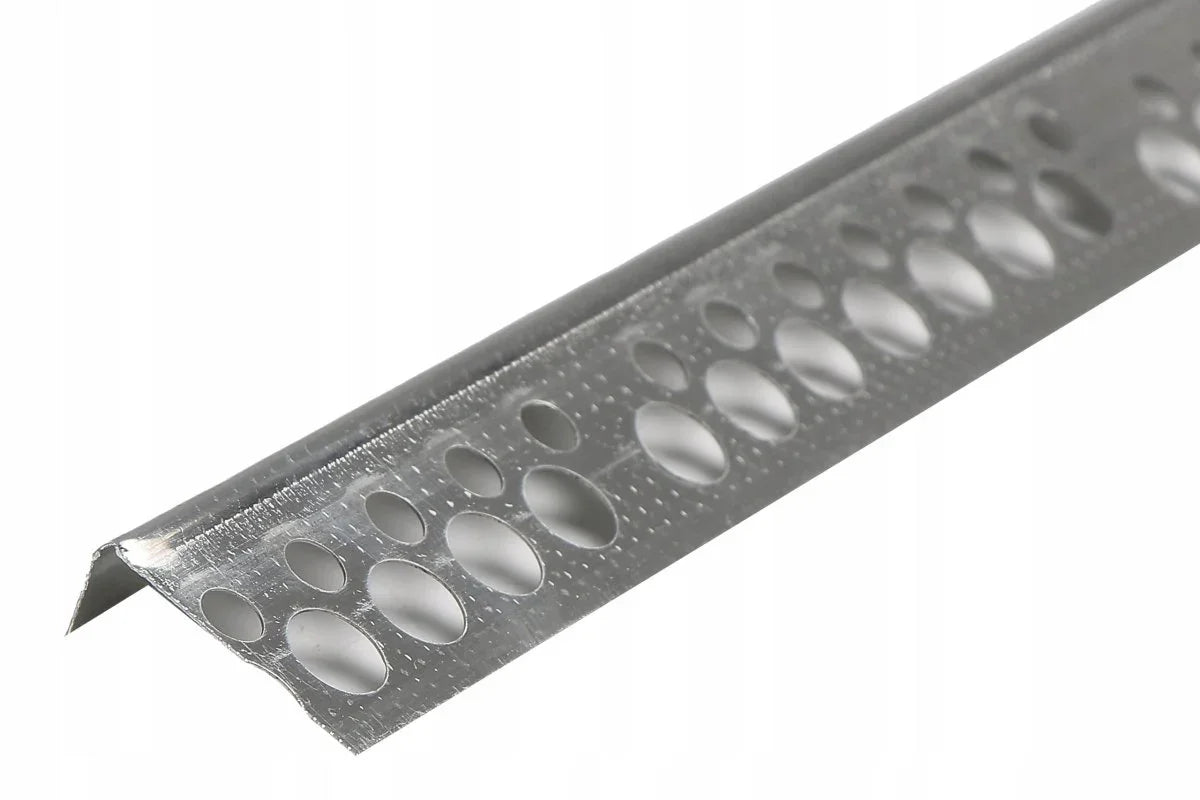
| High-traffic commercial corners and plinths | Aluminium Corner Bead 3.0m | 3,000 mm · rigid · impact-rated |
| Curved window heads and arched openings | PVC Arched Corner with Mesh | Notched spine · mesh wings · 2.5 m |
| Wet plaster and internal sand-cement angles | Wet Plaster Aluminium Corner 3m | Aluminium · 3,000 mm · interior |
For most external silicone or acrylic render over insulation, the PVC corner bead with mesh is the working default. Move up to the no-mesh depths where the build-up exceeds 10 mm, switch to aluminium where ground-floor impact resistance is the priority, and reach for the arched variant whenever the geometry isn't a straight 90° vertical edge.
How to Install Corner Beads — Basecoat, Mesh Layup, Alignment
Corner beads are embedded into a fresh strip of basecoat rather than mechanically fixed, so the basecoat must push through the mesh perforations along the whole length, leaving the wings inside the reinforced layer rather than on top of it.
- Butter the corner — apply a continuous 100 mm-wide basecoat strip down each face of the arris.
- Press the bead in — square the PVC nose to the corner so basecoat squeezes through the mesh perforations.
- Check plumb — confirm verticality every metre with a long level before the basecoat sets.
- Lay field mesh under the wings — tuck the main sheet under the wings with at least 100 mm overlap while wet.
- Reinforce joints — butt cut ends gap-free and bridge each join with a 250 × 250 mm mesh patch.
For the full sequence — adhesive bed depth, mesh layup order, reveal detailing, and trimming technique — our step-by-step corner bead installation guide for UK installers walks through every stage with detail from working sites.
What UK Installers Do Differently With Corner Beads
The habits below come from contractors ordering corner beads across Renders World facade programmes — small differences that separate a smooth basecoat day from a callback two seasons later.
- Pre-cut beads to elevation height on a mitre saw before basecoat day, keeping offcuts for patching around meter boxes and service penetrations.
- Stagger butt joints away from window-head height so the splice sits in a lower-stress zone where the reinforcement layer absorbs movement more effectively.
- Work within the basecoat's 15–20 minute open time, embedding each bead before the adhesive skins.
- Trim with bead-cutting scissors rather than tin snips to avoid crushing the PVC nose and deforming the arris at cut ends.
- Order field mesh and corner beads together so both reinforcement elements come from a chemically matched batch and behave as one composite layer under thermal movement.
Is a Corner Bead Range Right for Your Project?
- Best for: external thin-coat silicone, silicate, mineral, and acrylic render, plus full EWI build-ups on masonry, timber-frame, and cement-board substrates.
- Choose your profile: use the Selection Guide above to route from render system or corner condition straight to the matched product — depth, material, and geometry confirmed in one read.
- For termination edges instead: where render meets a frame, jamb, or transition, see the render stop beads collection for depth-matched profiles in 3, 6, 10, and 15 mm.
- For water run-off at base level: at DPC level and above openings, the bellcast beads collection provides the drip profiles that channel rainwater clear of the plinth zone.
FAQ — Corner Beads Installation, Compatibility, Selection
What is the difference between PVC and aluminium render corner beads?
PVC profiles are chemically inert in the high-pH basecoat and entirely corrosion-proof, making them the default for external rendering and EWI in the UK. Aluminium beads offer greater rigidity and are typically chosen for high-traffic ground-floor commercial facades or internal wet-plaster work where mechanical edge strength is the priority. For most residential and light-commercial EWI, PVC with integrated mesh gives the best balance of installation speed, durability, and weather resistance.
Do I need to add separate mesh if the bead already has mesh wings?
With a PVC corner bead carrying factory-bonded mesh, the wings overlap directly with the main reinforcement layer, so no additional strip is required at the corner itself. The critical detail is a minimum 100 mm overlap between the bead's wings and the adjacent fibreglass sheet, tying the corner into the continuous tensile network. For no-mesh PVC variants, bed a separate strip of alkali-resistant mesh over each wing during the basecoat stage to reach the same continuity.
Which bead depth should I choose for my render system?
Match the bead depth to the designed render build-up. A standard-depth PVC profile suits thin-coat silicone or acrylic; thicker traditional and heavy-coat EWI finishes are best served by the 10 mm or 15 mm no-mesh variants. Choosing the correct depth means the bead nose sits flush with the finished surface, giving a clean edge without packing or shaving on site.
Are these corner beads suitable for coastal or high-exposure UK sites?
All PVC profiles here are designed for full exterior exposure across UK climate zones, including coastal and wind-driven rain environments. PVC does not corrode in salt-laden air, and UV-stabilised formulations resist embrittlement across decades of service. For the highest-exposure commercial elevations, pairing a PVC corner bead with a higher-grammage reinforcement mesh strengthens the corner zone further against combined mechanical and weather loads.
How much do render corner beads cost?
Individual profiles start from around £1.70 for steel corners and rise to about £4.90 for specialist arched PVC beads with mesh, with standard PVC-with-mesh corners sitting near £3.00 per 2.5 m length. A typical three-bedroom semi takes 25–35 linear metres of corner bead, a modest proportion of the overall facade materials budget. Trade-account volume pricing is available — send your bill of materials to the technical desk for project-matched quantities and rates.