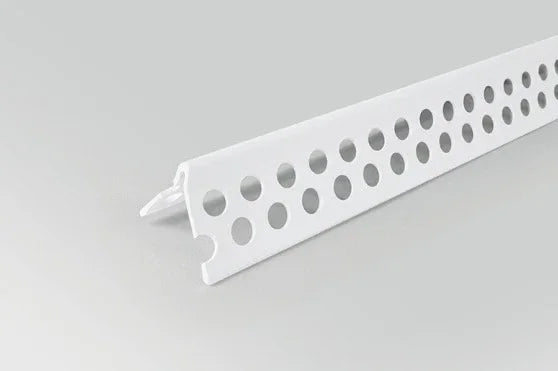
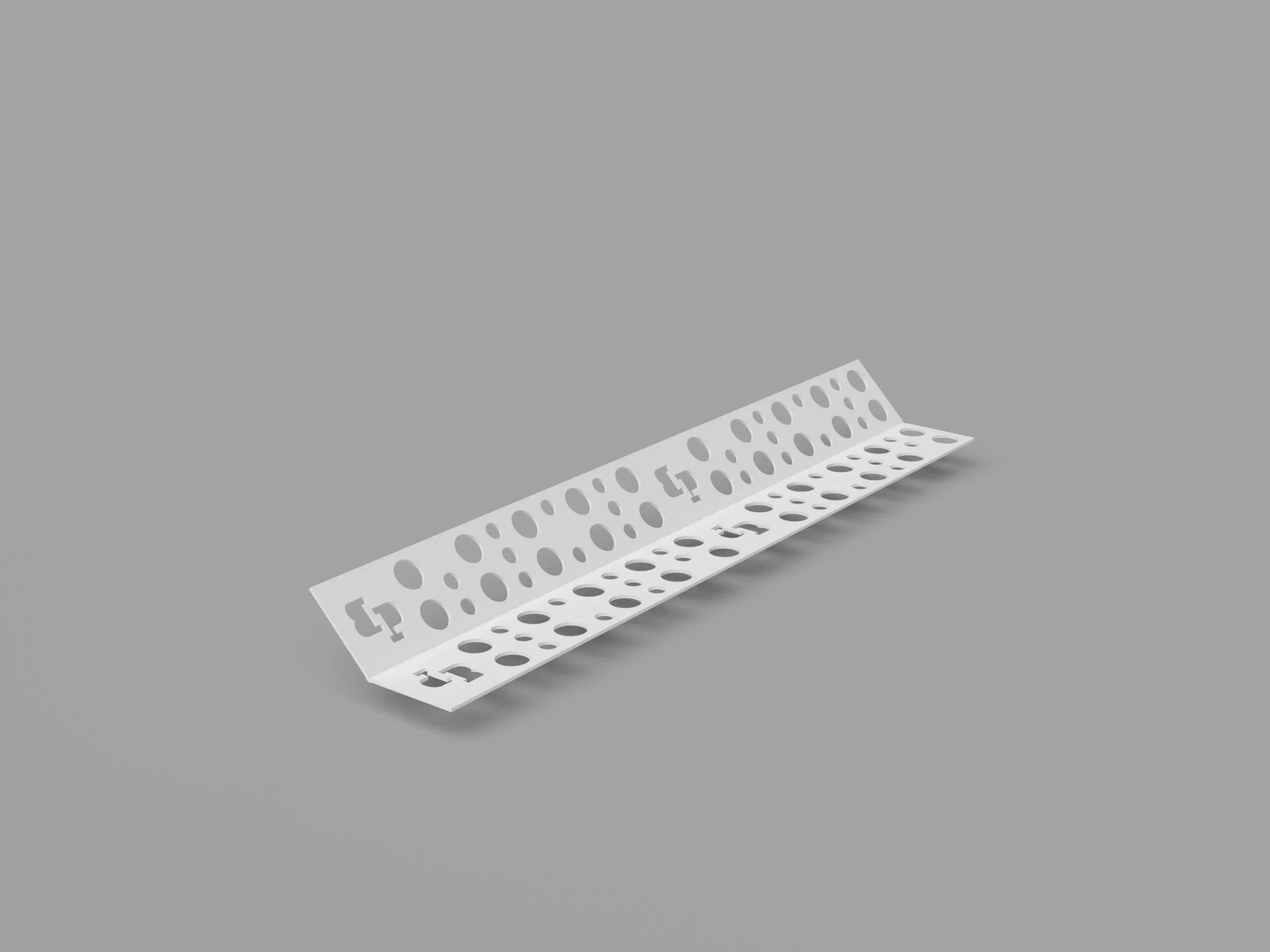
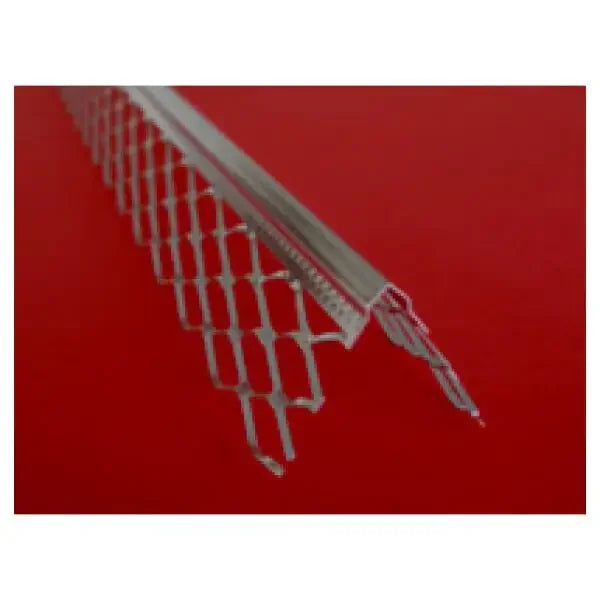
Quick picksMost bought: Corner PVC Render Bead with MeshShort returns and reveals: Atlas 4 mm corner with meshRender stops at a frame, not a corner: a stop bead.
A render corner bead gives every external corner a straight, hard edge for the render to finish against. This range holds corner profiles in PVC, aluminium and steel, and the choice comes down to three questions: does the bead need its own mesh, how deep is the render at the corner, and is the corner straight or curved?
Render Corner Bead Choices by Material and Mesh
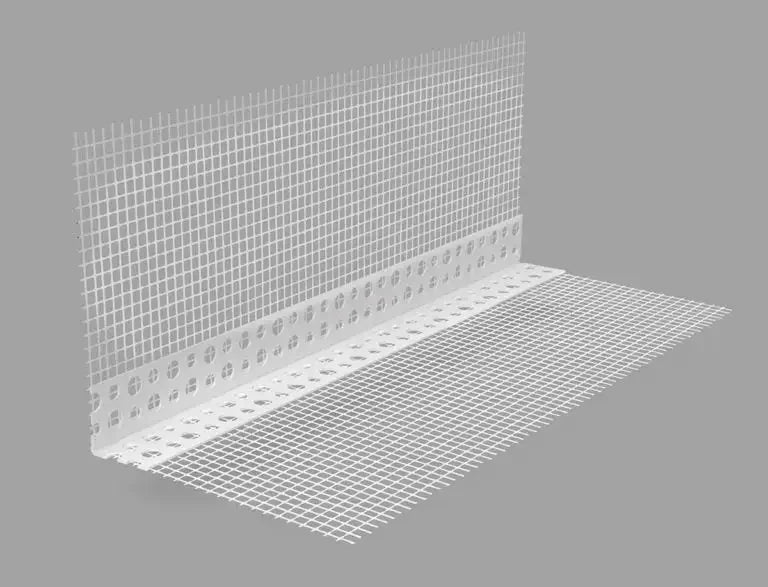
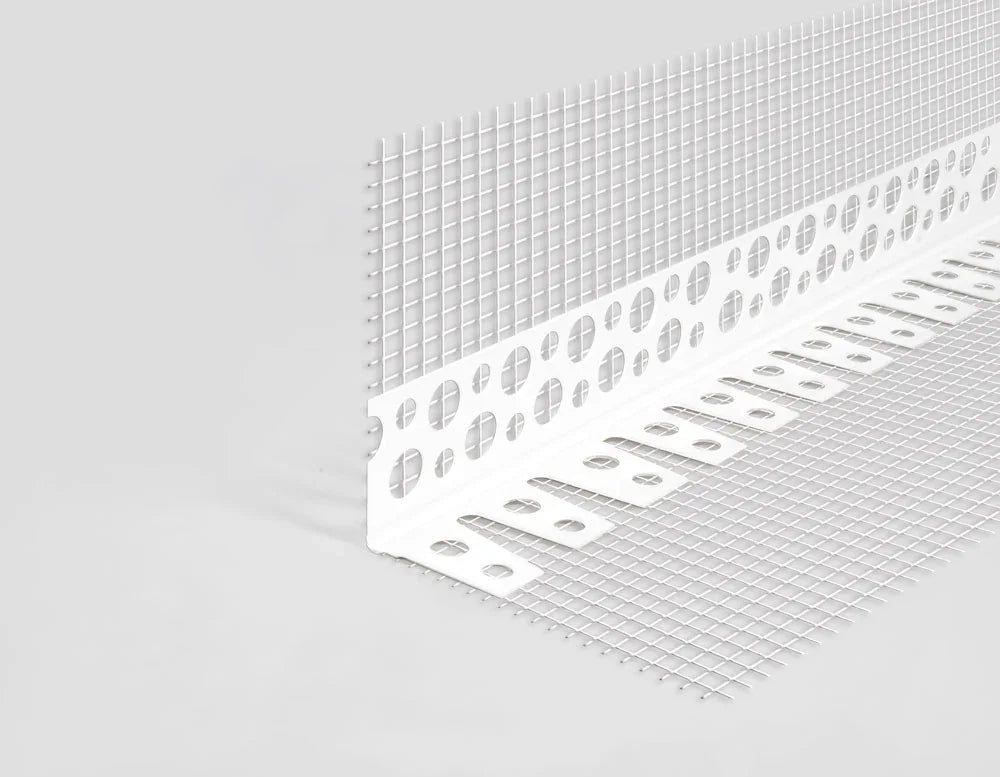
Most of the shelf is PVC, split into beads with mesh wings and beads without. A bead with mesh wings is meant for walls where the render sits on a reinforced basecoat, as it does on external wall insulation: the wings are bedded into that layer, so the corner needs no separate strip of mesh. A bead without wings is set by its nose depth, and on a reinforced wall the field mesh is carried round the corner instead.
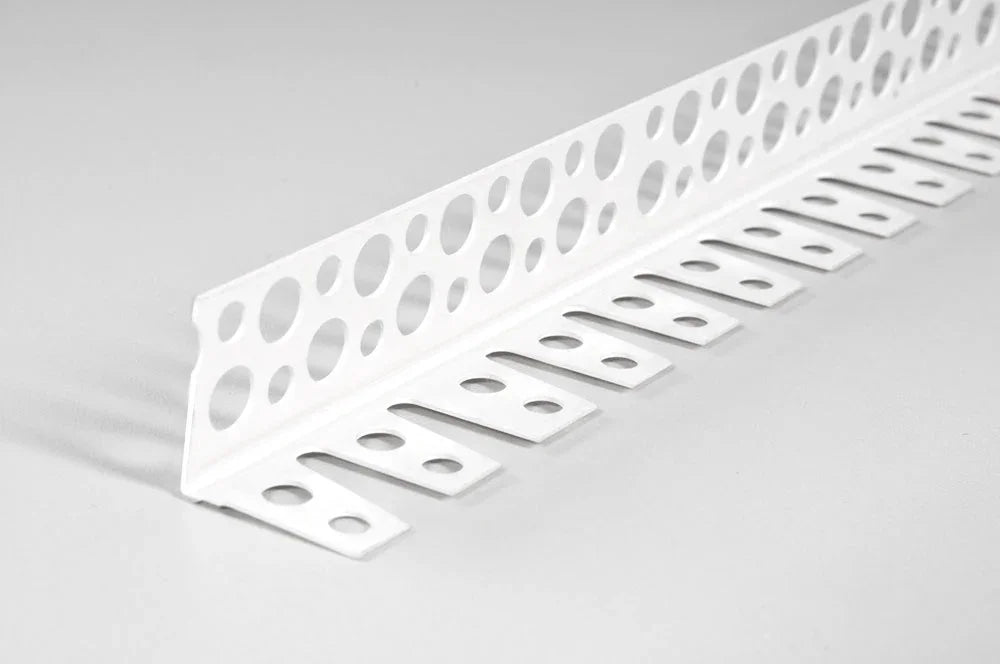
PVC with mesh wings: straight and arched profiles for insulated and thin-coat walls.
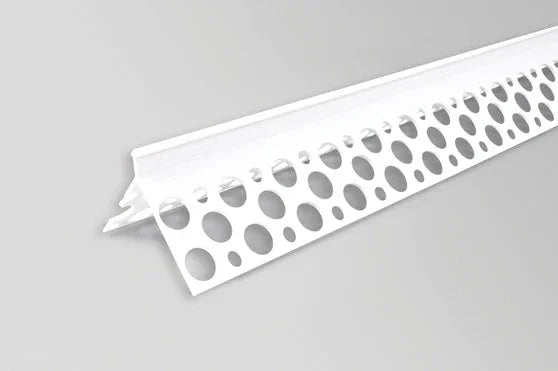
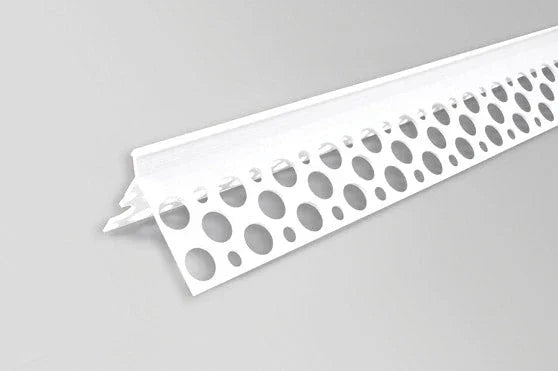
PVC without mesh: 6 mm, 10 mm and 15 mm noses, plus an arched profile, for traditional coats where the depth at the corner decides the bead.
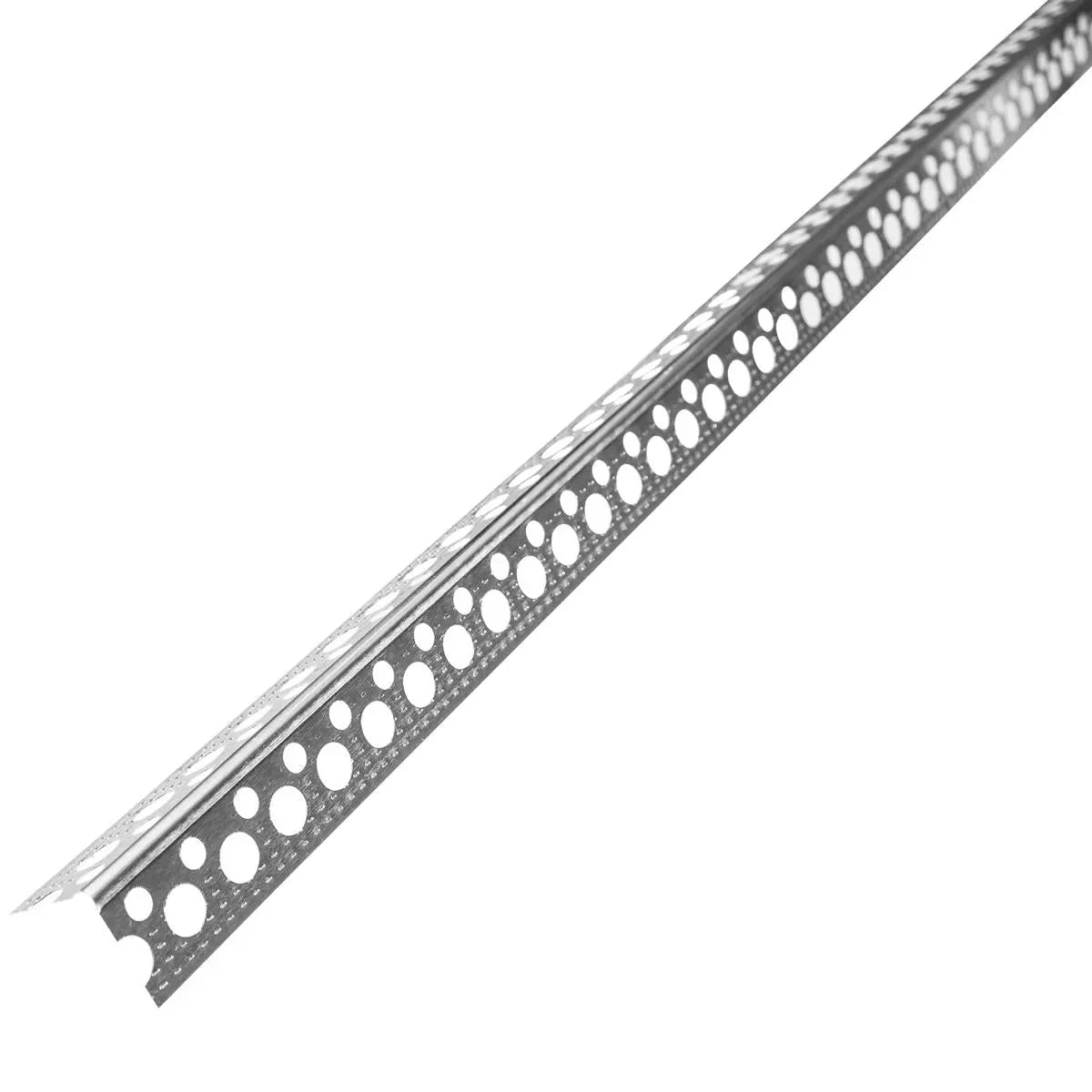
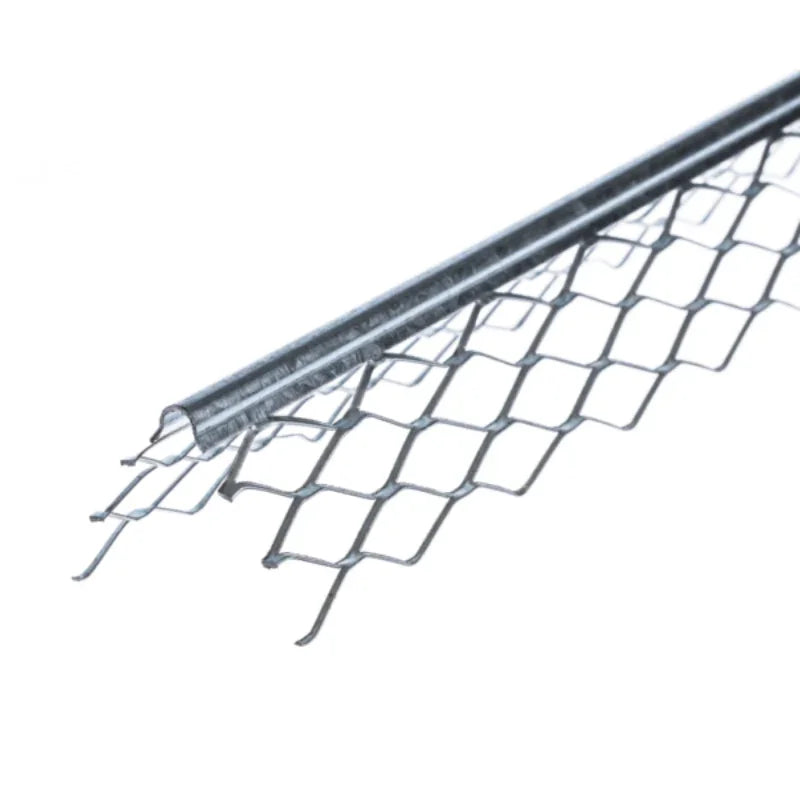
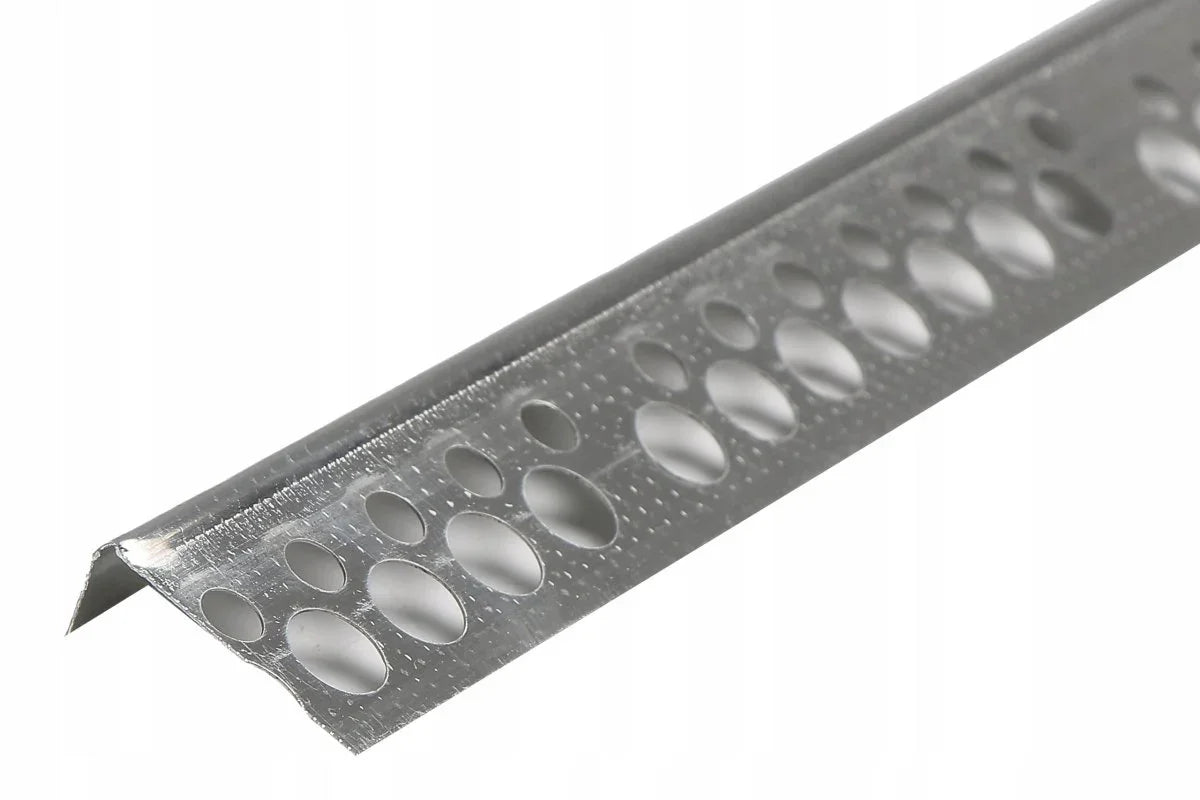
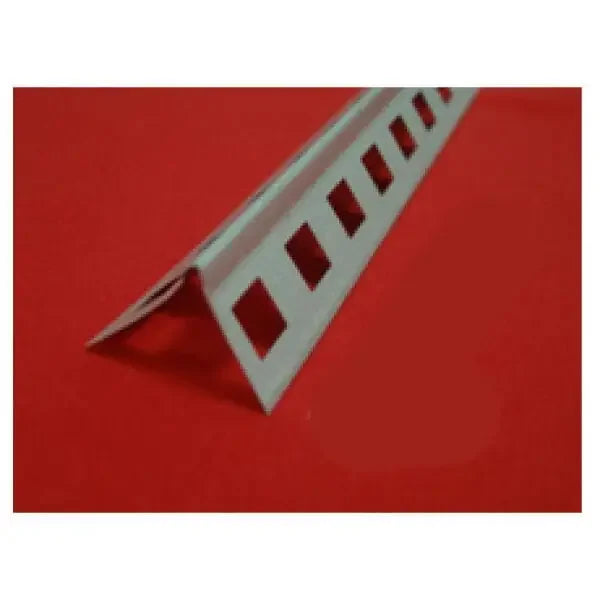
Aluminium and steel: metal profiles, most of them in 3 m lengths, and a steel profile with its own mesh.
Every one of them sits in the render beading profiles range at Renders World, next to the stop and drip profiles that finish the other edges of the same wall.
Why Fit a Bead at Every External Corner
A true line to float to: the bead is set plumb first, and the render is ruled off against it, so the corner comes out straight however uneven the wall behind it.
A set thickness at the arris: the nose depth fixes how much render sits on the corner, which keeps the finish even where it is most visible.
A harder edge: the profile under the render takes the knocks a bare render corner would take on its own.
On insulated walls there is one more reason. A render corner bead with mesh wings ties the arris into the reinforcing layer, so the corner is part of that layer rather than a joint in it.
Pick a Render Corner Bead for Your Wall
Start with the wall build-up, then the shape of the corner, then the depth of render the corner will carry.
The nose depth of a bead without mesh should match the render thickness at the corner. Too shallow and the render stands proud of the nose; too deep and the nose stands proud of the render. Measure the build-up at the corner itself, not the average across the wall.
How to Fit a Corner Bead Before the Render Goes On
Cut the bead to the corner height, keeping the nose straight at the cut.
Bed it on dabs or a thin line of the system's mortar on both faces of the corner.
Press it into line and check it plumb along its full length before the mortar grabs.
On an insulated wall, bed the mesh wings into the basecoat so the field mesh laps over them.
Where two lengths meet, butt them tight with the noses in one line, so the joint does not show as a step in the finished arris.
Let the bead set before the render coats are ruled off against it.
The full sequence, with joints between lengths and the order of work around openings, is in the guide to fitting corner beads step by step. Where a bead without wings is used on a reinforced wall, the field mesh is carried round the corner from a roll such as the Ceresit CT 325 mesh roll.
The Rest of the Corner Profiles on the Shelf
The profiles outside the table fill the gaps it leaves.
The profiles named for plastering need a second look. The wet plaster corner aluminium is for wet plaster and is the one profile here that is not part of a render system, and the PVC plastering corner is a white PVC profile in 2.5 m lengths. Check the job before ordering either for an outside wall.
Corner Bead or Stop Bead: Which the Edge Needs
The render turns a corner: use a corner bead from this range.
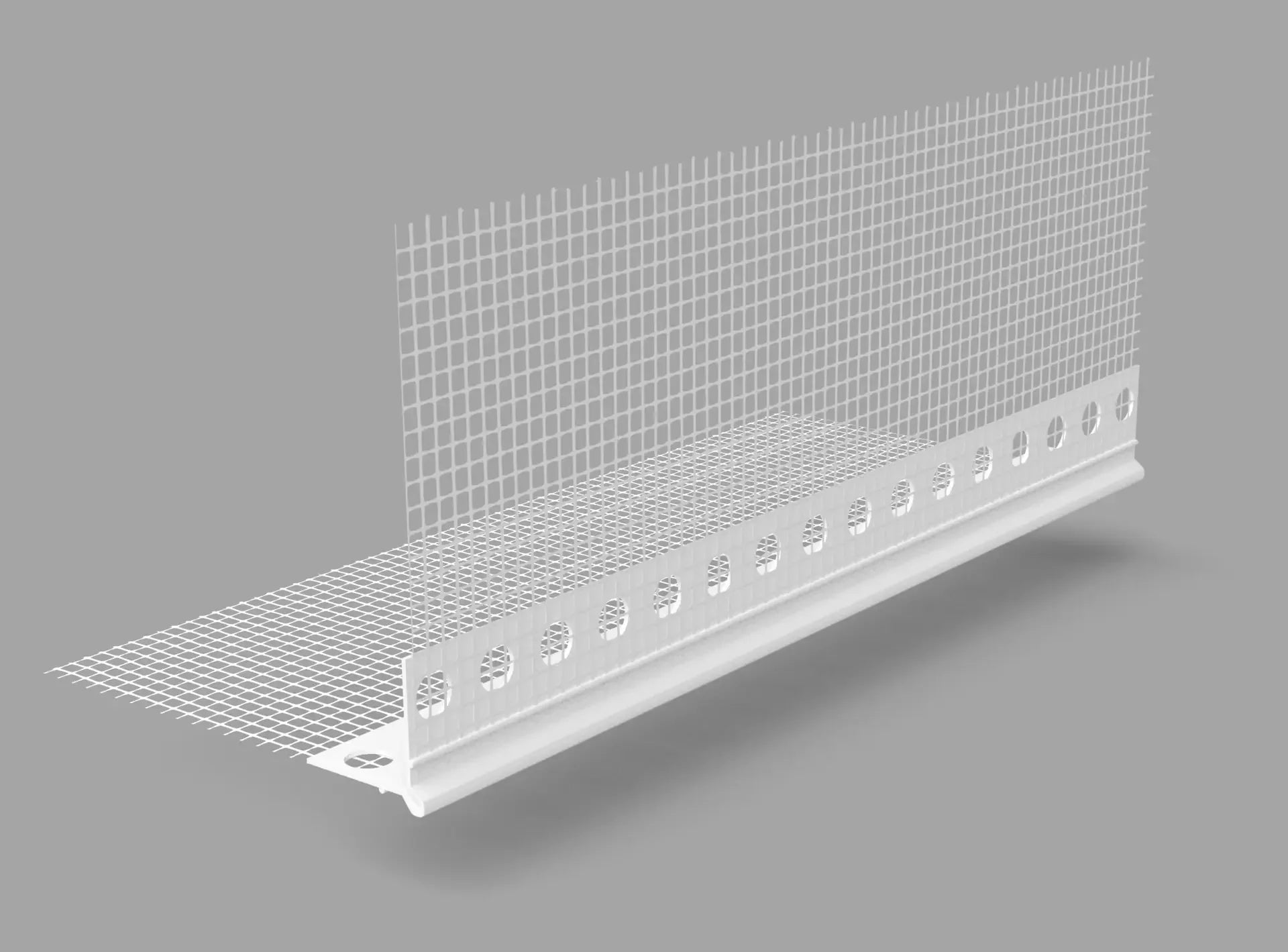
The render stops at a frame, a soffit or another material: use one of the stop beads for flat edges instead.
The render ends above a plinth or a window head: a drip profile from the bellcast range is the one for that edge.
A curved corner is still a corner: choose an arched render corner bead, with or without mesh to match the wall.
Renders World dispatches orders the same day when the stock is there, the team quotes delivery after the order, and every delivery is kerbside. Corner beads can also be collected from the Renders World counter in Southampton during opening hours.
Render Corner Bead Questions
How many lengths does a corner take?
Measure each corner from top to bottom and divide by the length of the bead, rounding up for each corner separately. Offcuts rarely reach another corner in one piece, so counting corner by corner avoids running short.
Does a render corner bead with mesh need extra mesh at the corner?
No separate strip is needed at the arris, because the wings are bedded into the reinforcing layer and the field mesh laps over them. A bead without wings on the same wall needs the field mesh carried round the corner instead.
Can a render corner bead with mesh wings go into a sand and cement coat?
The wings are made to be bedded into a reinforced basecoat. In a traditional coat with no mesh layer, the profiles without mesh wings are the usual choice, picked by the depth of render the corner will carry.
Which bead goes round an arch?
One of the arched render corner bead profiles. Take the version with mesh on an insulated or thin-coat wall and the plain white version in a traditional render.
What if the render is deeper than 15 mm at the corner?
The deepest PVC nose in this range is 15 mm. Where the corner carries more render than that, build out the corner first so the finish coat sits at the depth of the bead.