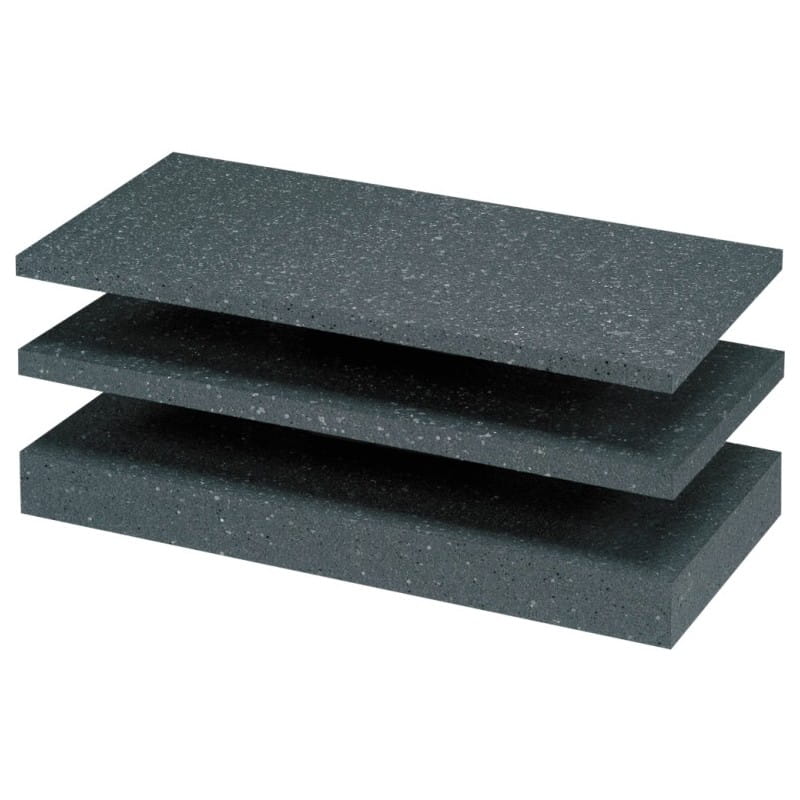
EPS INSULATION BOARDS
11 products
Showing 1 - 11 of 11 products
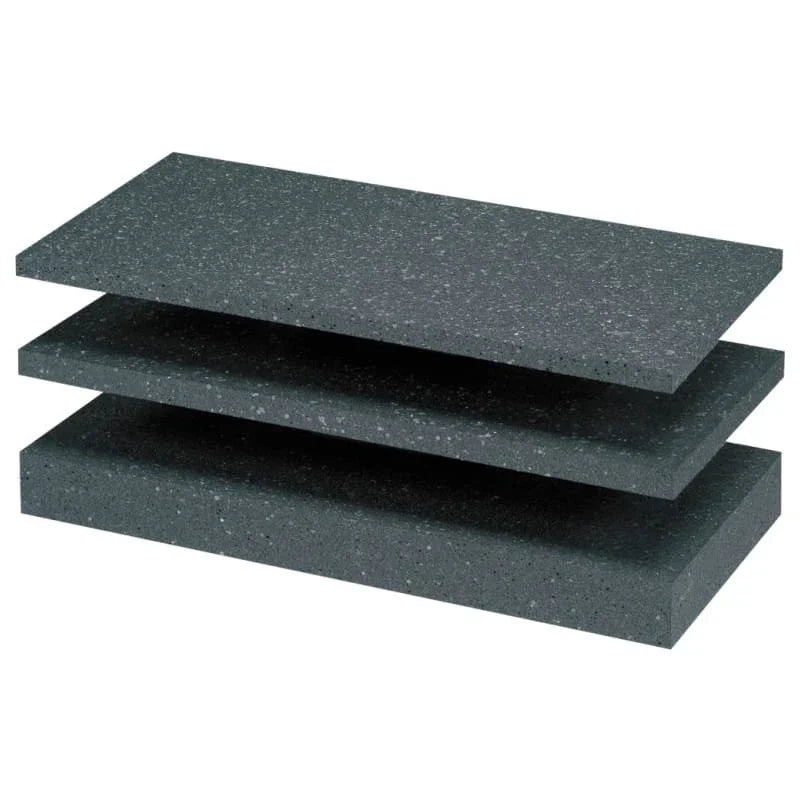
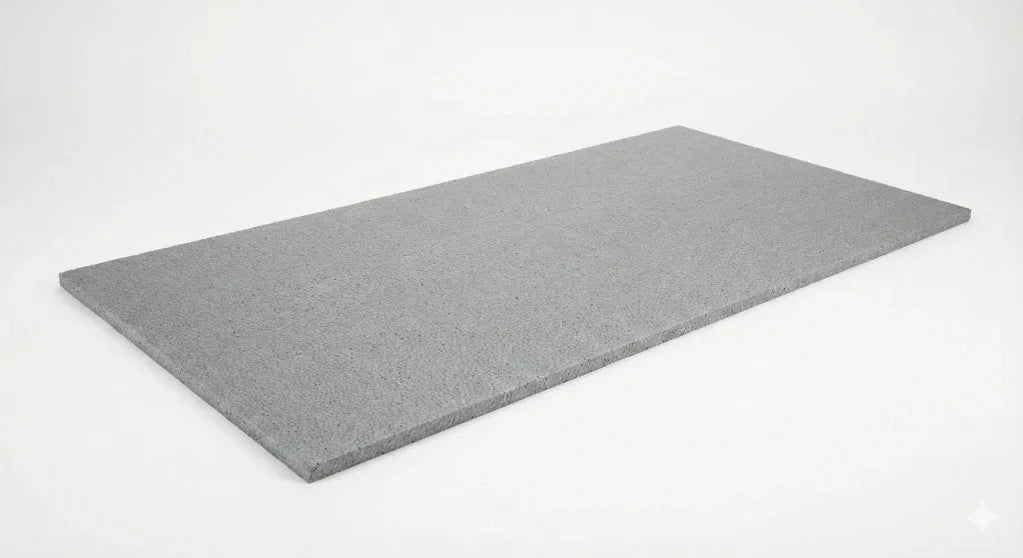
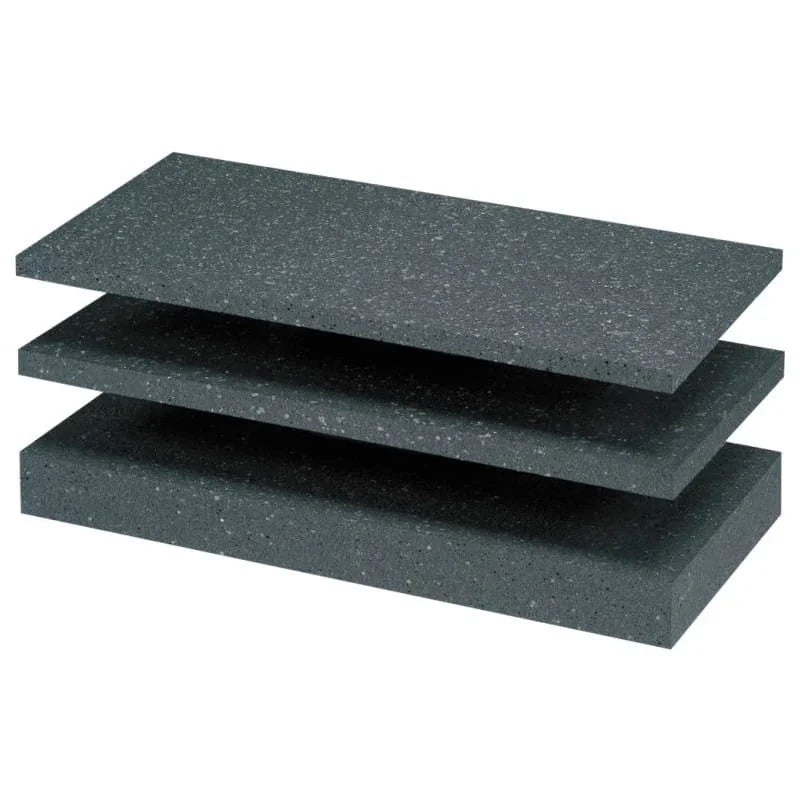
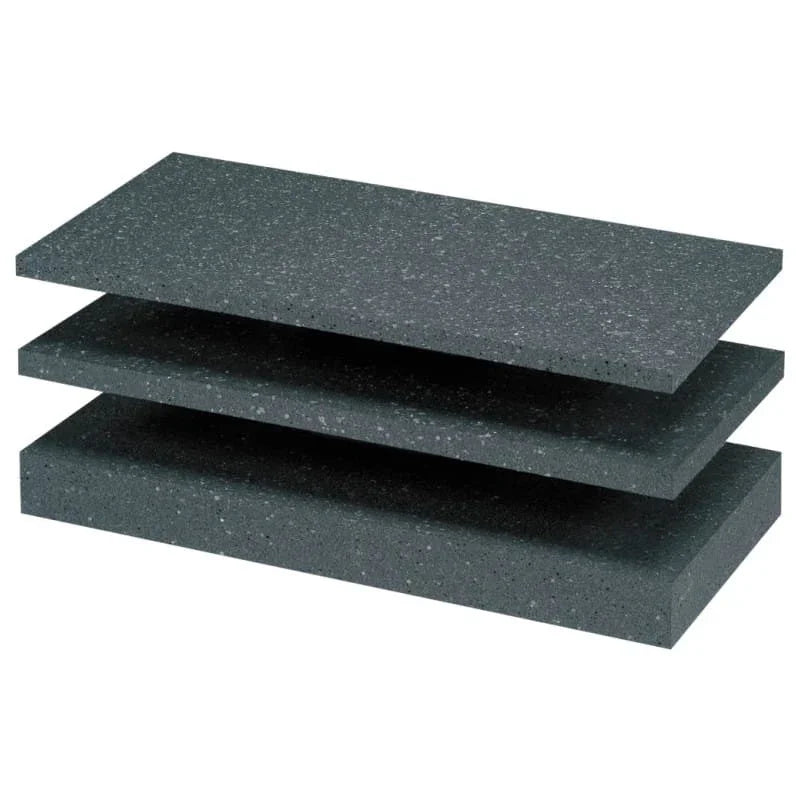
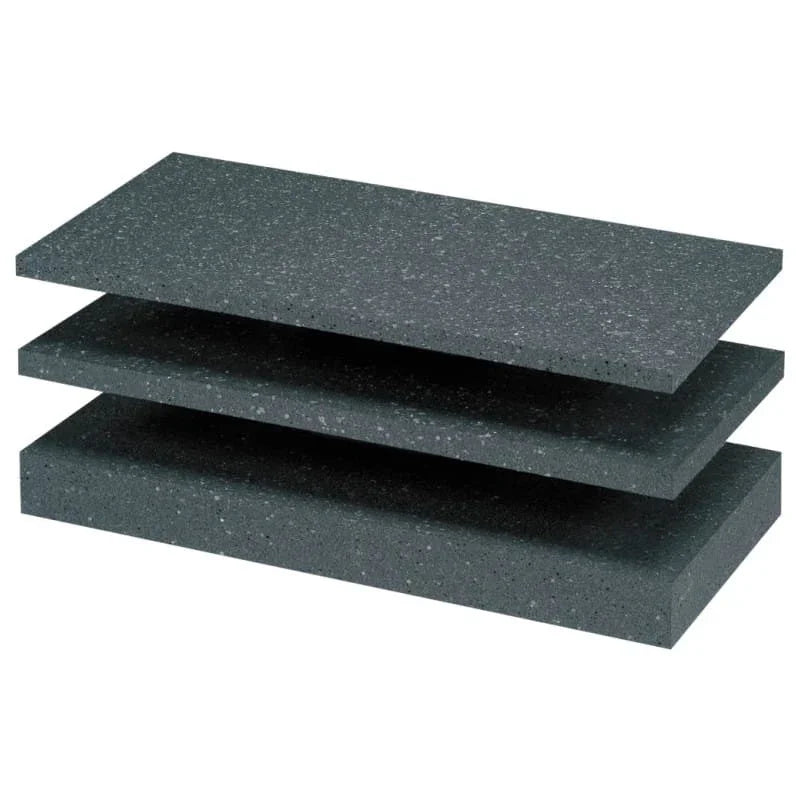
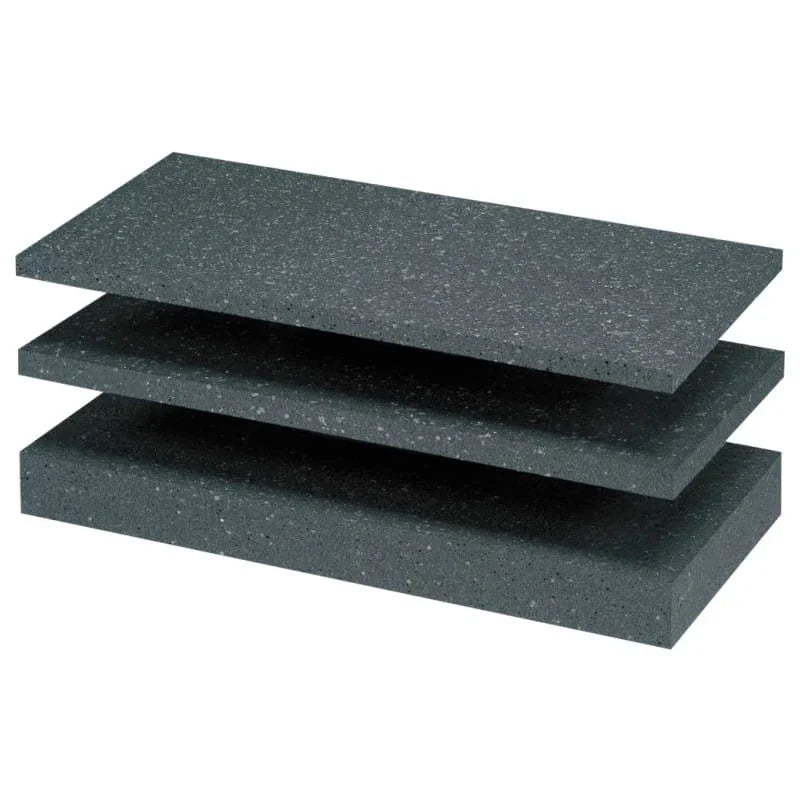
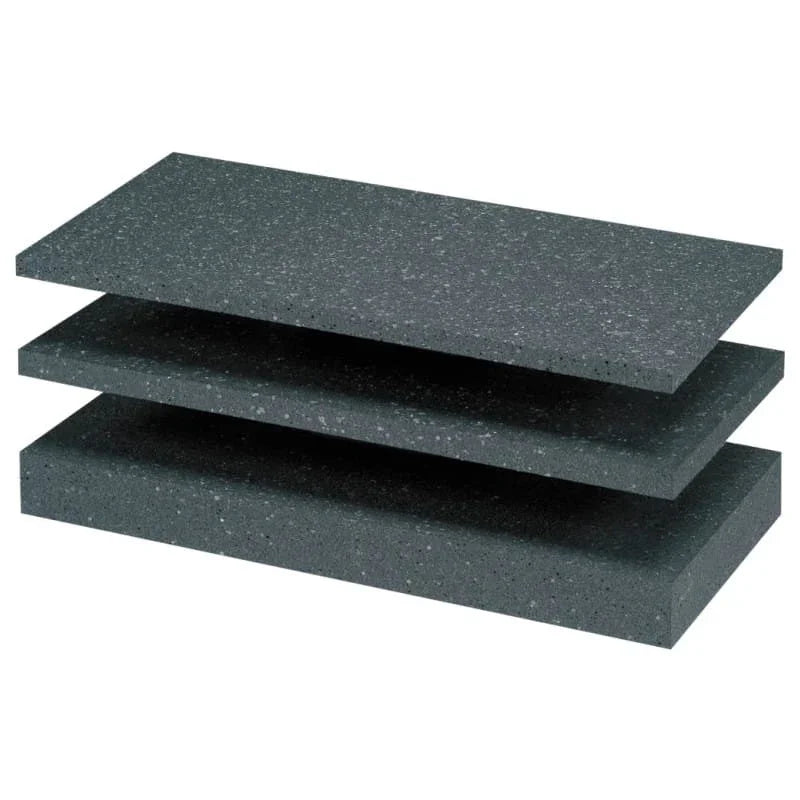
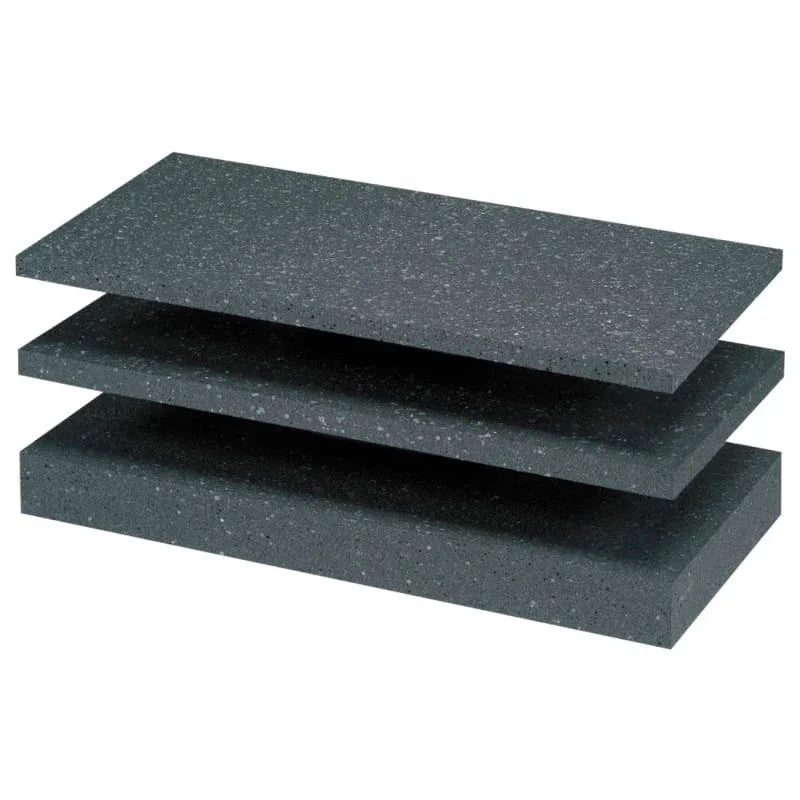
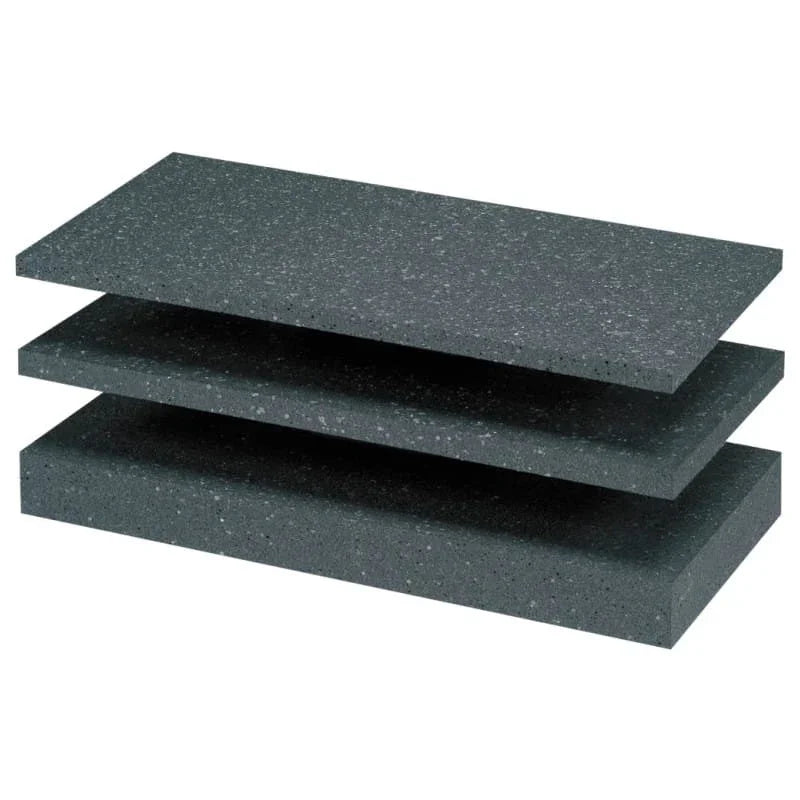
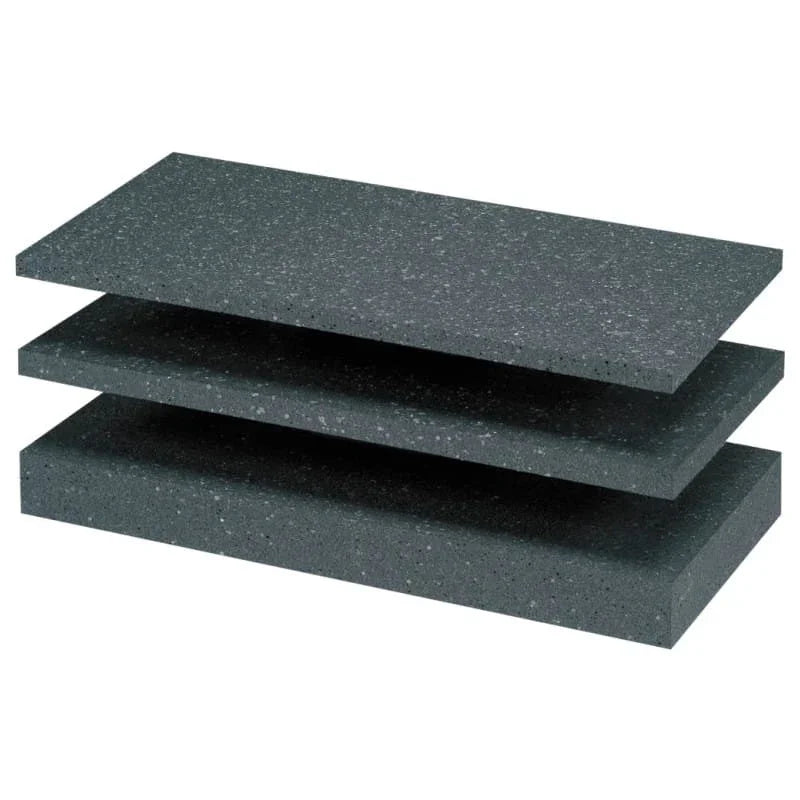
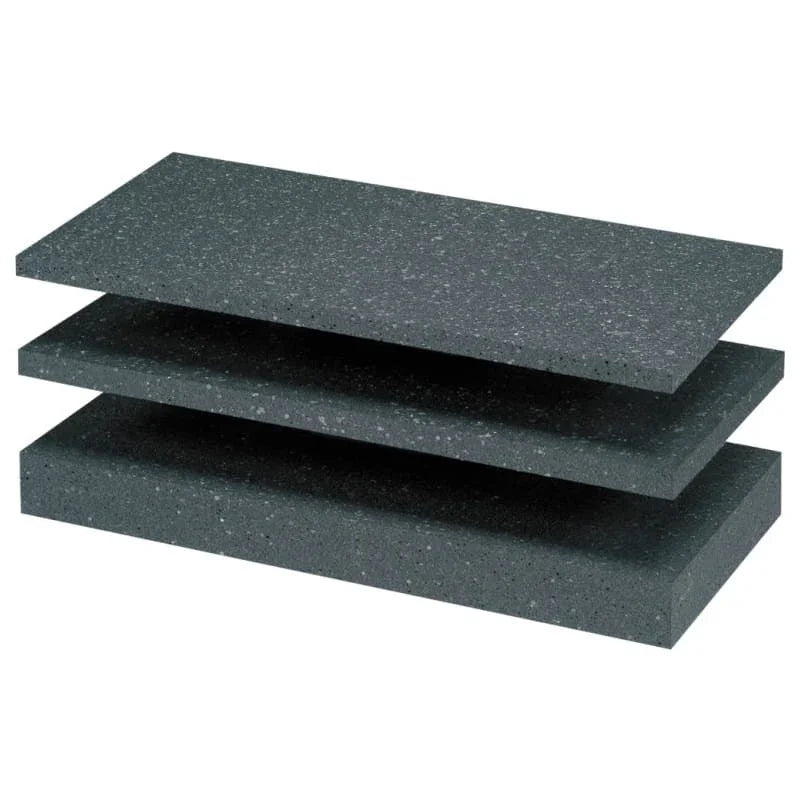
Renders World stocks the full Genderka EPS 031 Fasada Extra Plus range direct from manufacturer — eleven graphite-enhanced thicknesses at λ 0.031 W/mK, all certified to EN 13163:2012+A1:2015 and dispatched from UK warehouse stock with full DoP traceability for Building Control sign-off. Boards cover every facade zone from 10 mm reveal strips through to 200 mm Passive House targets, in standard 1000 × 500 mm panels.
What Graphite EPS Boards Do in a UK EWI System
Graphite EPS sits at the thermal core of an external wall insulation build-up at λ 0.031 W/mK, bonded and mechanically fixed to the substrate before a reinforced basecoat, primer, and decorative thin-coat render close the wall to weather. The graphite additive in the bead matrix reflects infrared radiation back into the foam, dropping the declared lambda from the 0.038 W/mK of standard white EPS to 0.031 W/mK, so a 100 mm graphite board matches the thermal resistance of roughly 125 mm of white EPS. That 25 mm saving on every square metre is what makes the range the default core for UK retrofit work: window-reveal proportions are preserved, oversill modifications drop, and the elevation finishes closer to the original facade line. Browse the full external wall insulation systems range to see how the insulation core sits within the wider envelope build-up.
The eleven thicknesses in the range cover three working bands. Thin boards from 10 mm to 30 mm handle reveal returns, lintel soffits, and thermal-bridge strips where space is the constraint. Mid-range boards from 50 mm to 100 mm cover the bulk of UK domestic retrofit work — semi-detached and terraced solid-wall properties that target a wall U-value in the 0.27–0.35 W/m²K band.
Heavy-duty boards from 150 mm to 200 mm reach Future Homes Standard wall U-value targets in the region of 0.18 W/m²K, subject to project-specific calculation, and into Passive House territory beyond. Every board in the range shares an identical mechanical specification — CS70 compressive, BS100 bending, TR100 tensile — so a single adhesive and fixing schedule covers an elevation that mixes thicknesses across reveals, soffits, and main wall.
Why Trade Specifiers Choose Graphite EPS for UK Walls
- Lambda 0.031 W/mK at the lowest cost per R-value: graphite EPS delivers the highest thermal resistance per millimetre in the volume EWI market, so reaching a target U-value costs less per square metre than the equivalent mineral wool or rigid PIR specification on residential retrofit work.
- One range covers every elevation zone: eleven thicknesses from 10 mm to 200 mm let a single product family handle reveal strips, parapets, lintel soffits, main walls, and deep-renovation zones — simplifying procurement, site logistics, and quality assurance across multi-property programmes.
- Slimmer build-up preserves facade proportions: 25 mm thinner than the equivalent white EPS specification, graphite boards keep window reveals deep, oversills modest, and the finished facade closer to original elevation lines on terraced and semi-detached stock.
- Lightweight handling at every thickness: at approximately 15 kg/m³ density, even a 200 mm board weighs only around 1.5 kg per panel, keeping single-handed positioning practical at scaffold height and reducing handling fatigue across full-day installation programmes.
- Identical mechanical spec across the range: CS70 / BS100 / TR100 on every board means adhesive bonds hold securely and one fixing schedule covers an entire elevation regardless of how many thicknesses appear on the drawing.
- BBA-compatible certification trail: EN 13163:2012+A1:2015 conformity with CE marking and a Declaration of Performance referencing the named Genderka factory of origin supports complete traceability for Building Control, NHBC, and PAS 2035 retrofit audits.
- UK warehouse stockholding: all eleven thicknesses sit in stock for next-working-day dispatch — multi-property retrofit programmes do not stall waiting on a 100 mm pallet from Poland, and the technical desk handles cross-silo compatibility checks before the first board ships.
Selection Guide — Find Your Board Thickness in 30 Seconds
How to use this table: identify the wall U-value your project is targeting, read across to the matching thickness, then click through to the product page for pack pricing, lead time, and full DoP data.
| Project Need | Board (link) | R-Value · U-Value Band · Pack |
|---|---|---|
| Thermal-bridge strips, junction packs | EPS Grafit 10 mm | R 0.30 · backing-pad band · 60 boards/pack |
| Reveal returns, lintel soffits | EPS Grafit 20 mm | R 0.60 · reveal-band · 30 boards/pack |
| Narrow soffits, cost-sensitive overlay | EPS Grafit 30 mm | R 0.95 · entry-band · 20 boards/pack |
| Parapets, depth-constrained walls | EPS Grafit 50 mm | R 1.60 · 0.48–0.52 W/m²K · 12 boards/pack |
| Domestic retrofit — popular spec | EPS Grafit 80 mm | R 2.55 · 0.34–0.37 W/m²K · 7 boards/pack |
| Solid-wall standard target | EPS Grafit 90 mm | R 2.90 · 0.31–0.33 W/m²K · 6 boards/pack |
| Semi-detached standard spec | EPS Grafit 100 mm | R 3.20 · 0.27–0.30 W/m²K · 6 boards/pack |
| Enhanced compliance target | EPS Grafit 150 mm | R 4.80 · 0.19–0.21 W/m²K · 4 boards/pack |
| Deep renovation thickness | EPS Grafit 160 mm | R 5.15 · 0.18–0.19 W/m²K · 3 boards/pack |
| Near Passive House performance | EPS Grafit 180 mm | R 5.80 · 0.16–0.17 W/m²K · 3 boards/pack |
| Passive House / maximum performance | EPS Grafit 200 mm | R 6.45 · 0.14–0.16 W/m²K · 3 boards/pack |
How Graphite EPS Installs in a Render or EWI System
The boards bond to the substrate with a polymer-modified cementitious adhesive or a polyurethane foam adhesive, then take mechanical fixings at a typical density of 6 to 8 plugs per square metre to resist wind uplift across UK exposure zones. After a minimum 24 hours of adhesive cure, plugs are driven through the board into the structural substrate at the correct embedment depth for each thickness, then a reinforced basecoat embeds alkali-resistant fibreglass mesh across the full facade before priming and decorative render application.
- Substrate prep: sound, dry, dust-free masonry; structural defects repaired and surface levelled before adhesive application.
- Adhesive bonding: perimeter-and-dab pattern for cementitious mortars achieving ≥40% adhesive contact area; full-bed for foam adhesives — sourced from the EPS adhesives and basecoats range.
- Mechanical fixing: 6–8 polystyrene plugs per square metre with edge-zone uplift, plug length matched to board thickness from the fixing accessories range.
- Basecoat and mesh: reinforced layer with alkali-resistant fibreglass mesh embedded in fresh basecoat, typically 3–5 mm finished thickness.
- Primer and finish: keying primer followed by thin-coat decorative render, applied within the system manufacturer's compatibility schedule.
For the full installer-level method, including substrate-specific detailing for masonry, timber frame, and steel frame, the EWI system build-up layers guide walks through every layer in the order it goes on the wall. The fixing pattern and spacing guide covers wind-load zone assessment and edge-zone uplifts most installers work to.
What UK Installers Do Differently With Graphite EPS
The handling discipline that separates a fast, clean graphite EPS install from a slow, callback-prone one comes down to four things — most of them routine, none of them obvious from the TDS alone.
- Solar protection from the moment packs arrive: the steel-grey surface absorbs infrared far more readily than white EPS, and a few hours of direct summer sun can soften the outer bead layer enough to weaken the adhesion key. Keep packs under opaque sheeting, fix boards to the wall the same working day they are unwrapped.
- Light rasp before adhesive: graphite boards have a smoother factory skin than white EPS. A quick mechanical key with an EPS rasp brings the adhesive contact area above the 40% Genderka TDS minimum with less effort than chasing it with extra mortar — and saves visible adhesive on tight reveal returns.
- Ground-level cutting station on multi-property runs: a jig set up at scaffold base for the most common reveal and soffit widths, with the entire allocation pre-cut before scaffold-fix starts, lifts on-platform productivity sharply on terraced and semi-detached programmes.
- Board orientation and break joints: long edge horizontal, vertical joints staggered by at least 200 mm between courses, and full boards across openings rather than continuous joints aligned with corners — basic discipline that prevents cracking telegraphing through to the finished render.
Is Graphite EPS Right for Your Project?
- Specify graphite EPS for low-rise residential and commercial retrofit where Euroclass E with approved fire-barrier detailing satisfies the project fire strategy — typically buildings below 18 metres — and where the priority is the best thermal performance per millimetre at the most cost-effective price.
- Use the Selection Guide table above to match thickness to U-value target — 100 mm covers most semi-detached retrofits, 150–160 mm covers enhanced compliance and Future Homes Standard work, 200 mm reaches Passive House territory.
- Switch to Rockwool mineral wool slabs where the project fire strategy requires non-combustible A1-rated insulation, where the substrate is timber frame and full vapour-openness matters, or on taller and higher-risk facades.
- Pair with XPS foundation boards for the plinth zone below the damp-proof course, where compressive strength and zero water absorption sit ahead of headline thermal performance.
- For the side-by-side comparison call that comes up on most fire-sensitive specifications, the graphite EPS vs mineral wool 2026 facade guide sets the two options against each other with current regulatory context.
FAQ — Graphite EPS Installation, Compatibility, and Compliance
What thickness of graphite EPS meets current Part L and Future Homes Standard U-value targets?
Reaching a wall U-value of around 0.18 W/m²K — the band current regulatory guidance points to for Future Homes Standard work — typically requires 150 mm to 160 mm of graphite EPS at λ 0.031 W/mK on a standard 215 mm solid brick wall, subject to project-specific calculation. The 150 mm board delivers R 4.80 m²K/W and brings most brick constructions to approximately 0.19–0.21 W/m²K; 200 mm at R 6.45 m²K/W reaches 0.14–0.16 W/m²K for Passive House targets. The U-value calculation guide covers the full method.
How many mechanical fixings are needed per square metre, and which plug length?
UK practice typically uses 6 to 8 polystyrene plugs per square metre on standard residential elevations, with higher densities at corners, parapets, and exposed edge zones where wind uplift loads concentrate. Plug length matches board thickness — for example, 140 mm plugs for 100 mm boards, 180 mm plugs for 150 mm boards, 220 mm plugs for 160–180 mm boards, allowing for adhesive bed and minimum embedment in the structural substrate. The exact pattern is set by the system designer using the wind-load calculation for the building's location and height.
What is the practical difference between graphite EPS and standard white EPS?
Graphite particles in the bead matrix reflect infrared radiation back into the foam, dropping declared lambda from approximately 0.038 W/mK on white EPS to 0.031 W/mK on graphite. The practical effect is a thinner board for the same R-value — 100 mm graphite matches roughly 125 mm of white EPS — which preserves window-reveal proportions, reduces oversill modifications, and finishes closer to the original facade line. Mechanical properties (CS70 / BS100 / TR100) and the fixing schedule are identical between the two.
What fire-classification rules apply to graphite EPS in the UK?
Graphite EPS carries a Euroclass E classification and is typically suitable for residential buildings below 18 metres where the project fire strategy permits Euroclass E with approved fire-barrier detailing, in accordance with current Approved Document B guidance. For taller or higher-risk facades where the fire strategy requires non-combustible A1-rated insulation, mineral wool replaces EPS at the same thickness band. Confirming the classification with the designer and Building Control at design stage avoids costly substitutions once boards are on site.
How does graphite EPS perform environmentally over its service life?
The primary environmental benefit is operational: upgrading a typical semi-detached property from an original wall U-value of 2.1 W/m²K to approximately 0.27 W/m²K with 100 mm of graphite EPS reduces annual heating energy demand by an estimated 5,500–7,000 kWh, with embodied energy of manufacture typically paid back within the first two heating seasons. Off-cuts generated on site are recyclable through specialist polystyrene recovery programmes — the graphite additive does not affect recyclability — so site waste returns to the manufacturing stream rather than landfill.
Which UK substrates does graphite EPS bond reliably to?
The boards bond securely to solid brickwork, blockwork, concrete, timber frame with sheathing, and steel-frame substrates, provided the surface is structurally sound, dry, and free from loose material or contamination. On timber-frame constructions, breather membrane and vapour-management detailing maintain the vapour-open principle that keeps the wall assembly performing as designed — the dew-point and condensation risk check sits behind PAS 2035 retrofit sign-off and is something the Renders World technical desk routinely runs on retrofit specifications before dispatch.
How many packs do I order for a typical semi-detached retrofit?
A typical three-bedroom semi-detached property carries roughly 80 m² of exposed wall area after deducting windows and doors, which works out at approximately 27 to 30 packs of 100 mm boards including 5–10% for cutting waste around reveals, soffits, and service penetrations. Each product page in the Selection Guide table above shows exact pack coverage, so a precise materials list against a surveyed area is straightforward to build — the technical desk can sense-check pack quantities and cross-silo component counts before dispatch.