EPS ADHESIVES & BASECOATS
8 products
Showing 1 - 8 of 8 products
Eight mortars and foams cover the two structural stages of an external wall insulation build-up: bonding the boards, then reinforcing them with mesh. Atlas and Ceresit publish both stages against the same 25 kg bag, and once the two consumption figures are added together, a wall area converts straight into a delivery note.
What EPS Adhesives and Basecoats Do on a UK Facade
EPS adhesives and basecoats carry two structural jobs on one wall: bonding boards at 4.0–5.0 kg/m² and embedding mesh at 3.0–3.5 kg/m², the rates Atlas publishes for Hoter U in its English adhesives compendium. Both rates are quoted for polystyrene, and wool sits higher.
Part of the Renders World thin coat render systems, the eight products here fall into three groups, and the group shapes the working week more than the brand does.
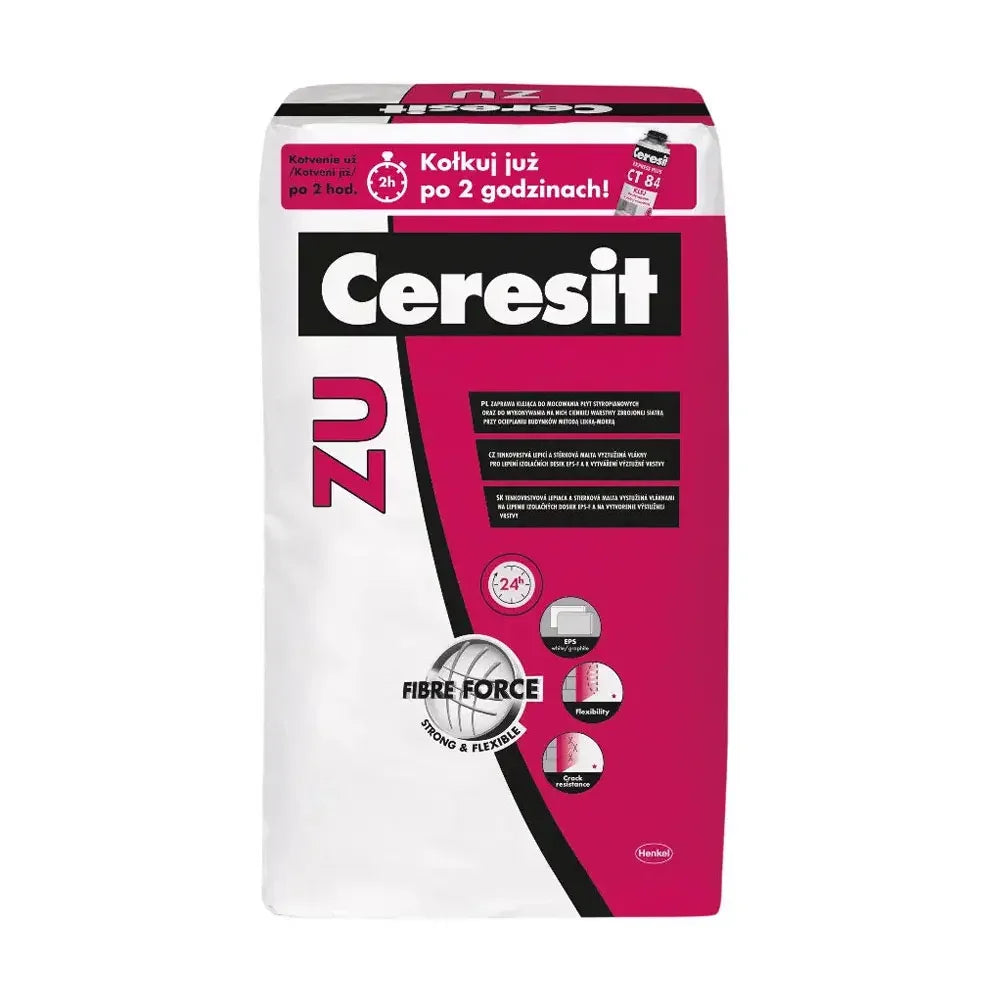
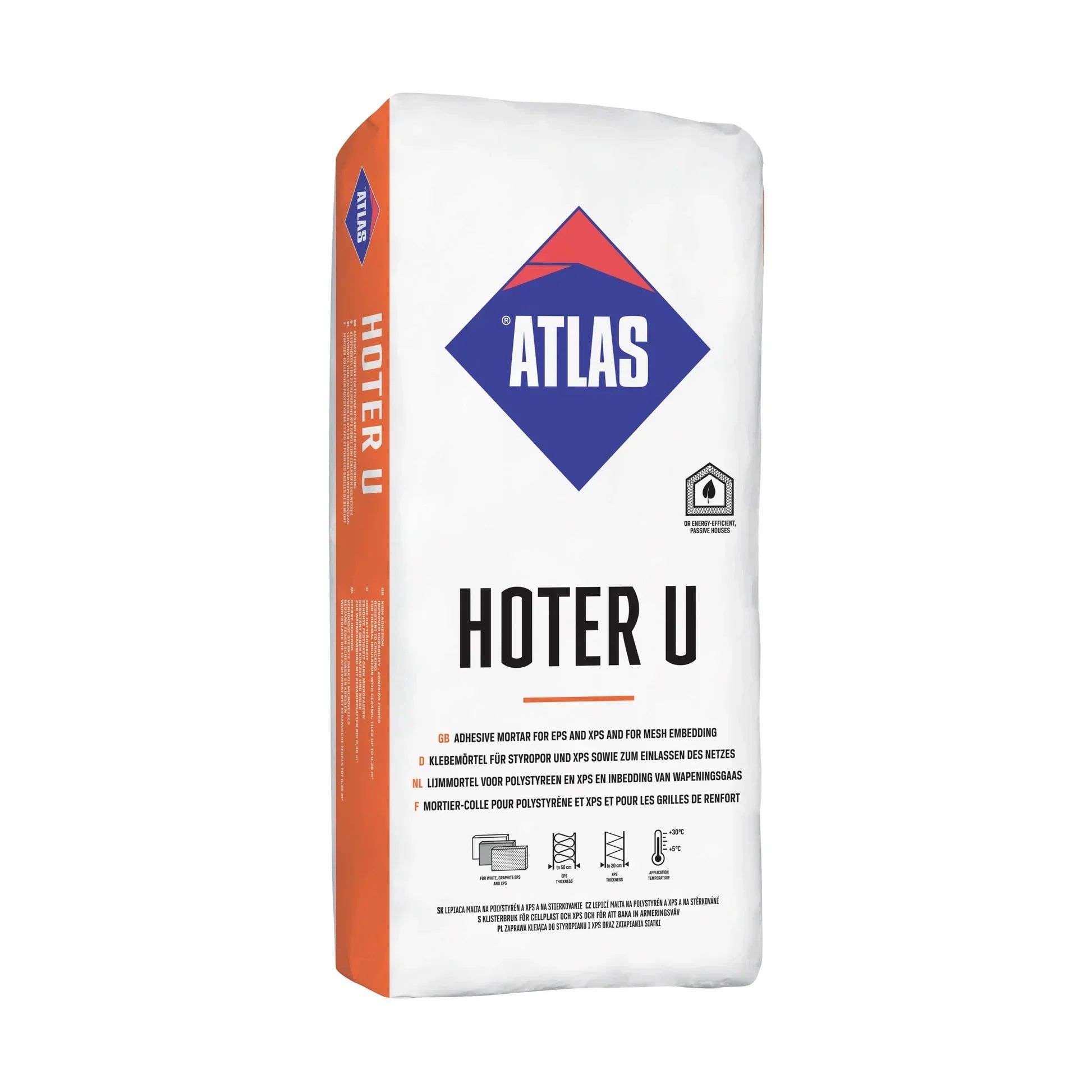
- Cement 2-in-1 mortars — Atlas Hoter U grey and white, Ceresit ZU and Atlas Roker U bond boards and form the reinforced layer from one bag.
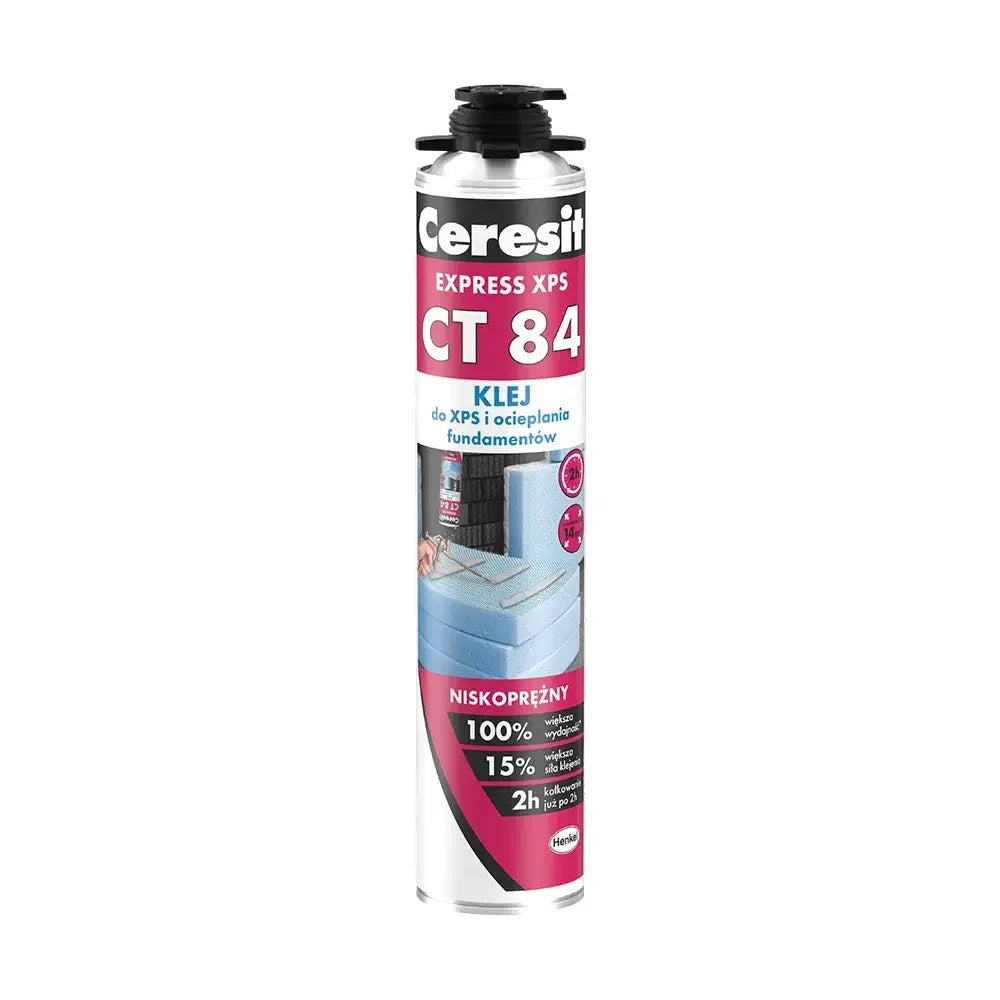
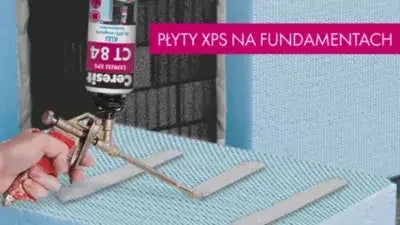
- Polyurethane foam — Ceresit CT84 bonds boards; the Henkel sheet then routes the reinforced layer back to a cement mortar.
- Preparation mortars — Atlas One Coat Dash Cover and ZW330 bring a wall flat and sound before any board goes on it.
Why Specifiers Choose a 2-in-1 Mortar Over Two Products
One bag doing two jobs is the commercial argument; the technical file is what carries a specification through sign-off, and the published figures differ enough here to make the choice a real one.
- Bond figures on record: Atlas declares min. 0.25 MPa to concrete and min. 0.08 MPa to polystyrene for Hoter U, and Ceresit ZU is stated to ETAG 004 at ≥0.25 MPa to concrete with ≥5.5 N/mm² flexural resistance to EN 1015-11.
- A working window you can plan around: Hoter U holds a pot life of about four hours against up to 90 minutes for Ceresit ZU, so batch size follows the mortar rather than habit.
- Cold-season cover: the Ceresit CT 84 Express STD sheet gives an application range of 0 °C to +40 °C and hardening in roughly two hours, which keeps a shoulder-season programme moving.
- One bag across mixed boards: Atlas scopes Roker U to mineral wool up to 30 cm and EPS up to 50 cm within ETICS, so a building with wool on one elevation standardises on a single fibre-enhanced adhesive.
- Vapour-open by design: Atlas describes Hoter U as water vapour permeable and not limiting free transfer through the insulated partition — the property that lets a solid wall keep drying outward.
Match the Mortar to Your Board Type and Substrate
Board type, topcoat colour and the temperature on the wall decide this, in that order. Read across from the project description to the standout figure, then open the product page for the full sheet.
Every specification figure below was read from a manufacturer document fetched today. Where a document could not be retrieved, the row carries pack and price instead of a performance number rather than an estimate.
| Your Project | Best System | Standout Spec |
|---|---|---|
| EPS or XPS under a mid or dark topcoat | Atlas Hoter U Grey 25 kg | 4.0–5.0 kg/m² bonding, 3.0–3.5 basecoat |
| Pale finishes where grey cement would read through | Atlas Hoter U White 25 kg | White cement, ATLAS ETICS listing only |
| Ceresit Ceretherm build-ups on white or graphite EPS | Ceresit ZU 25 kg | ~5.0 kg/m² bonding, ~4.0 basecoat |
| Mixed mineral wool and polystyrene elevations | Roker U Grey 25 kg | Wool to 30 cm, EPS to 50 cm |
| Board bonding through the cold months | Ceresit CT84 Adhesive Foam 850 ml | 0 °C to +40 °C, hardens in ~2 hours |
| Plinth and below-DPC boards over bituminous tanking | Ceresit CT84 XPS Foam 850 ml | Bonds XPS and bituminous substrates |
| Sound pebbledash to be covered rather than removed | Atlas One Coat Dash Cover 30 kg | 30 kg bag, £11.30, August 2026 |
| Cavities and hollows to fill before boarding | ZW330 Fast Setting Levelling Mortar 25 kg | Atlas names it for filling cavities |
One scope note on the foam: the Henkel sheet retrieved today covers CT 84 Express STD in a 750 ml bottle, while both stocked canisters are 850 ml. The chemistry figures above are quoted from that sheet with its name attached; the yield per canister is pack-dependent, so no coverage figure is published here until the 850 ml sheet is on file.
Prices read from the product pages in August 2026: Renders World lists Hoter U Grey and Ceresit ZU at £12.90 per 25 kg bag, Roker U at £13.80, Hoter U White at £13.90 and currently showing as out of stock, both CT84 canisters at £14.00, and the two preparation mortars at £11.30. Converting the Atlas rate: 25 kg ÷ 4.0–5.0 kg/m² = 5.0–6.3 m² per bag, so £12.90 ÷ 5.0–6.3 m² = £2.06–£2.58 per m² for the bonding pass. Across both stages Hoter U runs 4.0–5.0 + 3.0–3.5 = 7.0–8.5 kg/m², giving 700–850 kg ÷ 25 kg = 28–34 bags per 100 m²; Ceresit ZU at 5.0 + 4.0 = 9.0 kg/m² gives 900 kg ÷ 25 kg = 36 bags.
How to Apply the Bonding Coat and the Reinforced Basecoat
Both manufacturers describe the same sequence with different numbers, and the numbers that matter most are the waiting times. Where the two sheets diverge, the longer interval is the one to build the programme around.
- Prepare the wall: frost-free, sound and dust-free; Atlas directs major irregularities and cavities to ZW 330 before any board is fixed, and absorbent or dusting masonry to a consolidating primer first.
- Mix to the sheet: Hoter U takes 5.00–5.50 l of water per 25 kg, Ceresit ZU 4.5–5.0 l; both rest about five minutes, then get a second mix.
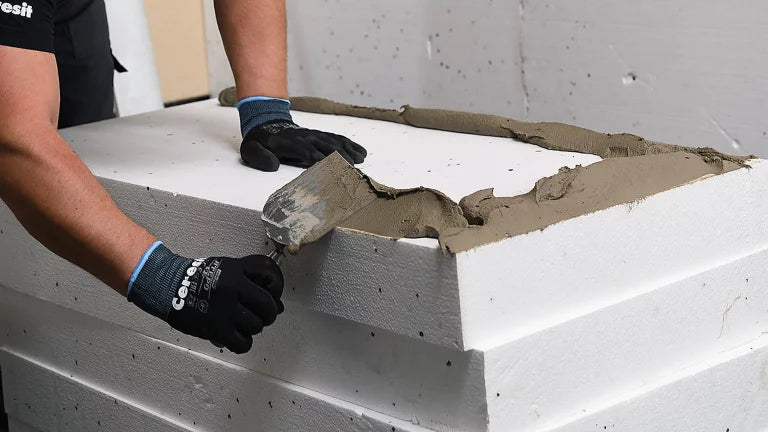
- Bond the boards: a continuous perimeter bead of at least 3 cm plus six to eight patches of 8–12 cm, pressed to a minimum 40 % rear-face contact — 60 % once the board is pressed home — with the bed under 10 mm.
- Wait three days: Atlas applies the base coat once the bonding mortar has set and fixings are in, on average after three days, and Ceresit sands and fixes after three days. That is the interval, not twenty-four hours.
- Embed the mesh: spread with a 10–12 mm notched trowel, lap fibreglass mesh by 100 mm in vertical strips and float until the weave is fully covered and clear of the boards, at a 2–5 mm layer.
- Then render: Atlas puts thin-coat work no earlier than three days after the base coat goes on.
Application temperature is +5 °C to +25 °C for both cement mortars, covering mortar preparation, substrate and ambient conditions. The guide to choosing the right adhesive for EPS works the decision through by board type, and the basecoat and mesh reinforcement guide covers overlap discipline and detailing at openings.
Site Notes Buried in the Data Sheets
- Keep graphite boards cool: Atlas states plainly that heated graphite polystyrene should not be fixed, and that graphite boards are best ground and dusted before the base coat.
- Test a doubtful substrate: bond eight to ten 10 × 10 cm cubes across the elevation and check after three days — a cube that tears within itself confirms the wall is carrying.
- Work the shade: Ceresit advises against forming the reinforced layer on sun-struck walls and recommends protecting it from rain.
- Use the pot life as logistics: four hours against ninety minutes is the difference between one station batch and four, which is worth more on a big elevation than a few pence a bag.
What the ETA and BBA Paperwork Actually Covers
Certification on an EWI adhesive belongs to the assembly that was tested, and reading it that way keeps a specification defensible.
- Ceresit ZU: ETA 08/0309 in Ceretherm Popular (certificate 1488-CPR-0382/Z, DoP 00426) and ETA 13/0086 in Ceretherm Impactum (1488-CPR-0407/Z, DoP 00436), plus Irish Agrément Board certificate 09/0340.
- Atlas Hoter U grey: listed in ATLAS (ETA 06/0081), ATLAS XPS (ETA 07/0316), ATLAS ETICS (AT-15-9090/2014) and ATLAS RENOTER (AT-15-8477/2010).
- Atlas Hoter U white: listed in ATLAS ETICS (AT-15-9090/2014) alone — a narrower listing than the grey, and worth confirming before a white basecoat is written into a submission.
The Atlas compendium also records NSAI certificate 10/0347 and BBA certificate 13/5018 against Hoter U. Neither certificate was retrieved in this session, so no product on this page is described as certified — the scope sits with the system, and Renders World will supply the current certificate on request. The Atlas pages used here carry a 2016 revision date, so check the live manufacturer sheet where a submission turns on a figure.
Which Product Suits Your Project
- EPS or graphite EPS under a mid or dark finish: Hoter U Grey, with graphite-enhanced EPS insulation boards as the thermal layer and the basecoat pass from the same bag.
- Fire-sensitive elevations in stone wool: Roker U is the wool-scoped route, and the mineral wool insulation range holds the slabs it is documented to bond.
- A programme running into the cold months: CT84 for bonding, a cement mortar for the reinforced layer — foam adhesive against traditional cement bonding sets out where each one pays.
- A wall out of true: ZW330 for cavities and hollows, One Coat Dash Cover where a sound dash finish is being covered rather than stripped.
Orders are processed the same day where stock is available, small parcels to 25 kg and pallets to 1,200 kg travel next day, and delivery runs curbside from the Southampton base. Most EWI orders start with the grey 2-in-1: Atlas Hoter U Grey 25 kg, £12.90 per bag as listed in August 2026.
FAQ — Ordering, Compatibility and Application Limits
How many bags cover 100 m² of wall?
Hoter U totals 7.0–8.5 kg/m² across both stages, so 100 m² takes 700–850 kg, or 28–34 bags at 25 kg. Ceresit ZU is heavier at 9.0 kg/m², giving 900 kg or 36 bags. Add a margin for reveals and uneven substrate — the published rates assume a flat wall.
Can Hoter U or Ceresit ZU bond mineral wool?
Atlas scopes Hoter U to polystyrene and extruded polystyrene, and the Ceresit ZU sheet is written for EPS and XPS within Ceretherm Popular. Wool belongs with Roker U, scoped to slabs up to 30 cm as well as EPS to 50 cm, which keeps the build-up inside its own documentation.
How cold can these go on?
+5 °C to +25 °C covers mortar preparation, substrate and ambient conditions for both cement mortars. Ceresit CT 84 Express STD is stated from 0 °C to +40 °C, tolerates humidity above 90 %, and its sheet allows the outside temperature to drop below 0 °C eight hours after application.
Does the foam replace the cement basecoat?
No — the CT 84 sheet has boards levelled and doweled about two hours after bonding, then a reinforcing mortar and mesh applied over them. Foam buys speed at the bonding stage, so a foam-bonded elevation is still a two-product order.
What fire classification can I quote?
Ceresit declares B-s1,d0 to EN 13501-1 for the Ceretherm Popular system and B-s2,d0 for Ceretherm Impactum. Those are system figures, typical of the assembly named and subject to the specification actually built, rather than properties of a bag; no class is published here against an individual mortar.