WINDOW SILL EXTENSIONS & OVERSILLS
12 products
Showing 1 - 12 of 12 products
Within our rendering materials range, this window sill extensions and oversills collection covers the powder-coated aluminium profiles that restore proper rainwater drainage to window openings on EWI and rendered facades — twelve components including oversills in four depths (110 mm, 140 mm, 170 mm and 220 mm), verge trim upstands and matched end caps, supplied in brilliant white and anthracite grey for UK insulation build-ups from 50 mm to 200 mm.
What Window Sill Extensions Do in a Render or EWI System
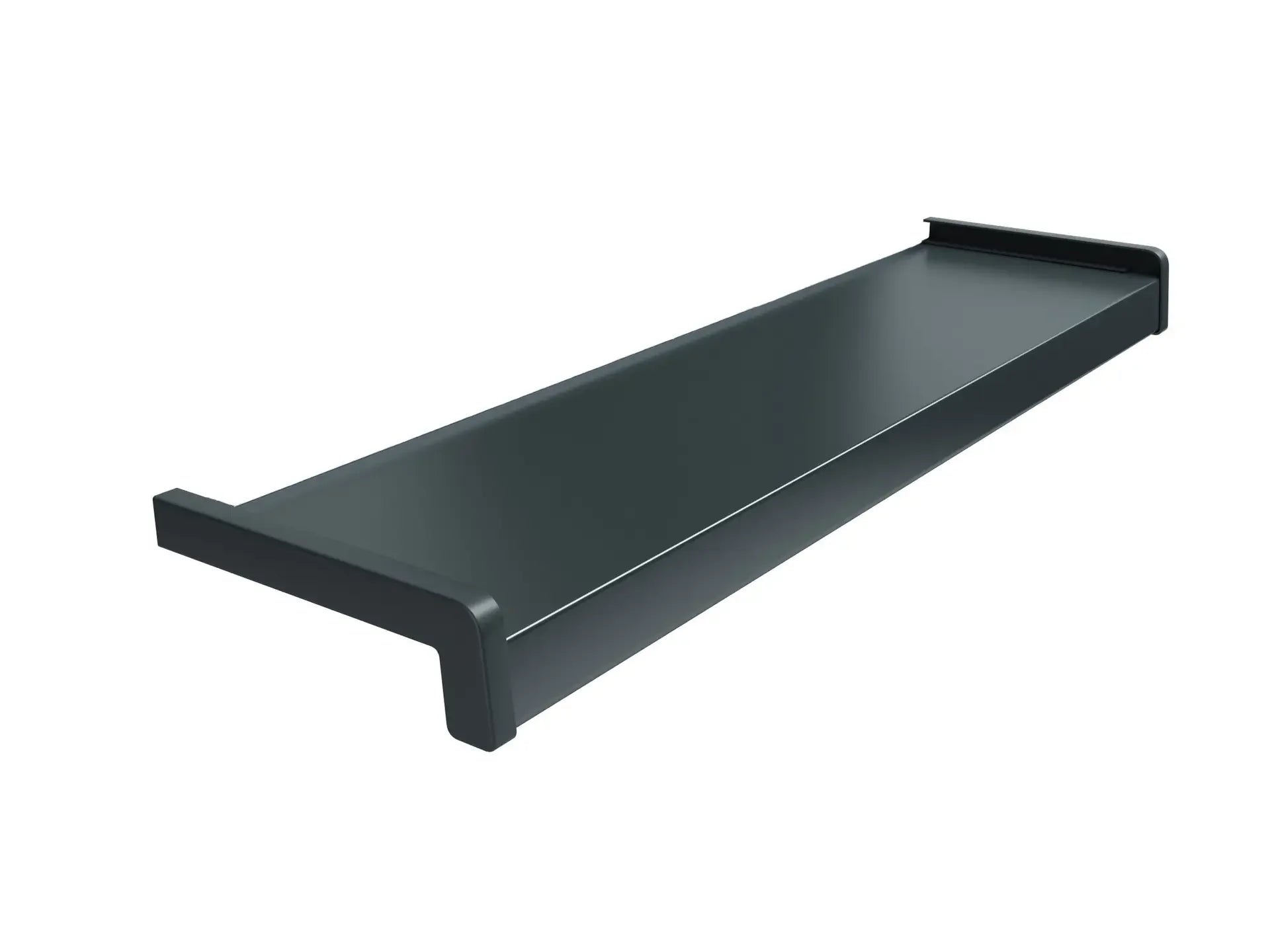
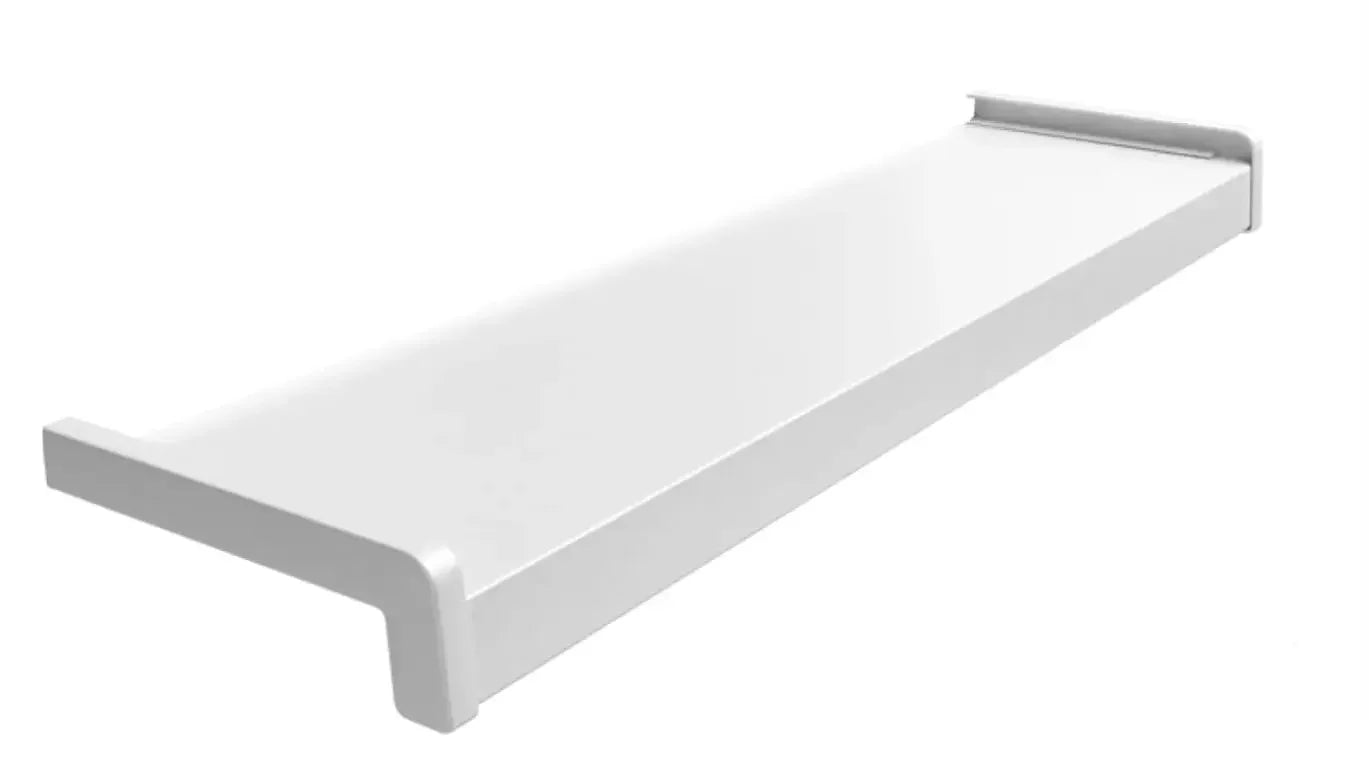
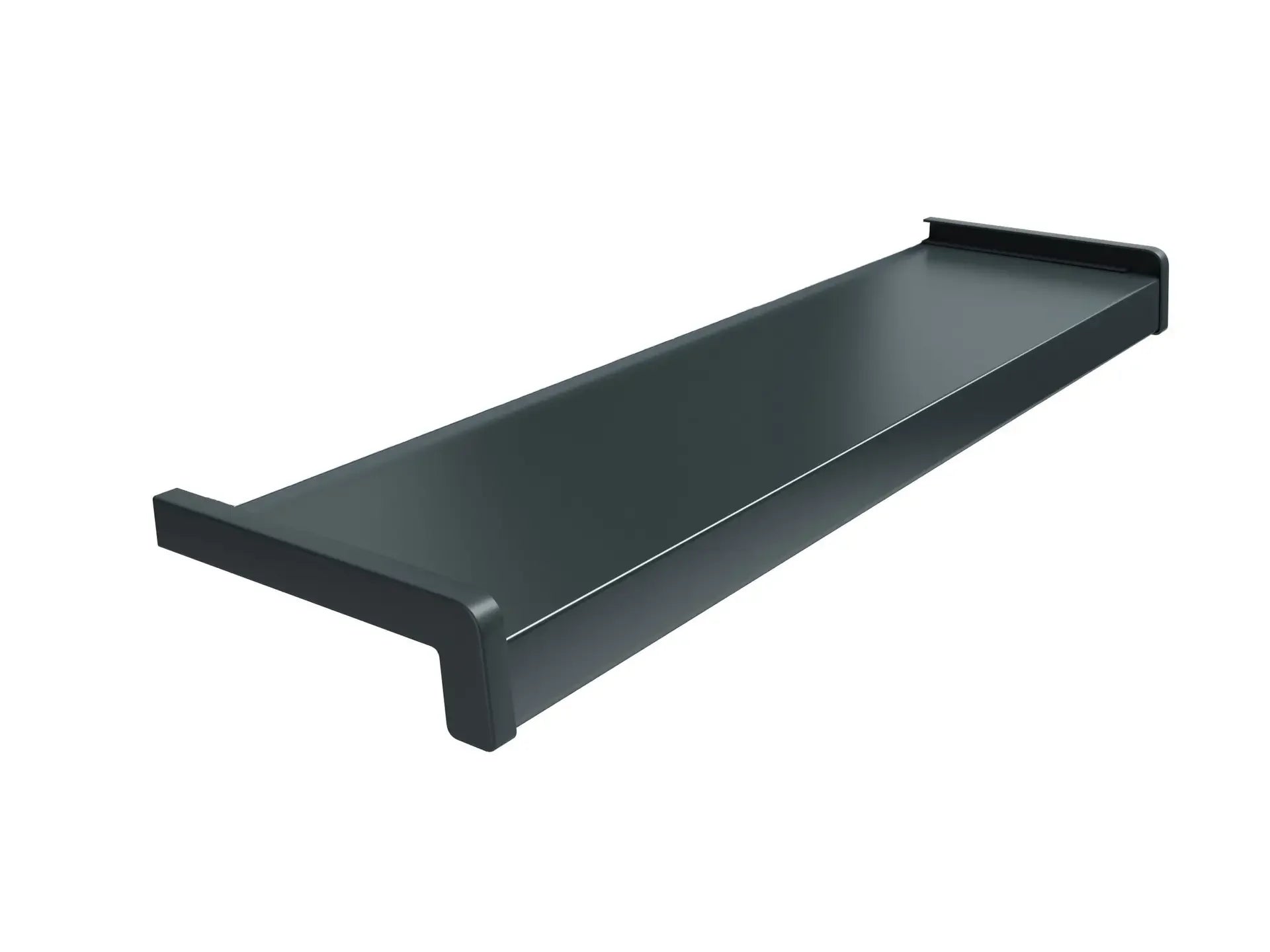
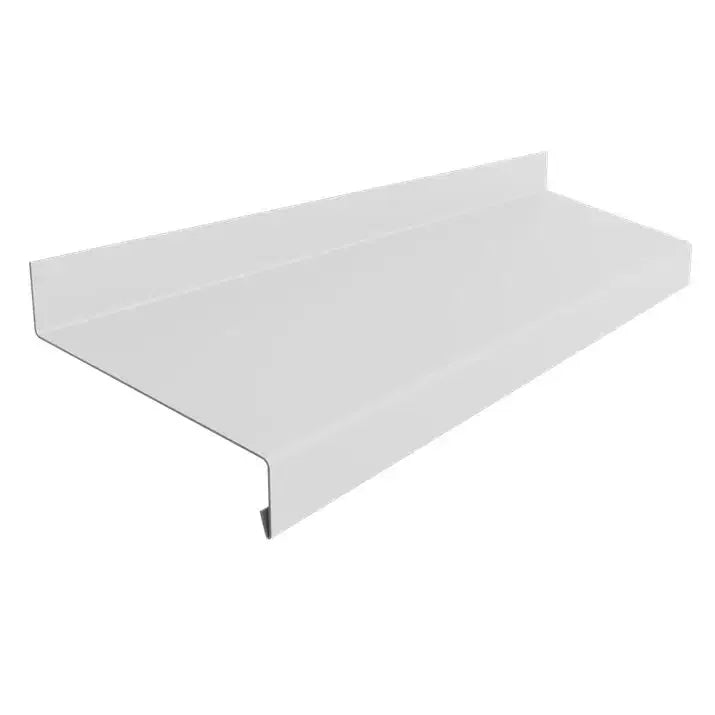
A window sill extension is a powder-coated aluminium oversill that fits over the existing window sill, extending the drip edge beyond the new render face to shed rainwater clear of the insulated wall — supplied in 2.5 m lengths, cut to opening width on site, mechanically fixed and sealed at the rear upstand. Every external wall insulation installation adds 50 mm to 200 mm of board plus basecoat and topcoat to the original wall thickness, and the original sill — sized for the uninsulated wall — no longer projects far enough to keep water off the new render. The oversill restores that critical drainage overhang, and a complete elevation usually wins or loses on whether that detail reads as a clean continuous line across every opening.
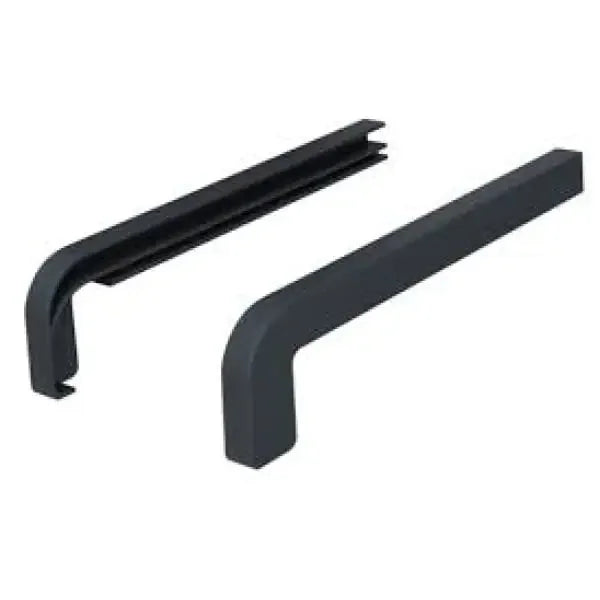
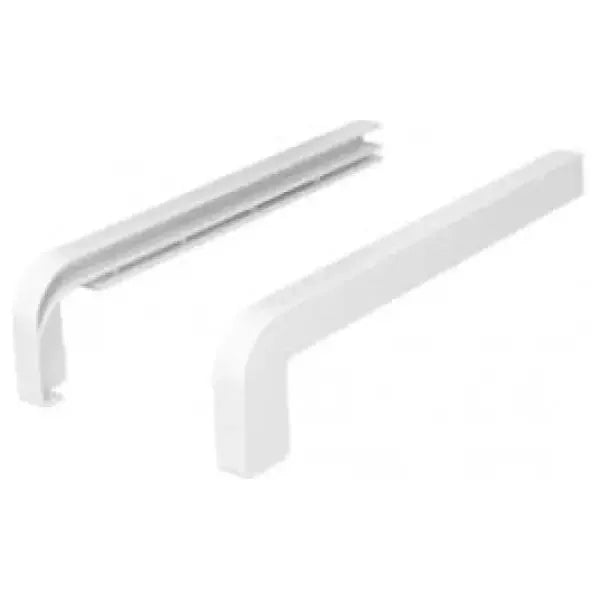
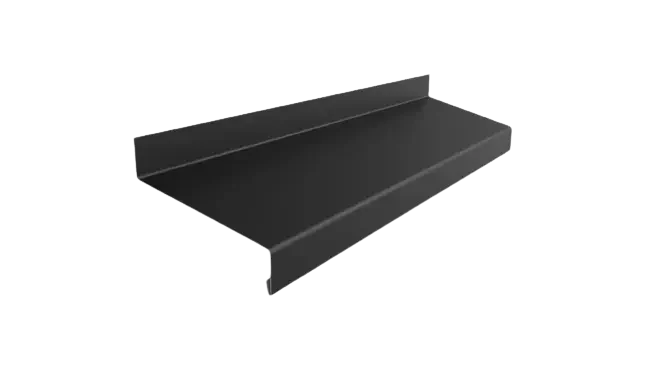
The collection extends to two related profiles: verge trim upstands for top-edge terminations where the sill meets a flat roof, fascia or parapet, and verge sill end caps that close the exposed aluminium ends at each reveal. All twelve components share the same powder-coated finish and a protective UV-resistant PVC film during the rendering stage — peeled off after topcoat cure to reveal the factory finish underneath.
What Makes Window Sill Extensions Worth Specifying
- Restored drainage overhang: the extended drip edge sheds rainwater clear of the insulated wall, addressing the moisture-tracking risk that drives most EWI failures around window openings.
- Powder-coated aluminium construction: corrosion-free service across a working life that matches the typical 25–30 year design horizon of certified EWI systems, with no rust or finish degradation.
- Factory-matched colour palette: brilliant white and anthracite grey cover the two most-specified UK sill colours, providing a consistent line across multi-window elevations without on-site painting.
- Protective PVC film as standard: every profile is supplied with a UV-resistant film that protects the powder coating through the rendering stage — eliminating the remedial cleaning unprotected aluminium requires.
- Four-depth coverage: 110 mm, 140 mm, 170 mm and 220 mm oversills span the full UK insulation specification range, ensuring correct drip projection across thin-coat refurbishment and full-system EWI alike.
- Complete junction set: verge trims and end caps are profile-matched and colour-matched, providing watertight terminations at top edges and sill ends without reliance on foam tape or surface-applied sealant alone.
Selection Guide — Find Your Window Sill Profile in 30 Seconds
Identify your insulation thickness, read across to the matched oversill depth, and select the colour that suits the window-frame and fascia line. Where the build-up sits between two depths, choose the next size up — extra projection always outperforms a marginal drip edge on UK exposure.
| Your Project | Best Profile | Standout Spec |
|---|---|---|
| 50–70 mm insulation | 110 mm oversill | 2.5 m · 110 mm depth · powder-coated |
| 70–120 mm insulation | 140 mm oversill | 2.5 m · 140 mm · most-specified depth |
| 100–140 mm insulation | 170 mm oversill | 2.5 m · 170 mm · exposed elevations |
| 140–200 mm insulation | 220 mm oversill | 2.5 m · 220 mm · deepest projection |
| Top-edge / parapet termination | Verge trim upstand | 2.5 m · 140 mm · upstand return |
| Reveal-end termination | End cap pair | Press-fit · matched colour · per opening |
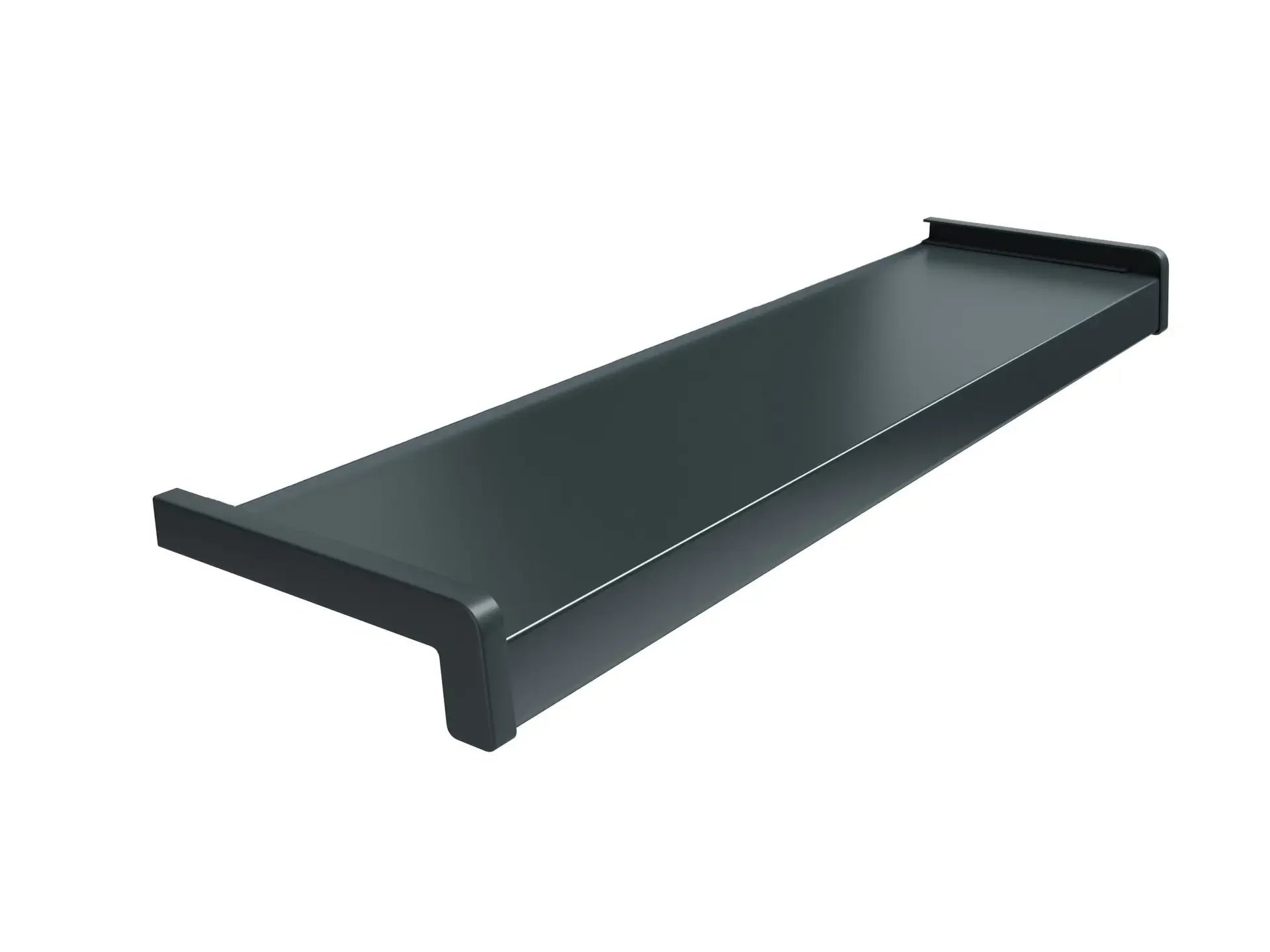
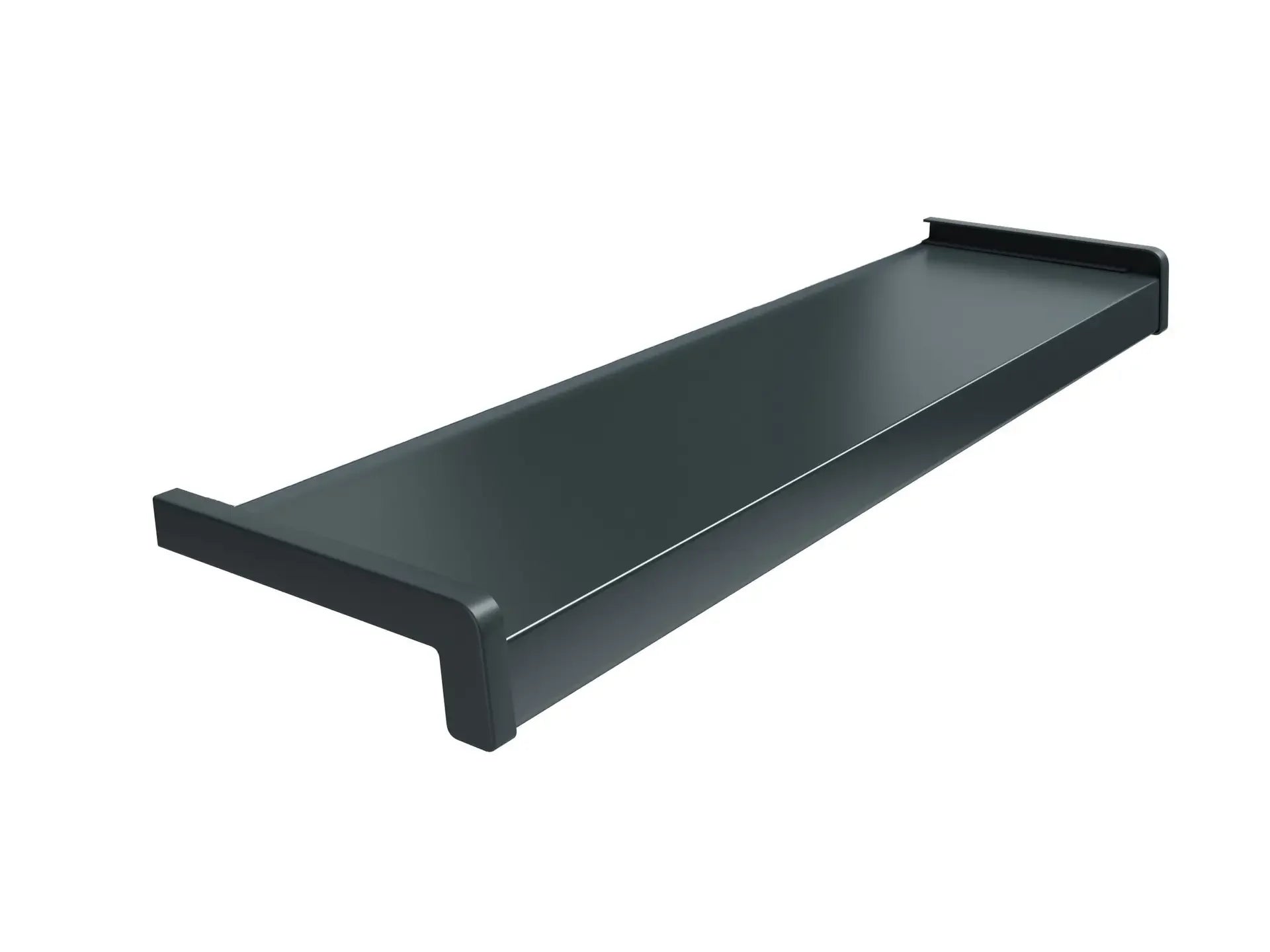
Every oversill, verge trim and end cap is available in matched anthracite grey for projects specifying a darker window-line — the 140 mm anthracite oversill is the most-ordered variant for contemporary residential schemes, paired with the anthracite end cap pair at each reveal to maintain a consistent dark line.
How Window Sill Extensions Install in a Render or EWI System
Oversills fit after the insulation boards are bonded and mechanically fixed but before the basecoat and mesh reinforcement layer is applied. The profile sits over the existing stone or concrete sill, mechanically fixed with countersunk screws at 300 mm centres, with a continuous bead of low-modulus sealant along the rear upstand sealing the junction to the window frame. End caps close the exposed profile ends at each reveal, and the basecoat returns up to the profile edge to lock the assembly into the wider render system.
To match an oversill to your build-up, add the insulation thickness to the basecoat and topcoat allowance (typically 10–15 mm combined) and then add 30–40 mm minimum drip projection. A 100 mm graphite EPS build-up plus 12 mm of basecoat and topcoat totals 112 mm of added wall thickness — a 140 mm oversill provides about 28 mm of projection, suitable for sheltered elevations, while a 170 mm oversill extends to about 58 mm, the safer choice on exposed or weather-facing walls.
For the step-by-step fitting method — measuring, cutting, sealant sequencing and integration with the basecoat — the window sill extensions installation guide for UK projects walks through the trade process with worked examples. Oversill detailing is one element of the broader window reveal treatment, and for the complete junction-by-junction approach coordinating stop beads, corner beads and bellcast profiles around openings, the render detailing around windows and doors pillar guide covers the full sequencing from reveal insulation through to finished topcoat.
What UK Installers Do Differently With Window Sill Extensions
A clean run of oversills across a multi-window elevation looks effortless from the ground; the discipline behind it sits in a handful of habits experienced trades repeat on every job.
- Measure every opening individually: on pre-war and inter-war properties — the most common candidates for EWI retrofit — original reveals vary by 15–20 mm between openings on the same wall, and a single template width guarantees a poor fit somewhere.
- Cut with a fine-toothed metal-cutting blade: leave a 2–3 mm clearance at each end for the end cap to seat cleanly; forcing a tight-cut profile into the reveal bows the aluminium and breaks the sealant line at the rear upstand.
- Keep the PVC film on through the entire rendering stage: the film resists basecoat, primer overspray and topcoat splashes that would otherwise mark the powder coating; peel only after the finish has cured and scaffolding is being struck.
- Bed the rear upstand in a continuous sealant line: a single uninterrupted bead between profile upstand and window frame is the watertight detail — interrupted spots become the first point of moisture ingress in driving rain.
- Standardise on the next depth up where exposure is uncertain: the cost difference between 140 mm and 170 mm oversills is marginal compared to the difference in long-term performance on a weather-facing wall.
Are Window Sill Extensions Right for Your Project?
- EWI retrofit with shallow original sills: any external wall insulation project adding 50 mm or more of board thickness needs oversills to restore the drainage overhang at window openings; the four-depth range covers all standard UK insulation specifications.
- New-build with designed insulation envelope: on new construction where the window position sits within the insulation zone, oversills provide a factory-finished drip edge that integrates with the render system from first fix.
- Render carrier-board build-ups with adequate existing sills: if the project involves rendering onto carrier boards rather than full insulation, and existing sills already project sufficiently, the rendering cement boards range provides the substrate solution without sill extensions.
- Multi-opening elevations needing colour-matched continuity: for blocks of flats, terraces or commercial facades where consistency across many openings matters more than depth selection, order the same colour across all openings and standardise on the most-specified 140 mm depth.
FAQ — Window Sill Extensions Installation and Compatibility
What depth of oversill do I need for 100 mm of insulation?
For 100 mm of insulation board plus approximately 12 mm of basecoat and render topcoat, the total added wall thickness is around 112 mm. A 140 mm oversill gives roughly 28 mm of drip projection — adequate for sheltered elevations. For exposed or weather-facing walls, the 170 mm depth extends projection to about 58 mm, providing a more generous drip clearance that keeps wind-driven rain well clear of the facade below.
Can the powder-coated finish be repainted to a custom colour?
The factory powder coating in white or anthracite is engineered for long-term durability without maintenance, and typically outperforms site-applied paint on adhesion and UV stability. The aluminium surface will accept an over-paint with a suitable metal primer and exterior topcoat where a custom colour is essential, but for the majority of UK projects, the two standard colours match the prevailing window-frame and fascia palette without recoating.
Why are these profiles self-collection only?
Powder-coated aluminium is susceptible to denting and surface damage in courier transit, even with substantial packaging. To preserve the factory finish, all oversill, verge trim and end cap components are available for self-collection from our Southampton warehouse. The 2.5 m lengths fit comfortably in a standard panel van, and our team assists with loading; collection times are arranged in advance to suit project schedules.
Are end caps included with each oversill?
Oversills and end caps are supplied as separate components, allowing precise pairing to each window width and colour. Order one pair of verge sill end caps per opening in the matched colour — white pairs with white oversills, anthracite with anthracite. End caps press-fit onto the exposed profile ends and are sealed with a low-modulus sealant to close the watertight termination at each reveal.
How do verge trim upstands differ from oversills?
The two profiles share the same aluminium construction and colour options but address different junctions. An oversill fits over the window sill with a downward-angled drip edge that sheds water clear of the wall below. A verge trim upstand is designed for top-edge terminations — where the insulation meets a flat roof, fascia or parapet — with an upward return that slides behind the adjacent element to create a watertight seal without relying on surface-applied sealant alone.
Do the powder-coated profiles withstand UK coastal and exposed conditions?
Powder-coated aluminium is the specified choice for UK coastal and exposed-elevation work because it does not corrode like steel and resists the UV and salt-spray loading that degrades softer finishes. The factory coating provides the long-term colour and surface stability these conditions demand, and the protective PVC film during installation prevents the early-life surface marking that otherwise compromises long-term appearance.