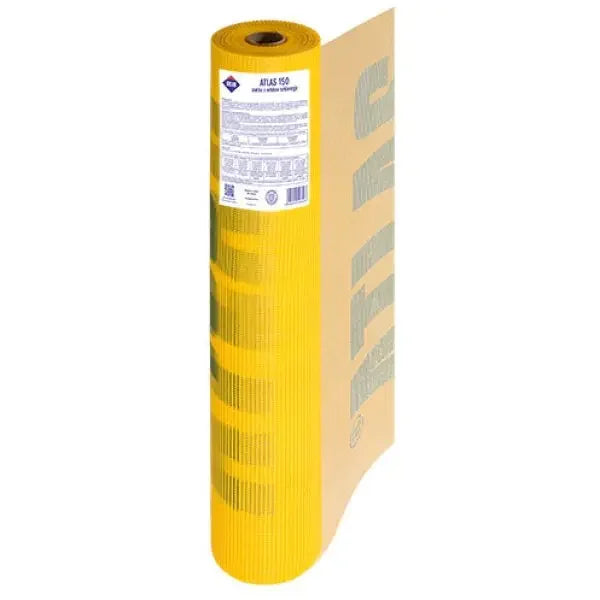
FIBREGLASS MESH
2 products
Showing 1 - 2 of 2 products
Fibreglass mesh is the fabric pressed into a wet basecoat so the render over an insulated wall has something to hold it together. This range carries two rolls, one from Atlas and one from Ceresit, and the choice between them usually follows the brand of adhesive and basecoat already on the job.
Where Fibreglass Mesh Does Its Work
The mesh sits inside the reinforcing layer of an external wall insulation build-up: boards on the wall, a coat of adhesive mortar over them, the mesh bedded into that coat, and the finish on top. Atlas describes its roll for exactly that job over both EPS and mineral wool, and Ceresit sets CT 325 into the same place in its own insulation systems. Both sit in the render beads and mesh range at Renders World, alongside the profiles that finish the edges, so the fibreglass mesh and the beads for one wall come from one order.
- Insulated facades: the whole field of the wall, strip by strip, over EPS or mineral wool boards.
- Openings: extra pieces laid diagonally at the corners of windows and doors, as Ceresit recommends for CT 325.
- Edges and arrises: corner beads with their own mesh wings carry the reinforcement round the arris, while a bead without wings needs fabric from the roll carried round it instead.
Fibreglass mesh is one part of the layer, not a cure for a poor one. For a wall that has already cracked, why render cracks on insulated walls sets out each cause and the repair that stops it coming back.
Why Installers Match the Mesh to the Basecoat
- One maker, one assessed layer: Atlas lists the 150 as a component of its insulation systems holding European Technical Assessments, and CT 325 is listed in the assessments of the Ceresit systems. Buying the mesh from the maker of the basecoat keeps the reinforced layer inside one of those assessments.
- Made for an alkaline bed: Atlas makes its fibreglass alkali-resistant, and Ceresit declares the strength of CT 325 after 28 days in an alkaline solution as well as in standard condition.
- A grid that holds its shape: CT 325 has a gauze weave that stops the grid shifting, so the squares stay square while the strip is pressed in.
Width is the difference an installer notices first. The CT 325 roll is 110 cm wide against 1.0 m for the Atlas fibreglass mesh, so the same elevation takes fewer strips and fewer vertical laps.
Choose Between the Two Fibreglass Mesh Rolls
The two fibreglass fabrics divide on width and weight, and on which maker's system the wall is being built to. The area in each product name is fabric before any lap is taken off, not the wall it will cover.
| Your Project | Best System | Standout Spec |
|---|---|---|
| Atlas adhesive and basecoat on EPS or mineral wool | Atlas 150 fibreglass mesh roll | 150 g/m² · 1.0 m wide · at least 50 m |
| Ceresit adhesive and basecoat, or a long facade | Ceresit CT 325 fibreglass mesh roll | 160 g/m² · 110 cm wide · 50 m long |
Atlas prints its fabric weight with a tolerance of minus 3 to plus 10 per cent, so mesh marked 150 may weigh a little more but never much less. The two weights are close enough that neither is the heavier-duty choice: pick on the system first, then on width.
How to Fit the Mesh Into a Wet Basecoat
The mesh goes into fresh mortar, never onto a dry coat. A first coat is combed over the boards with a notched trowel, the strip is laid into it, and more mortar is floated over until the grid disappears. The CT 325 guidance is explicit that correctly bedded mesh should not be visible at all, and that the strips should not coincide with the joints between the boards.
- Spread a coat of the system's adhesive mortar over one strip width.
- Lay the mesh into it from the top of the wall down, keeping it flat and taut.
- Float over it wet-on-wet until no grid shows, then move to the next strip with its lap.
- Bed a diagonal patch at each corner of every window and door opening.
The full sequence sits in guides that cover it step by step: the basecoat and mesh layer from start to finish, the top-down strip method used by installers, and the lap widths between strips and around openings. Lap and patch sizes are the maker's figures for its own fibreglass mesh and belong with that product.
Site Habits That Keep the Layer Sound
- Store the mesh upright and dry: both Atlas and Ceresit ask for this, and Ceresit adds that it should be kept free from pressure, so nothing gets stacked on it in the van or the compound.
- Keep fibreglass out of sun and rain until it is used: Atlas warns against leaving its mesh exposed to direct sunlight and the weather, which on a scaffold means back under cover at the end of the day.
- Set the strips out against the board layout: plan the first strip so the strip edges do not run along the board joints, as Ceresit asks.
Where the wall takes knocks, the answer is more fabric. For facades and plinths under heavier mechanical load, the guidance for CT 325 is a second layer rather than one.
Where This Shelf Ends and What to Order With It
For walls under high mechanical load, Ceresit points to a heavier fabric as the alternative to a second layer, and this range does not carry one. A ground-floor wall facing heavy wear is therefore handled here with an extra layer, as Ceresit also advises, rather than with a different fibreglass mesh.
- The bed the mesh goes into: the basecoat adhesives range holds the mortars that carry the mesh.
- The boards underneath: EPS boards set the joint pattern the strips are planned against.
- The edges: corner and edge beads with mesh wings meet the field mesh at every arris.
Renders World dispatches orders the same day when the stock is there, the team quotes delivery after the order, and every delivery is kerbside. Fibreglass mesh can also be collected from the Renders World counter in Southampton during opening hours.
Questions About Fibreglass Mesh Rolls
What separates the Atlas mesh from the Ceresit mesh?
Width, fabric weight and the system each one belongs to. The Atlas fibreglass is 1.0 m wide at 150 g/m² and is listed in Atlas systems; CT 325 is 110 cm wide at 160 g/m² and is listed in Ceresit systems. Match the mesh to the basecoat first.
Can Atlas mesh go into a Ceresit basecoat?
Each maker lists its own mesh with its own mortars, so a mixed layer is not the build-up either system assessment describes. Where the wall is built to a named system, keep the mesh and the basecoat from the same maker.
How much mesh do I need for a wall?
More than the wall area, because every lap and every patch at an opening comes out of the fabric you buy. The area in the product name is fabric on the roll, not wall covered, and the overlap guide works the arithmetic through strip by strip.
Is one layer enough at ground level?
On a plinth or a facade that takes knocks, Ceresit's guidance is two layers of CT 325. Decide where the second layer goes before the finish is planned, because it adds to the basecoat build-up.
How should fibreglass mesh be kept on site?
Upright and dry, with nothing stacked on it, and covered from sun and rain until the day it is used. Both makers ask for upright, dry storage, whichever fibreglass mesh is on the job.