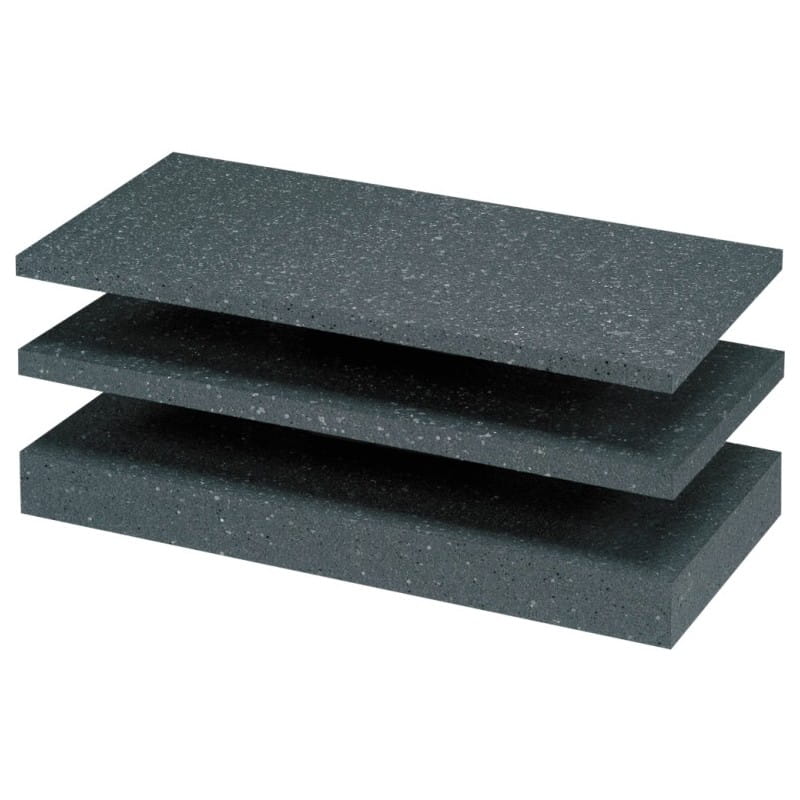
EPS INSULATION BOARDS
11 products
Showing 1 - 11 of 11 products
EPS Insulation Boards UK — Graphite Expanded Polystyrene for External Wall Insulation
Product Overview — What This Category Covers
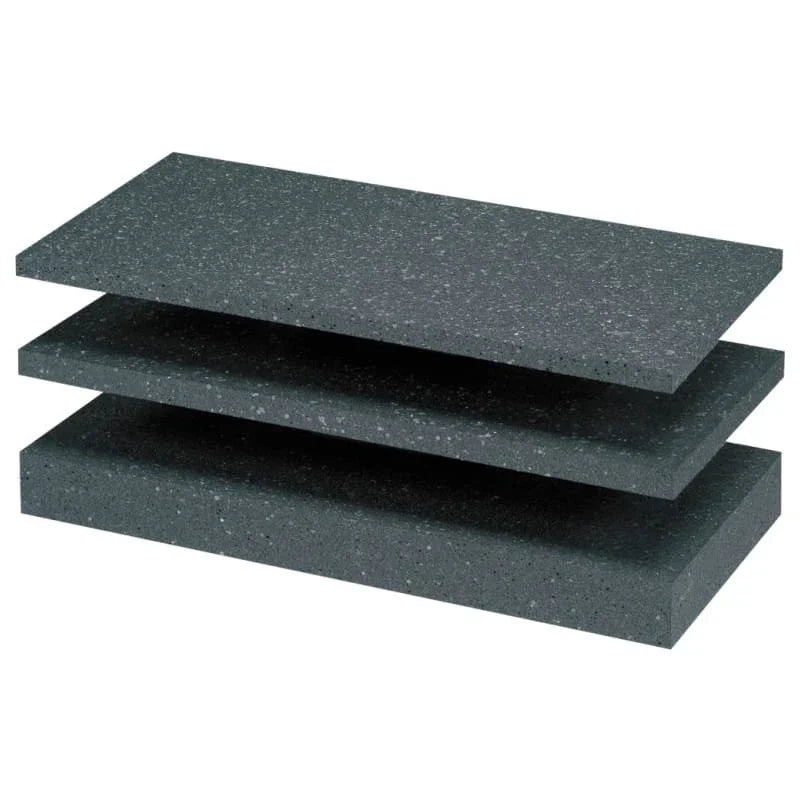
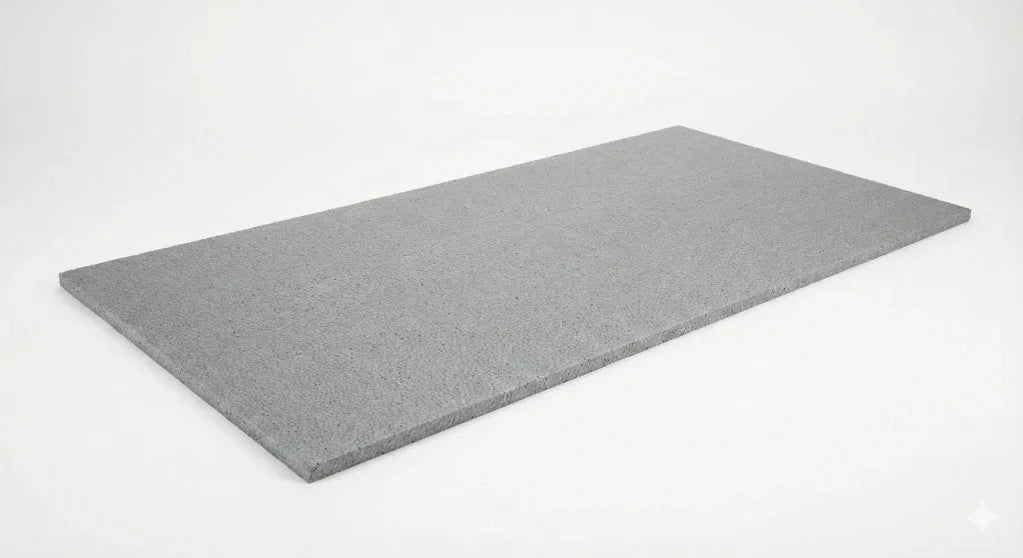
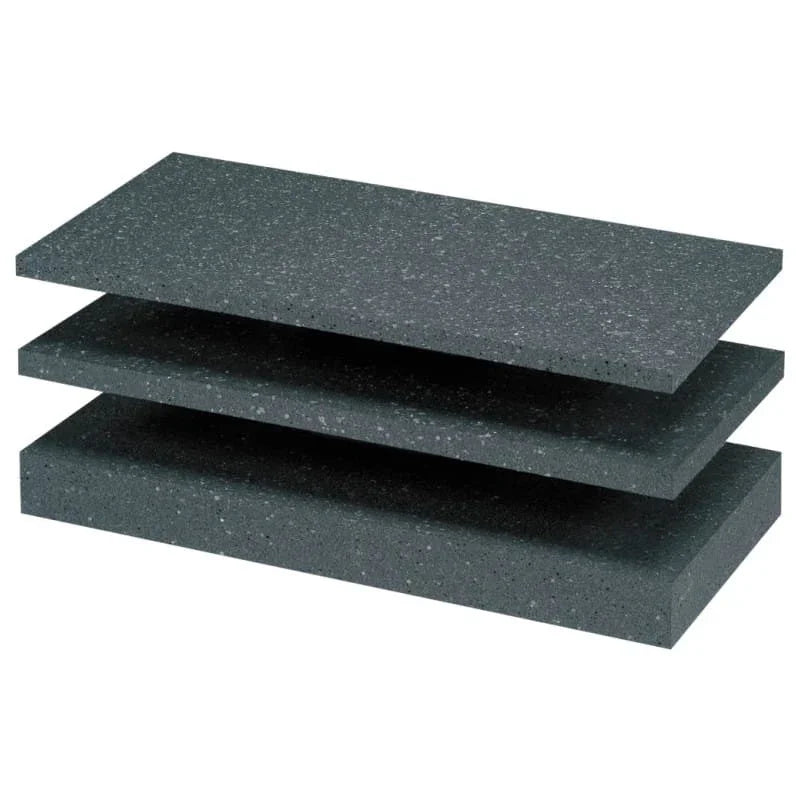
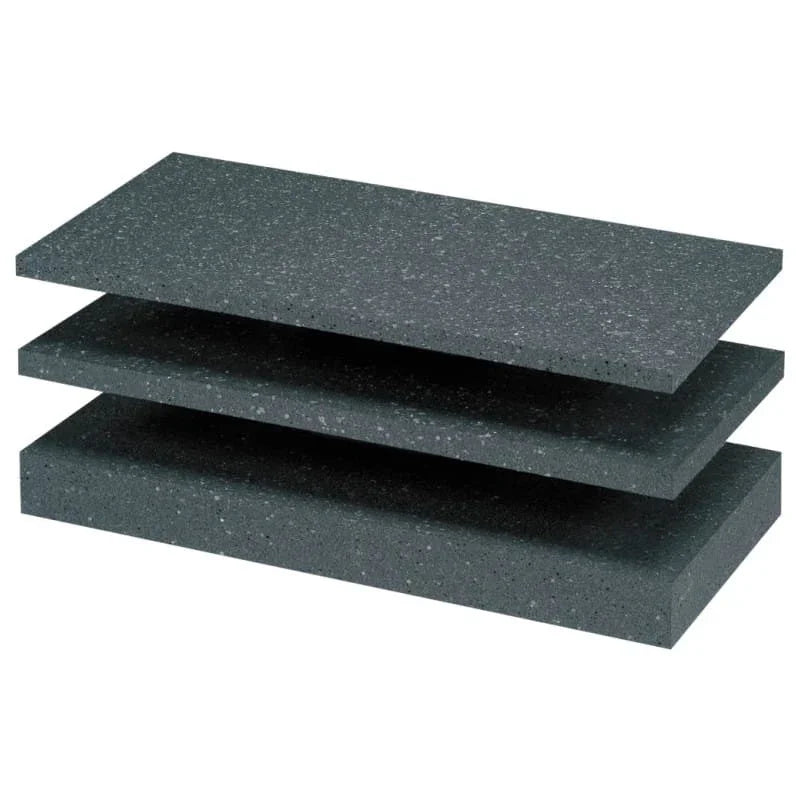
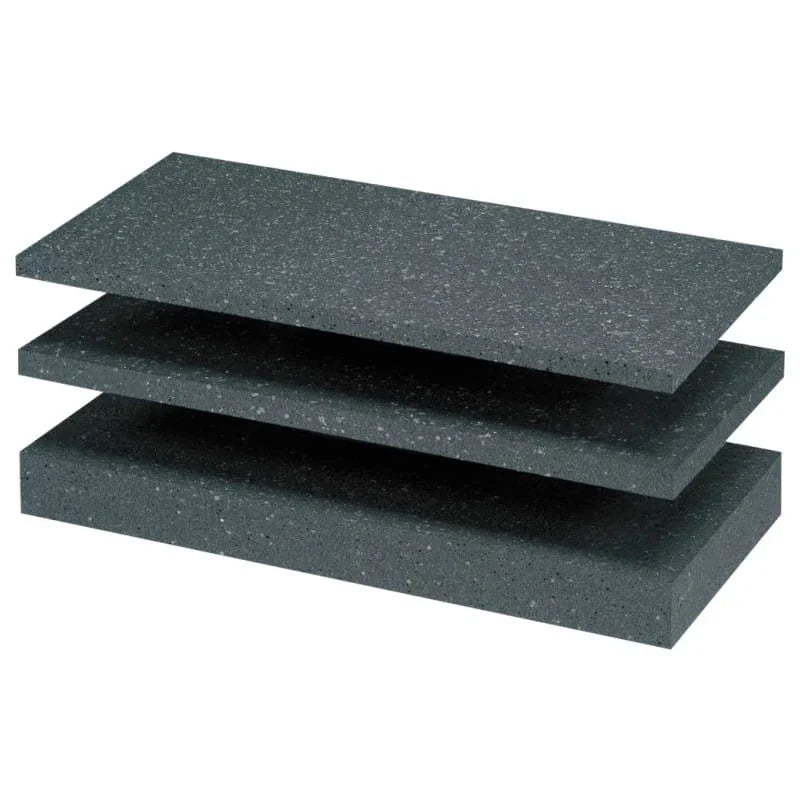
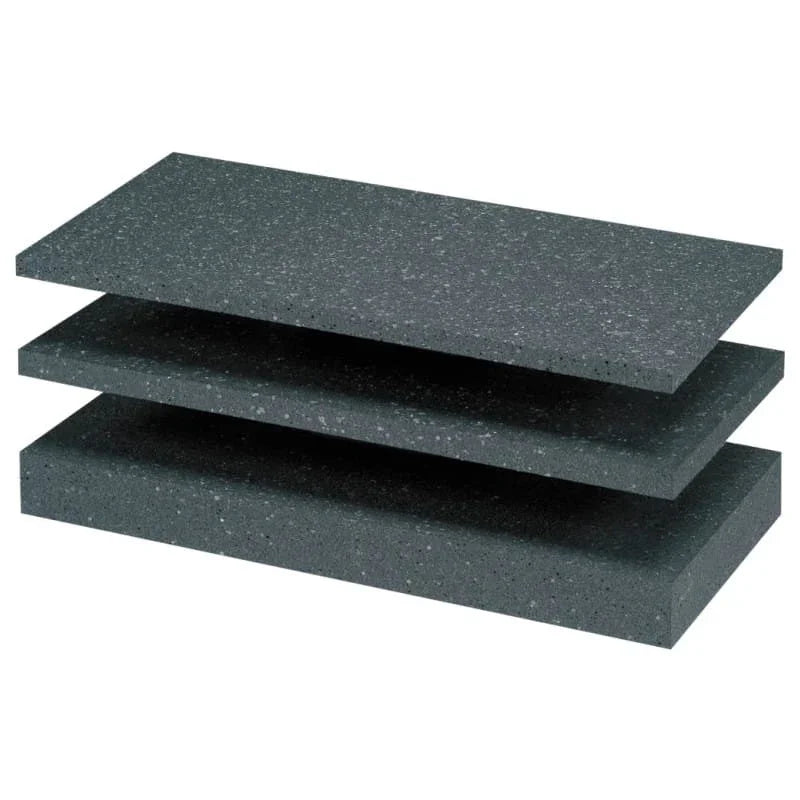
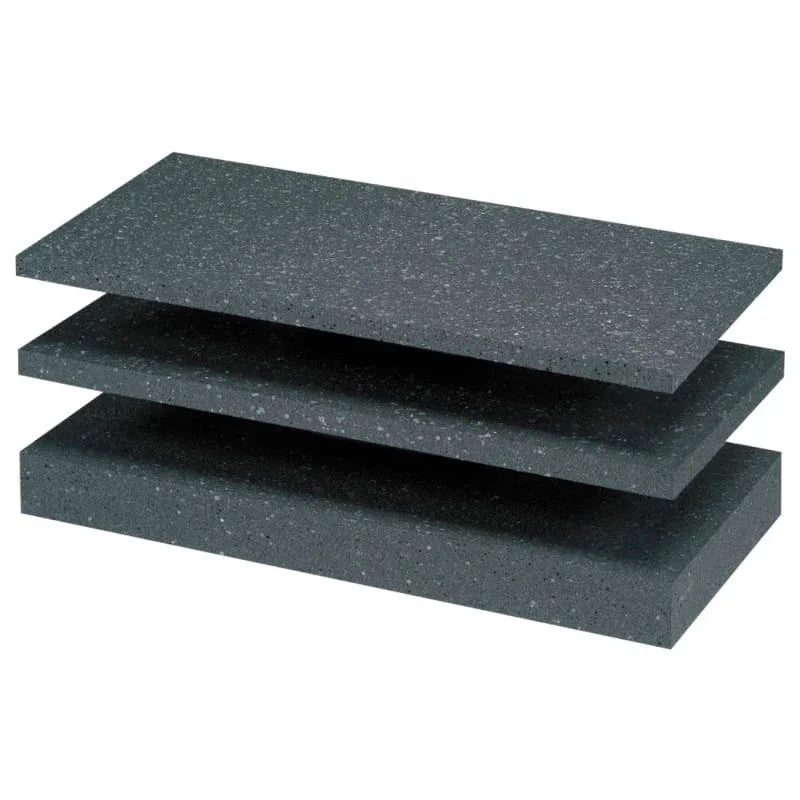
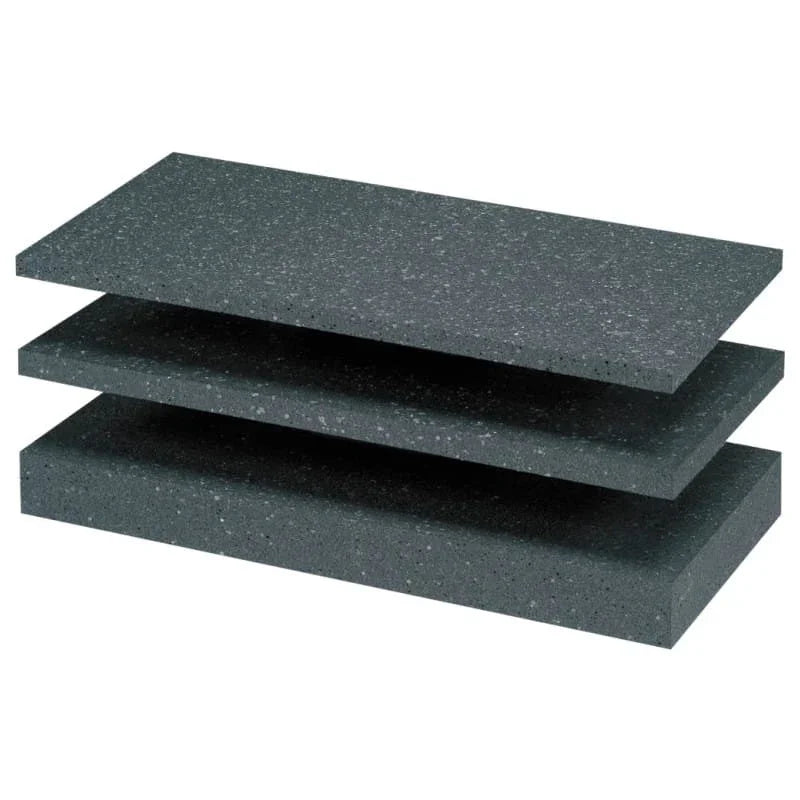
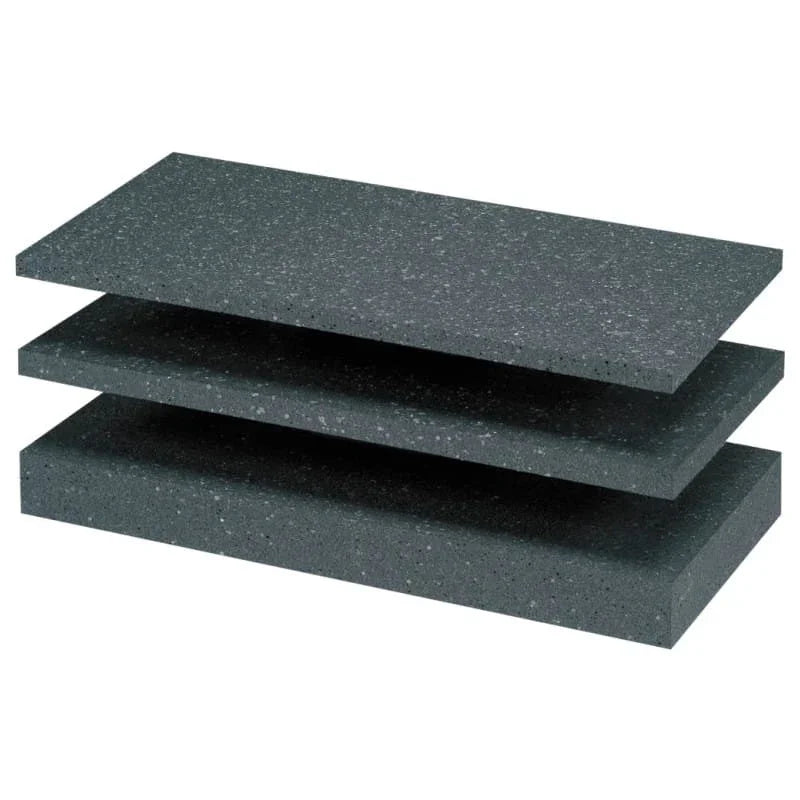
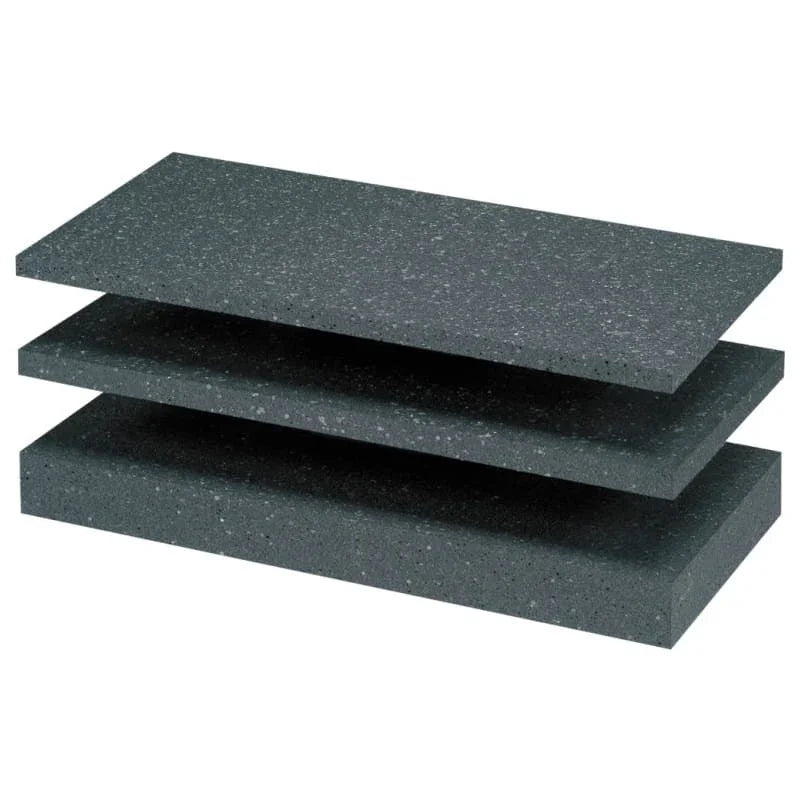
Graphite EPS insulation boards are expanded polystyrene panels infused with high-purity graphite particles that reflect infrared radiation within the foam matrix, achieving a declared thermal conductivity of λ 0.031 W/mK so your walls reach target U-values at the slimmest possible build-up depth. This collection within the external wall insulation systems range covers the full Genderka EPS 031 Fasada Extra Plus family — eleven thickness options from 10 mm reveal-detailing strips through to 200 mm deep-renovation boards — all manufactured to EN 13163:2012+A1:2015 and supplied in standard 1000 × 500 mm panels sized for efficient ordering against surveyed wall areas.
A 100 mm graphite board matches the thermal resistance of roughly 125 mm of standard white EPS, saving 25 mm of build-up depth on every square metre. That slimmer profile preserves window-reveal proportions and reduces the oversill modifications that add time and cost to semi-detached and terraced facade projects. The range covers every zone of a facade build-up: thin boards for lintels, soffits, and window reveals where space is tight; mid-range boards for domestic retrofit and cavity over-cladding; and heavy-duty boards for Future Homes Standard compliance and Passive House performance targets. All boards share an identical mechanical specification — compressive strength ≥ 70 kPa, bending strength ≥ 100 kPa, tensile strength ≥ 100 kPa — so a single fixing and adhesive specification covers the entire project regardless of how many thicknesses appear on the elevation.
Key Benefits & Technical Advantages
- Thinner Walls, Same Warmth: Graphite enhancement brings the declared thermal conductivity down to λ 0.031 W/mK, meaning a 100 mm graphite board matches the thermal resistance of approximately 125 mm of standard white EPS — saving 25 mm of build-up depth on every square metre, which preserves window-reveal proportions and reduces oversill modifications on most semi-detached and terraced facades.
- One Range Covers Every Facade Zone: Eleven thicknesses from 10 mm to 200 mm let you specify a single product family for the entire elevation — main walls, reveal returns, lintels, soffits, and parapets — simplifying procurement, site logistics, and quality assurance across domestic and multi-property retrofit programmes.
- Ready for Current and Future Regulations: The 150–200 mm boards deliver thermal resistance of R 4.80–6.45 m²K/W, enabling wall assemblies to reach U-value targets in the region of 0.18 W/m²K on standard UK masonry substrates, subject to project-specific calculation. The Future Homes Standard 2026 insulation requirements guide explains how these thresholds translate into board selection for each wall type.
- Consistent Handling at Every Thickness: Every board in the range achieves compressive strength ≥ 70 kPa (CS70), bending strength ≥ 100 kPa (BS100), and tensile strength ≥ 100 kPa (TR100), so adhesive bonds hold securely and boards resist flexing during handling at scaffold height — from the thinnest 10 mm reveal strip to the heaviest 200 mm deep-renovation panel.
- Lightweight for Faster Installation: At a density of approximately 15 kg/m³, even the 200 mm board weighs only around 1.5 kg per panel, keeping single-handed positioning practical on scaffold platforms and reducing handling fatigue across full-day installation programmes on large-scale retrofit projects.
- Certified and Traceable for Building Control: Full EN 13163:2012+A1:2015 compliance with CE marking and a Declaration of Performance (DoP W31FEP) referencing the specific Genderka factory of origin supports complete traceability for Building Control inspections, NHBC sign-off, and publicly funded retrofit programmes. Fire classification is Euroclass E (self-extinguishing), suitable for residential buildings where Euroclass E with approved fire-barrier detailing satisfies the building's fire strategy, in accordance with current Approved Document B guidance.
Technical Specifications / Selection Guide
The selection table below maps each board thickness to its declared thermal resistance (from the manufacturer's DoP), approximate wall U-value contribution on a standard 215 mm solid brick substrate, and the most common application scenario. Identify the row that matches your project target, then click through to the individual product page to check pricing, pack sizes, and full technical data.
| Thickness (mm) | R-Value (m²K/W) | Approx. U-Value on 215 mm Brick | Boards/Pack | Pack Coverage (m²) | Primary Application |
|---|---|---|---|---|---|
| 10 mm | 0.30 | — | 60 | 30.0 | Thermal bridge strips, backing pads |
| 20 mm | 0.60 | — | 30 | 15.0 | Reveal returns, lintel soffits |
| 30 mm | 0.95 | — | 20 | 10.0 | Reveal detailing, narrow soffits |
| 50 mm | 1.60 | 0.48–0.52 | 12 | 6.0 | Parapets, secondary overlay, depth-constrained walls |
| 80 mm | 2.55 | 0.34–0.37 | 7 | 3.5 | Popular domestic retrofit thickness |
| 90 mm | 2.90 | 0.31–0.33 | 6 | 3.0 | Solid wall target thickness |
| 100 mm | 3.20 | 0.27–0.30 | 6 | 3.0 | Standard semi-detached specification |
| 150 mm | 4.80 | 0.19–0.21 | 4 | 2.0 | Enhanced compliance target |
| 160 mm | 5.15 | 0.18–0.19 | 3 | 1.5 | Deep renovation thickness |
| 180 mm | 5.80 | 0.16–0.17 | 3 | 1.5 | Near Passive House performance |
| 200 mm | 6.45 | 0.14–0.16 | 3 | 1.5 | Maximum performance / Passive House target |
Application & System Compatibility
These graphite EPS boards form the thermal core of a standard EWI build-up, bonded and mechanically fixed to the substrate and finished with a reinforced basecoat, primer, and decorative thin-coat render. The boards are adhesive-ready for use with polymer-modified cementitious mortars and polyurethane foam adhesives, and they accept mechanical fixings at a recommended density of 6–8 per m² to resist wind uplift across all UK exposure zones. A single adhesive and fixing specification covers every thickness in the range, simplifying site coordination on projects that use multiple board sizes across main walls, reveals, and parapets. Child products in this range are designed to work with compatible adhesive and basecoat systems — cementitious mortars such as Atlas Hoter U or Ceresit ZU, or polyurethane foam adhesives — and a reinforced basecoat layer embedding alkali-resistant fibreglass mesh completes the structural substrate before priming and decorative render application.
- Complete EWI layer-by-layer build-up: The EWI system build-up layers guide walks through the full installation sequence — from substrate preparation and adhesive application through board fixing, basecoat reinforcement with fibreglass mesh, priming, and decorative render — in the order a professional installer follows on site.
- U-value calculation and thickness selection: The correct board thickness depends on the existing wall construction, the target U-value, and the thermal bridging contribution at junctions. The U-value calculation and insulation thickness guide explains the methodology for determining the right specification for each substrate type and regulatory target.
- Fixing pattern and mechanical retention: After a minimum 24 hours of adhesive curing, boards are secured with polystyrene fixing plugs at the correct embedment depth for each thickness. The fixing pattern and spacing guide covers wind-load zone assessment, plug selection, and the recommended layout for even load distribution across the facade.
- Substrate suitability: EPS boards bond reliably to solid brickwork, blockwork, concrete, timber frame with sheathing, and steel frame systems — provided the surface is structurally sound, dry, and free from loose material. On timber-frame constructions, a breathable membrane and correct vapour management maintain the vapour-open principle that keeps the wall assembly performing as designed.
For a detailed comparison of graphite EPS against mineral wool insulation — covering thermal performance, fire classification, vapour permeability, cost, and regulatory suitability by building type — the graphite EPS vs mineral wool 2026 facade guide provides the selection criteria that installers, developers, and specifiers need to make a confident material choice. The guide includes a side-by-side specification table and a building-height decision matrix for quick reference.
Trade Insight: Pro Application Notes
The single most important handling discipline with graphite EPS is solar protection — the steel-grey surface absorbs infrared radiation far more readily than white EPS, and even a few hours of direct summer sun can soften the outer bead layer enough to weaken the adhesion key for basecoat application. Keeping packs under opaque sheeting and positioning boards onto the wall within the same working day they are unwrapped ensures the factory surface stays firm and bondable. For the cleanest adhesive contact, rasp the bonding face lightly before applying the cement-based mortar — graphite boards have a smoother factory skin than white EPS, and mechanical keying brings the adhesive contact area above the 40 % minimum specified in the Genderka TDS with less effort than compensating with extra adhesive. On multi-property retrofit programmes, setting up a ground-level cutting station with a jig for the most common reveal and soffit widths and pre-cutting the entire allocation for each property before starting the scaffold fix speeds up on-platform work significantly and reduces material waste across repetitive semi-detached elevations.
Is This Right for Your Project?
- Choose graphite EPS boards if: you are insulating a low-rise residential or commercial property and want the best thermal performance per millimetre at the most cost-effective price point in the EWI market — whether the target is a Part L retrofit pass at 100 mm or an enhanced compliance specification at 150–200 mm for projects targeting the most demanding U-value thresholds.
- Match board thickness to your wall type: the Selection Guide table above maps every thickness to its thermal resistance and application scenario, so you can identify the right board in seconds. The U-value calculation guide then confirms whether that thickness meets Building Regulations on your specific substrate.
- Consider mineral wool insulation if: your building's fire strategy requires non-combustible A1-rated insulation — typically where the project involves taller facades or higher-risk building classifications under current Approved Document B guidance — or if vapour permeability for moisture-sensitive substrates such as timber frame is the primary design driver.
- For below-ground and plinth applications: XPS insulation boards provide the zero water absorption and compressive strength that foundations and zones below the damp-proof course demand, complementing graphite EPS on the main elevation above.
Frequently Asked Questions
How much do graphite EPS boards cost per square metre, and how many packs should I order?
Per-pack pricing is shown on each individual product page and varies by thickness — thicker boards carry a higher material cost per square metre but deliver proportionally greater thermal resistance, so the cost per unit of R-value remains competitive across the range. A typical three-bedroom semi-detached house with approximately 80 m² of exposed wall area (after deducting windows and doors) requires roughly 27–30 packs of 100 mm boards, including 5–10 % for cutting waste around reveals, soffits, and service penetrations. The individual product pages provide exact pack coverage figures so you can build a precise materials list matched to your surveyed area.
Is graphite EPS insulation environmentally responsible?
Graphite EPS is fully recyclable through specialist polystyrene recovery programmes, and off-cuts generated on site can be collected and returned for granulation and re-expansion into new products — the graphite additive does not affect recyclability. The primary environmental benefit is operational: upgrading a typical semi-detached property from an original wall U-value of 2.1 W/m²K to approximately 0.27 W/m²K with 100 mm of graphite EPS reduces annual heating energy demand by an estimated 5,500–7,000 kWh, with the embodied energy of manufacture typically paid back within the first two heating seasons.
What happens if EPS boards are exposed to direct sunlight during storage or installation?
Protecting graphite EPS from prolonged UV exposure is one of the most straightforward site-management steps in the process, and modern boards are designed to tolerate brief exposure during normal working-day handling. The steel-grey surface absorbs solar radiation more readily than white EPS, so storing packs under opaque sheeting and fixing boards to the wall within the same day they are unwrapped keeps the factory surface firm and fully bondable. If boards are inadvertently left uncovered for several hours in direct summer sun, lightly rasping the softened outer layer before adhesive application restores the mechanical key and ensures full bond strength to the reinforcing basecoat.
Can graphite EPS boards be used on buildings of any height?
Graphite EPS carries a Euroclass E fire classification, which is suitable for use within certified EWI systems on residential buildings where approved fire-barrier detailing is installed at each floor level, in accordance with current Approved Document B guidance. For projects where the building's fire strategy requires non-combustible A1-rated insulation — typically taller facades or higher-risk building classifications — mineral wool slabs provide the compliant specification. The graphite EPS vs mineral wool comparison guide linked in the Application section above sets out the fire-classification considerations and system-certification requirements so you can confirm the correct specification for your building.
What thickness of graphite EPS is typically needed to meet current U-value targets?
Achieving a wall U-value in the region of 0.18 W/m²K, as indicated by current regulatory guidance for the Future Homes Standard, typically requires 150–160 mm of graphite EPS (λ 0.031 W/mK) on a standard 215 mm solid brick wall, depending on the thermal conductivity of the existing masonry. The 150 mm board delivers R 4.80 m²K/W and brings most brick constructions to approximately 0.19–0.21 W/m²K, while 200 mm at R 6.45 m²K/W reaches 0.14–0.16 W/m²K for projects targeting Passive House performance. A full U-value calculation accounting for substrate resistance, adhesive layer, and render finish is essential for accurate specification, and our technical team can assist with this assessment.
What is the difference between graphite EPS and standard white EPS?
Graphite EPS incorporates high-purity graphite particles that reflect and absorb infrared radiation within the foam matrix, reducing thermal conductivity from approximately 0.038 W/mK (standard white EPS) to 0.031 W/mK. The practical benefit is a thinner board for the same thermal resistance — a 100 mm graphite board matches the performance of roughly 125 mm of white EPS, saving 25 mm of build-up depth that preserves window-reveal proportions, reduces oversill modifications, and lowers the weight of the facade system. Mechanical properties — compressive, bending, and tensile strength — are identical between the two types, so the same adhesive and fixing specifications apply.