RENDER COLOUR CHARTS
6 products
Showing 1 - 6 of 6 products
Colour selection is the cheapest stage of a facade job to get right, and every figure below comes from two Atlas data sheets rather than from a catalogue blurb. Renders World holds six physical references spanning the Atlas and Ceresit finishes in its render systems range.
What the Atlas SAH Palette Behind These Colour Charts Covers
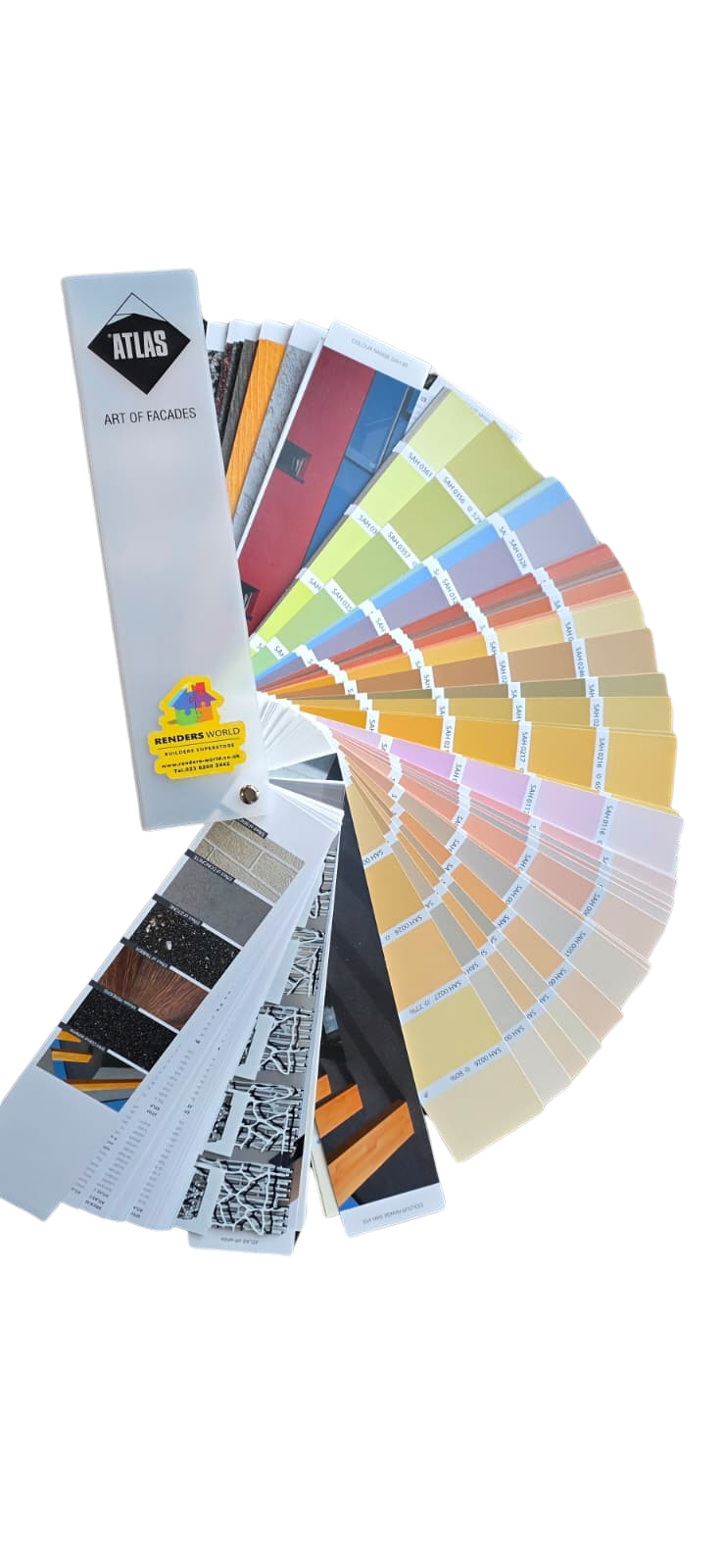
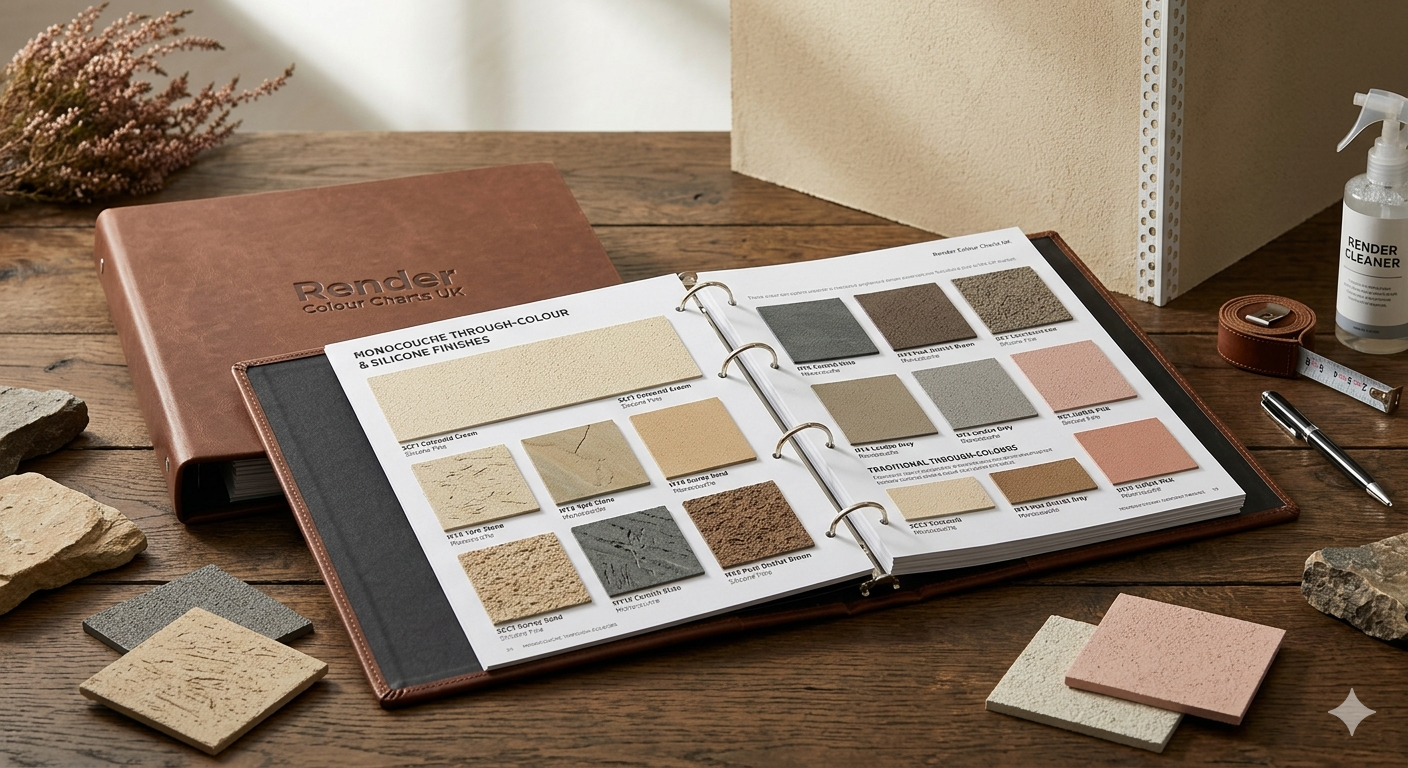
Render colour charts here cover the 480-shade Atlas SAH palette named on the Atlas Silicone Render data sheet, so a shade is chosen against a physical reference and its code carried straight onto the order. Everything in the table is declared for that render, not for the chart itself.
| What the Atlas Silicone Render sheet declares | Value |
|---|---|
| Colour range | 480 colours to the SAH scheme for renders and paints |
| Governing standard | PN-EN 15824:2017-07, thin-layer silicone plaster |
| Texture and grain versions | Lambskin aggregate — N-15 to 1.5 mm, N-20 to 2.0 mm |
| Consumption, grain to 1.5 mm | From 2.2 kg/m² by hand, from 1.9 kg/m² by machine |
| Consumption, grain to 2.0 mm | From 2.8 kg/m² by hand |
| Deep shades, HBW above 6% | In systems reinforced with ATLAS STOPTER K-100 |
| Deep shades, HBW above 15% | In systems reinforced with ATLAS HOTER U2 |
One divergence matters more than anything else on this page. The render sheet declares 480 SAH colours, while the Atlas Salta paint sheet fetched alongside it declares 406 SAH colours including six whites — the same colour scheme, two different palette sizes by product. Treat 406 as the working figure whenever render and paint must match on one building, and confirm the specific code against the product being ordered rather than against the scheme.
Which Colour Reference to Order for Your Project
| Your Project | Best System | Standout Spec |
|---|---|---|
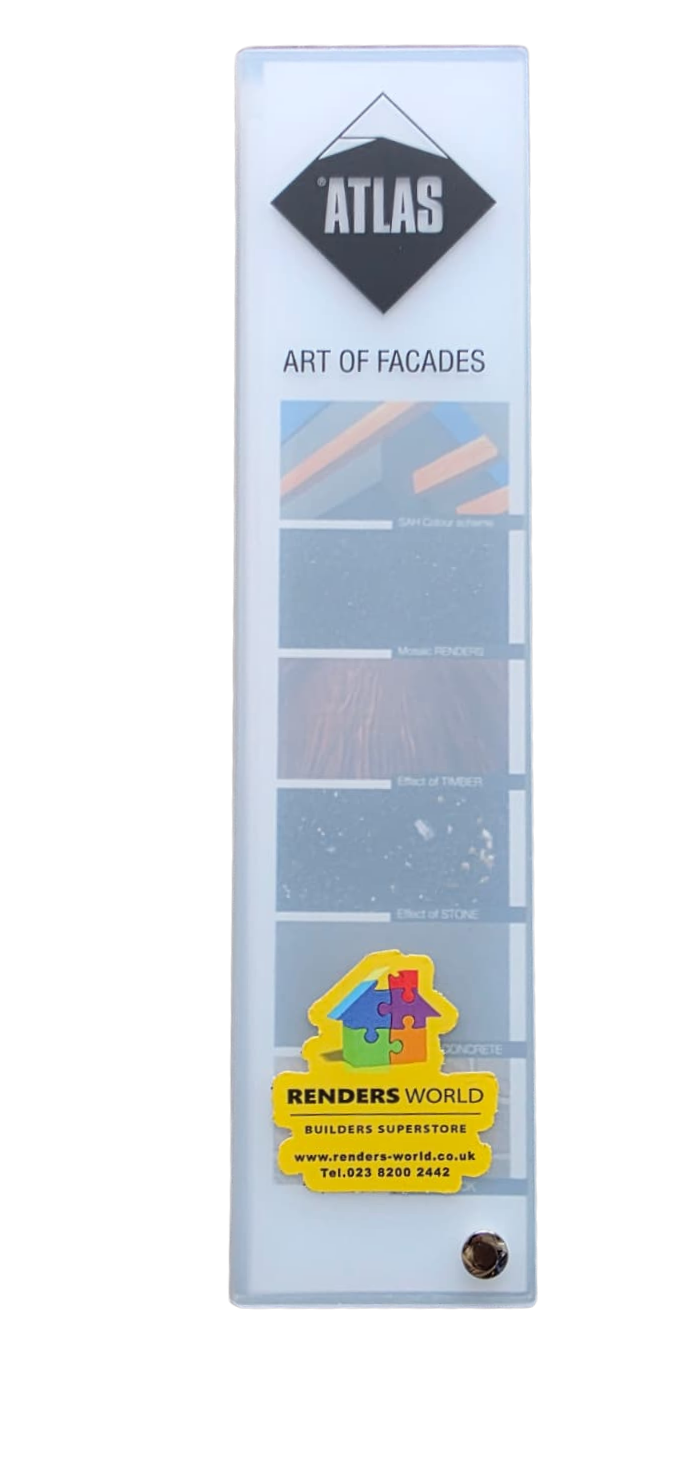
| Architect has named a precise SAH code, or the full palette is needed | Atlas Catalogue 480 Colours | Full SAH range |
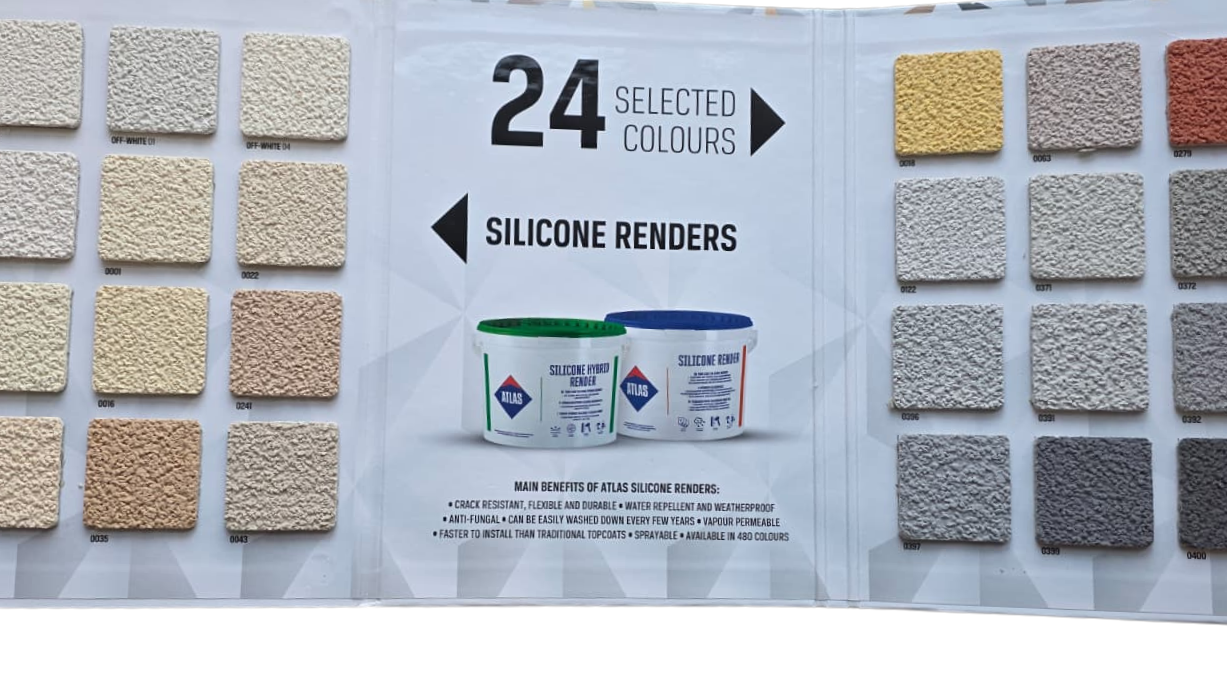
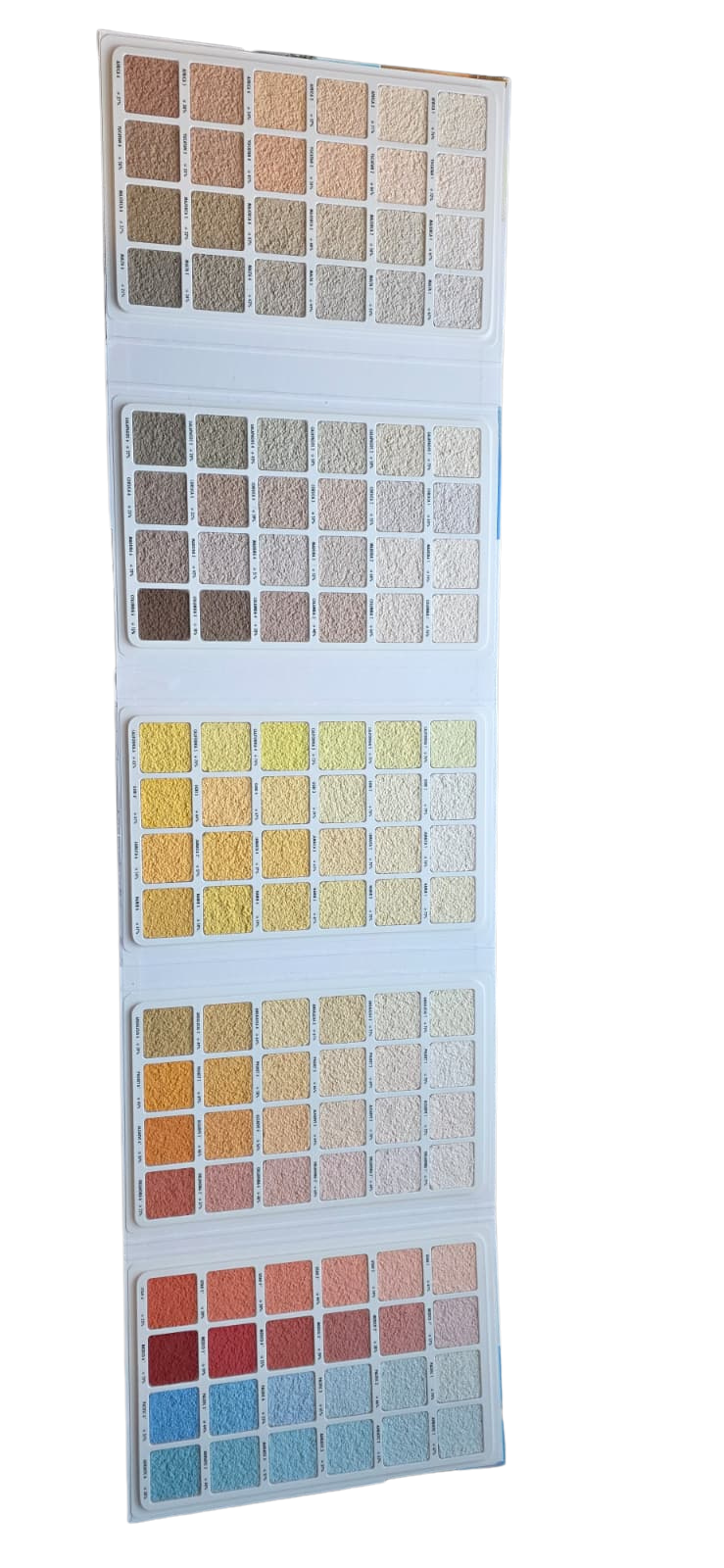
| Domestic facade shortlist to compare on site | Atlas Render Sample 24 Colours | Shortlist set |
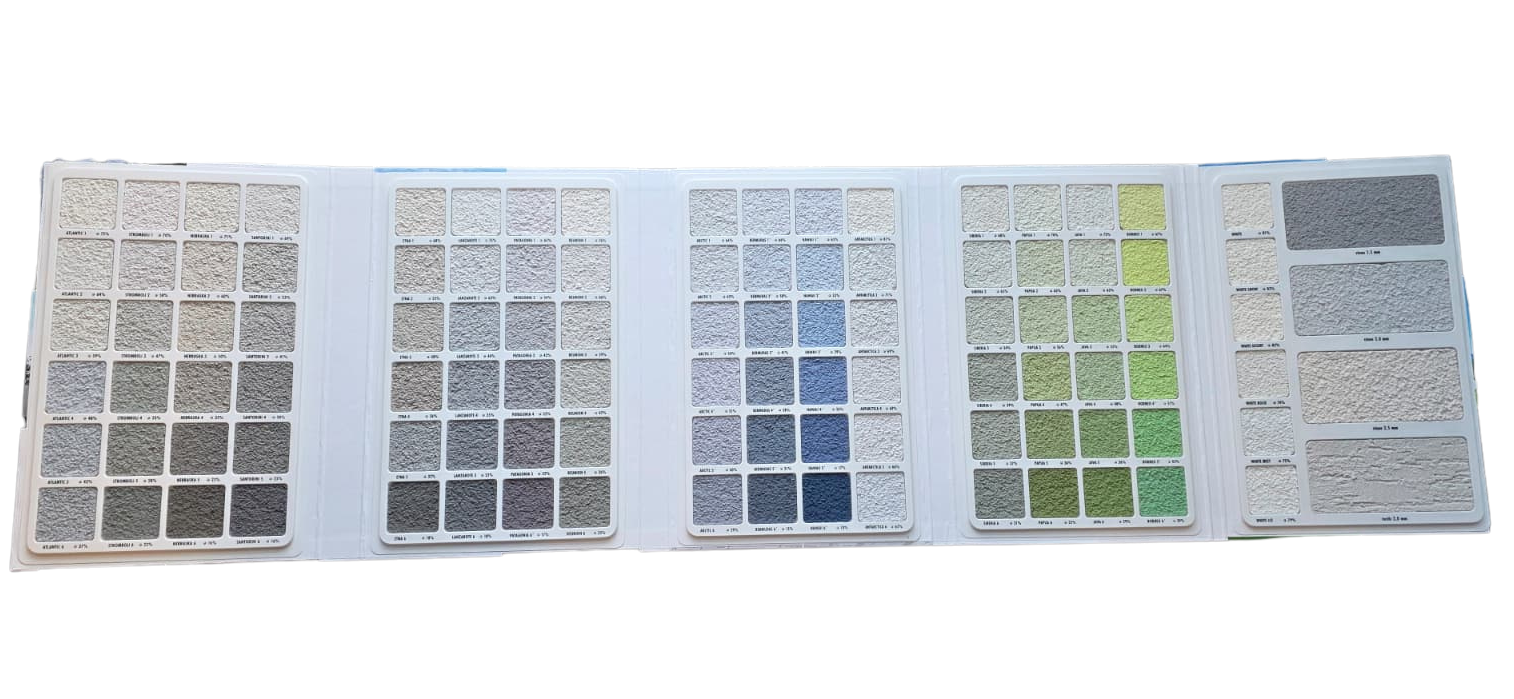
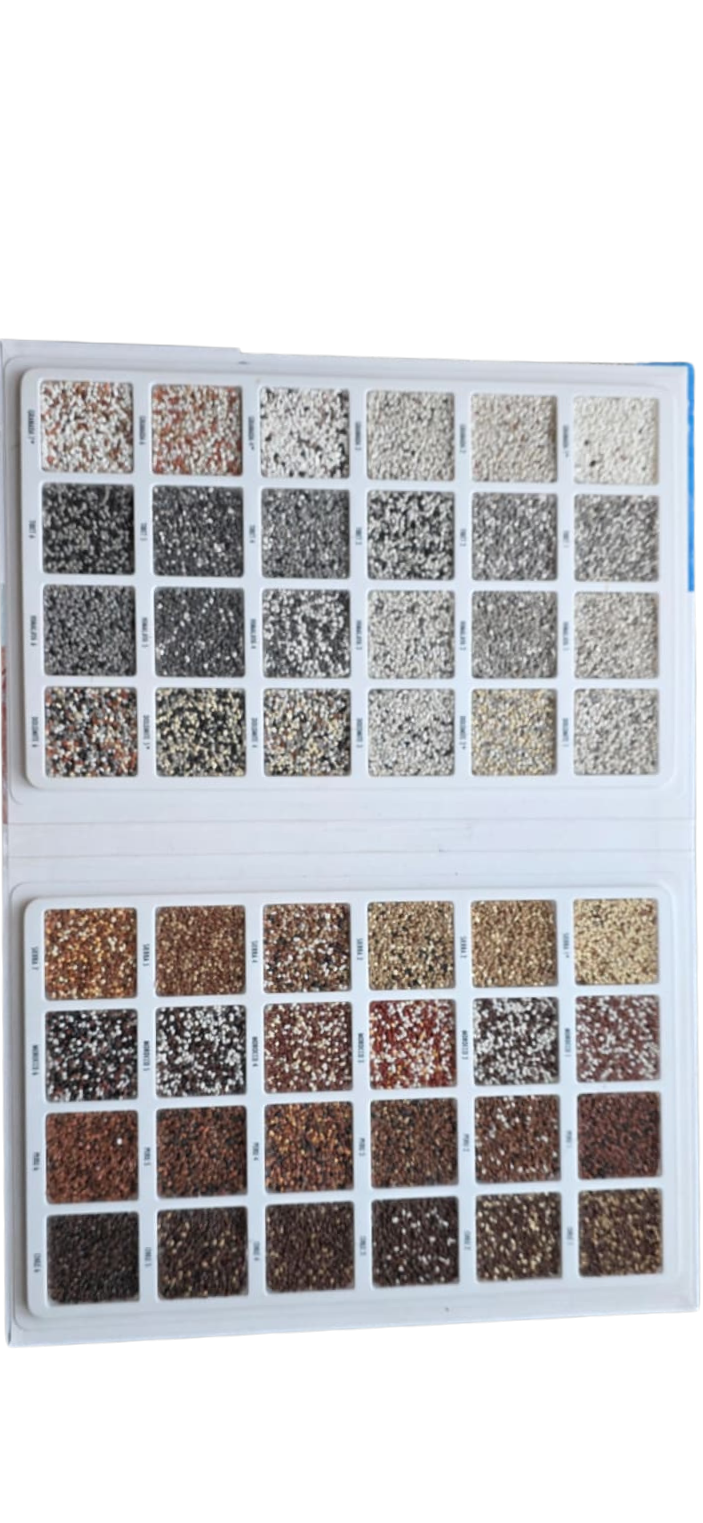
| Project specified in Ceresit renders, core palettes | Ceresit Colour Sample Book 1 | Core palettes |
| Contemporary or grey-led Ceresit scheme | Ceresit Colour Sample Book 2 | Quote on collection page |
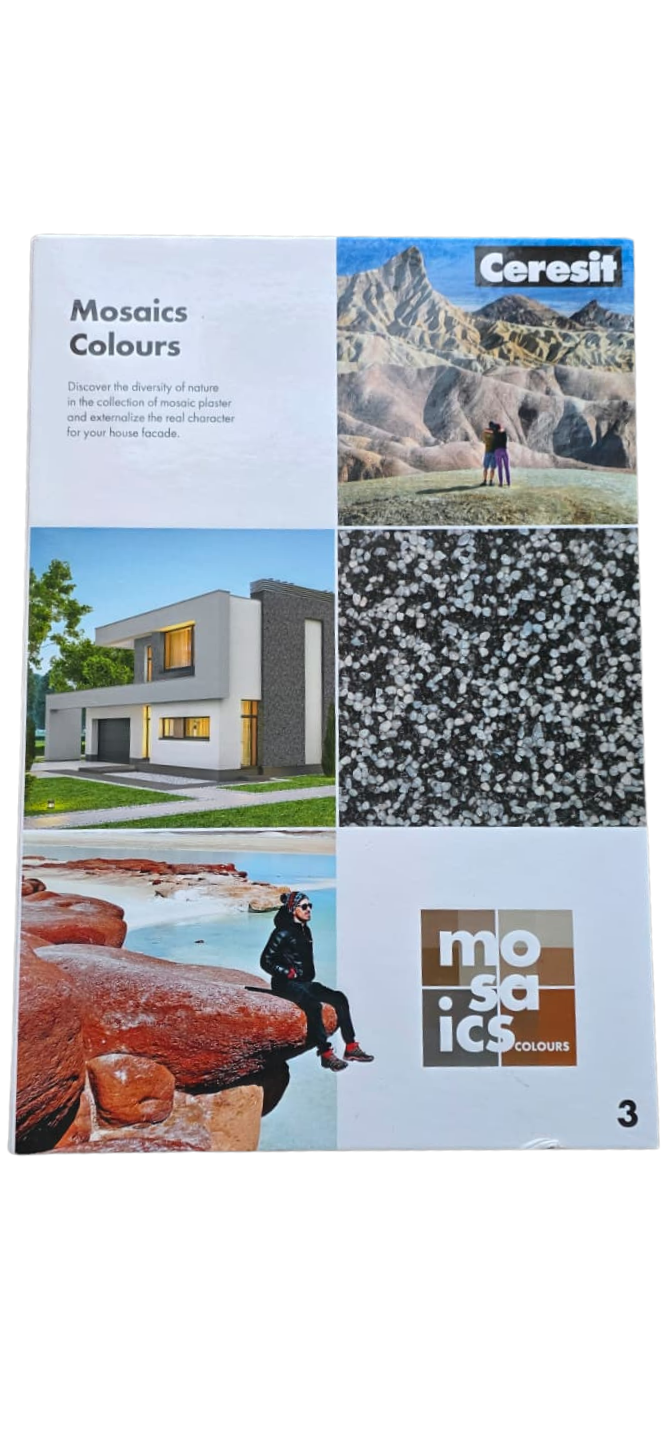
| Mosaic plinth or entrance detail | Ceresit Mosaic Sample Book | Mosaic shades |
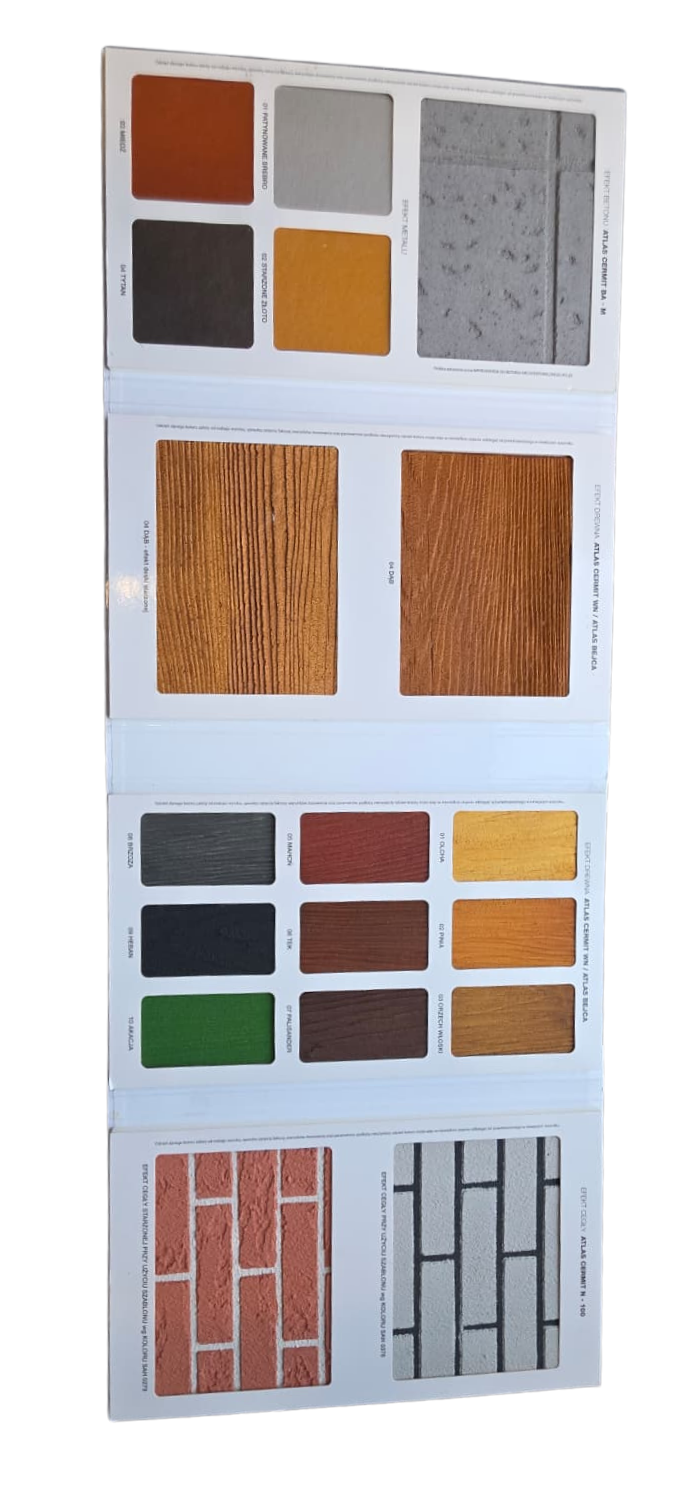
| Concrete or brick-effect decorative finish | Concrete and Brick Sample Book | Concrete and brick effects |
How to Use a Colour Chart on Site Before Anything Is Tinted
A chart does its work outdoors, on the elevation it is meant to describe, and the code it produces is the only part of the exercise that reaches the factory. Getting the grain and the reinforcing layer confirmed at the same moment is what keeps a deep shade specifiable.
- Ask which grain a swatch was made at: the sheet declares different consumption for each version, from 2.2 kg/m² by hand at up to 1.5 mm against 2.8 kg/m² at up to 2.0 mm, and aggregate depth changes how a pigment reads.
- Keep codes inside their own system: an SAH number and a Ceresit number are separate references, so order the chart for the brand the project will actually buy.
- Check the HBW route before promising a deep shade: the Atlas sheet permits colours above 6% light reflectance over a STOPTER K-100 reinforced layer and above 15% over HOTER U2, which makes the adhesive part of the colour decision.
- Note the mortar naming: the sheet writes that second mortar as HOTER U2 WHITE in its properties section and HOTER U2-B in its dark-colour table, so confirm the exact product with the supplier before it is ordered.
- Record the code at sign-off: the number is what travels to the tub label, and a photographed swatch page settles any question at handover.
Methodology beyond that belongs elsewhere: the silicone render colour selection guide owns light, orientation and palette coordination, the staged chart comparison method covers how professionals work through a shortlist, and the render grain size guide quantifies what a grain step does to finish and quantity. For saturated shades on exposed elevations, the dark shades and solar exposure guide sets out the reflectance thresholds and the systems that carry them.
Which Colour Counts Are Documented, and Which to Confirm on Ordering
This audit removed several shade totals that had no document behind them, and naming the gap is more useful to a specifier than a confident number would be. Charts are reference tools, so what they contain is a question for the supplier rather than something a data sheet answers.
- Documented: 480 SAH colours for Atlas Silicone Render, and 406 SAH colours including six whites for Atlas Salta paint, each from its own sheet.
- Not documented, so not stated: any combined Atlas-and-Ceresit total, the Ceresit palette counts for either book, the mosaic blend count and grain range, and the split of the 480 catalogue into dominant and accent halves.
- Confirmed on ordering: the exact contents of each book, which Renders World checks against current stock when the reference is requested.
Where a scheme is being built around earth tones or a drenched single-colour elevation, the 2026 earth-tone and colour-drenching guide works through the compositions these palettes support.
Atlas or Ceresit — Deciding Which Reference to Order
- Order Atlas where the render is Atlas: the 480-shade catalogue and the 24-shade set both key into the SAH system used across the silicone render range, and the code reads identically on the tub.
- Order both Ceresit books where the brand is fixed and the scheme is open: Book 1 carries the core palette families and Book 2 the contemporary groups, and neither count is published here for want of a document.
- Order the mosaic book for the plinth: it pairs with the mosaic renders for plinths collection, where the finish is decided by aggregate blend as much as by colour.
- Order the concrete and brick book for texture-led work: the swatches show what the concrete effect render range produces, which no flat colour reference can represent.
- Check the paint route before matching: the render sheet names ATLAS SALTA N as its renovation overpainting product, while the bucket stocked in the silicone masonry paints range is ATLAS SALTA — confirm the variant before matching a code across render and paint.
FAQ — Ordering, Codes, Deep Shades and Matching
How many references does one project need?
One per brand is normally enough, and one per stage where the work is decorative: a flat-colour reference for the main elevations, plus the mosaic or concrete book if a plinth or feature finish is in the scheme. On developer work a second copy of the shortlisted reference is worth having, so one stays on site while the other travels to client meetings.
Does an SAH code work on Ceresit render, or on Atlas paint?
An SAH code belongs to the Atlas colour scheme and does not transfer to a Ceresit product, which uses its own numbering. Within Atlas it does carry across renders and Salta paint, with the caveat that the render sheet declares 480 SAH colours and the paint sheet 406 — so a code chosen from the render catalogue is confirmed against the paint palette before a matched repaint is ordered.
What does the 480 catalogue give that the 24-shade set does not?
The catalogue covers the full declared 480-colour SAH range, which makes it the one to order from Renders World whenever a specific code has been issued or an existing facade is being matched. The smaller set earns its place as a handling tool for first conversations rather than as a substitute.
Can any shade on the chart go on an insulated wall?
Deep shades are specifiable, with the reinforcing layer doing the work: the Atlas sheet permits colours above 6% HBW over a STOPTER K-100 layer and above 15% HBW over HOTER U2, so the adhesive is chosen alongside the colour. Confirm the reflectance value of the chosen code with the supplier, and the dark-shade guide linked above sets out how those thresholds behave on south and west elevations.
How should a chart be looked after between projects?
Stored flat and out of prolonged sunlight, a physical reference stays usable across many specifications, and keeping a note of previously approved codes with it makes returning to a shade straightforward on later phases. Sustained UV will shift pigment on any reference eventually, which is reason enough to re-order before matching an extension years later.