Renders
11 products
Showing 1 - 11 of 11 products
Silicone Render — Premium Thin Coat Systems for the UK
Part of our comprehensive rendering materials range, this collection brings together the leading thin coat silicone render systems available to the UK trade. Engineered for the demands of the British climate, these hydrophobic render formulations deliver lasting weather resistance, high vapour permeability, and through-coloured aesthetics across EWI retrofits, masonry renovation, and new-build façade projects.
Product Overview — What This Category Covers
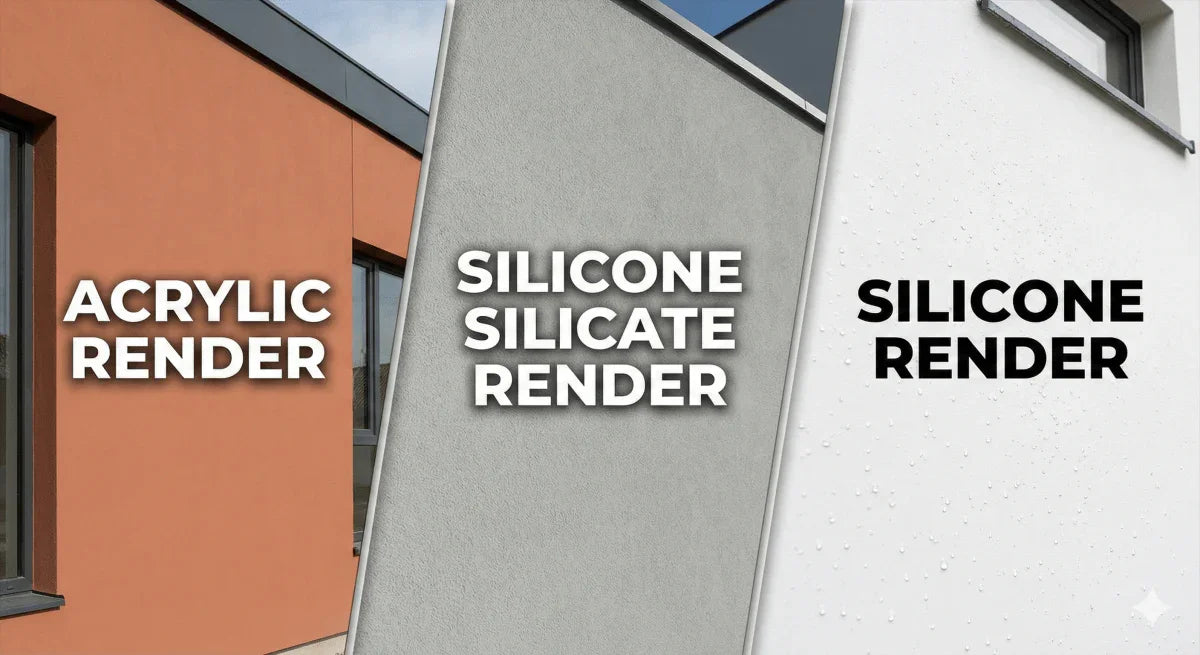
Silicone render is a polymer-modified, thin coat finishing system applied at 1.0–2.0mm thickness over a primed and reinforced substrate. Unlike traditional sand and cement renders, silicone technology introduces a water-repellent, flexible binder that prevents surface cracking and reduces long-term dirt accumulation. The category spans pure silicone formulations, silicone-silicate hybrids for heritage substrates, fine-grain machine-applied systems for large-scale elevations, and nano-technology finishes designed to manage solar heat gain on south-facing or dark-coloured façades. Whether specifying for a domestic retrofit or a commercial overclad, this range provides a technically matched solution for each project context.
Key Benefits & Technical Advantages
- Hydrophobic surface technology: The silicone binder creates a water-repellent finish that causes rainfall to bead and run off, reducing surface soiling and extending the decorative life of the façade.
- Vapour permeable construction: A V1 vapour permeability classification allows the building fabric to breathe freely, preventing interstitial condensation within the insulation layers.
- Flexible, crack-resistant matrix: Polymer modification accommodates thermal movement in the substrate, preventing the surface cracking common in rigid cement-based finishes.
- Integral biocidal protection: Factory-incorporated biocides suppress algae and fungal growth in damp or shaded environments, reducing maintenance requirements over the system's service life.
- Through-coloured finish: Pigment is integrated throughout the render layer across 1,000+ shades, eliminating the need for masonry paint and future repainting cycles.
- EN 15824 certified: All systems are manufactured and tested to EN 15824, the European standard governing organic render products.
Technical Specifications / Selection Guide
Selecting the correct system depends on substrate type, application method, project specification, and facade exposure. Use the table below as a first-stage guide when specifying from this range.
| Application Context | System Type | Key Technical Property |
|---|---|---|
| Standard EWI retrofit or new build | Pure silicone render | 1.5mm grain, through-coloured, V1/W3 |
| BBA-certified system requirement | Premium Gemini RS silicone | Enhanced impact resistance, BBA certification |
| Heritage or conservation substrate | Silicone-silicate hybrid | Hybrid breathability, mineral appearance |
| Large-scale machine application | Machine-applied 1.0mm system | Finest grain, pump-compatible |
| South-facing or dark-coloured façade | Solar Protect nano-technology system | Heat-reflective particles, HBW management |
| Sheltered elevation, budget-conscious project | Acrylic render | Cost-effective alternative, 1.5mm grain |
Application & System Compatibility
Silicone render is applied as the outermost decorative layer within a complete external wall system. All products require the substrate to be sound, level, and treated with a compatible render primer to regulate suction and promote adhesion. On EWI installations, a basecoat reinforcement layer incorporating fibreglass reinforcement mesh must be applied and fully cured before the thin coat render is introduced. Application temperatures must remain between +5°C and +25°C, with the finished surface protected from frost, heavy rain, and direct intense sunlight for a minimum of 24 hours. These systems are not suitable for below-DPC applications or surfaces subject to persistent standing water.
Is This Right for Your Project?
- Choose silicone render if: you require a premium, long-life façade finish — typically 25+ years — that is self-cleaning, crack-resistant, and requires no future masonry paint maintenance.
- Silicone render is well-suited when: the substrate is structurally sound, correctly primed, and forms part of a complete EWI or masonry renovation system.
- Consider alternative finishes if: the application zone is below the damp-proof course, subject to persistent ground moisture, or forms part of a plinth area where a mosaic or mineral decorative product may be more technically appropriate.
Frequently Asked Questions
What grain size should I specify for silicone render?
Grain size selection depends on the substrate condition and desired finish. A 1.0mm grain provides the smoothest surface profile and is typically reserved for machine application on large commercial elevations. A 1.5mm grain is the trade standard for most domestic and commercial EWI projects, balancing coverage rate with fine texture. A 2.0mm grain is chosen where a coarser finish is specified or where minor substrate imperfections require greater masking capability.
Are these renders through-coloured, or do they require painting?
All silicone renders in this range are through-coloured — the pigment is integrated into the render body during manufacture, not applied as a surface coat. Available in over 1,000 factory-mixed shades, the colour is present throughout the full thickness of the applied layer. This means minor surface abrasions do not expose a contrasting substrate, and the finish retains its appearance without the need for periodic repainting.
Can silicone render be applied during cold or wet weather conditions?
Application must not proceed when air or substrate temperatures fall below +5°C. For detailed guidance on managing application timing in variable British weather — including the appropriate use of winter setting accelerators — refer to our expert guidance article on when to apply silicone render in UK conditions.
What is the typical coverage rate for a 25kg tub of silicone render?
Coverage depends on grain size and substrate flatness. As a general guide, a 1.5mm grain silicone render requires approximately 2.3–2.5 kg per m², meaning a standard 25kg tub covers between 9m² and 10m² on a well-prepared, flat substrate. For a 1.0mm grain machine-applied system, material consumption is lower at approximately 1.6–1.8 kg per m². A 2.0mm grain will consume closer to 3.0–3.2 kg per m². These figures assume a single, even application pass; uneven substrates or pronounced surface texture will increase material consumption accordingly.