


Description
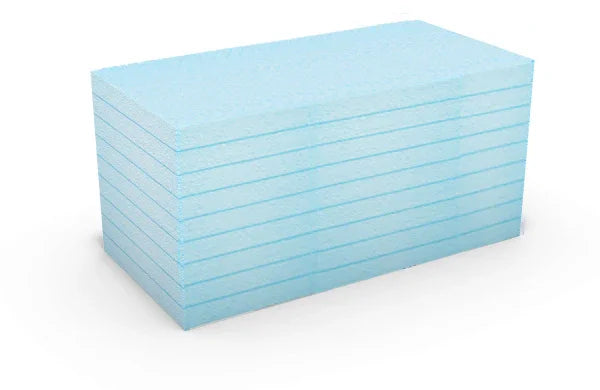
The XPS foundation board 50mm in the Renders World XPS foundation board range is a blue, water-repellent XPS board, 1000 × 500 mm and sold one board at a time. At 50 mm it is the board for shallow perimeter wraps and thin plinths where every centimetre of depth is spoken for.
Where the XPS Foundation Board 50mm Fits
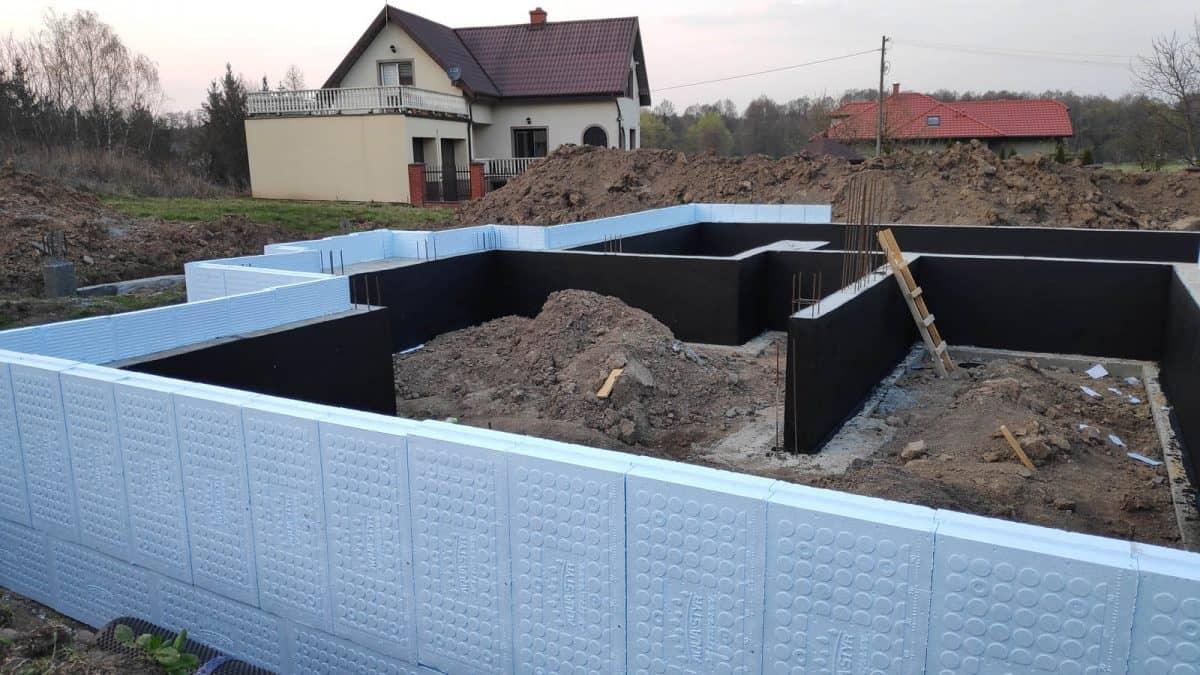
This range is the plinth and below-DPC shelf of the shop: boards for the wet zone at the bottom of a wall, where facade insulation would sit in splash water and backfill. The 50 mm depth suits jobs where the detail cannot give more:
- Shallow perimeter wraps on footings and foundation walls, where digging deeper costs more than the extra insulation returns.
- Thin plinths below the damp-proof course, where a deep board would push the plinth face out past paving and thresholds.
- Foundation walls below ground, bonded on and covered before the trench is filled back in.
Where the plinth meets the insulated wall above, the junction is the detail to get right; the guide to plinth thermal bridges and mould shows how the two zones join without a cold line.
Why Choose the 50 mm XPS Foundation Board
- Thermal conductivity λD 0.038 W/mK, the value on the board's own CE marking.
- About 1.30 m²K/W of thermal resistance from 50 mm. Thickness divided by λ: 0.050 ÷ 0.038 = 1.32, rounded down to 1.30.
- 100 kPa compressive strength, so it takes backfill and paving loads at the plinth.
- 150 kPa bending strength, so a 1000 × 500 mm board handles on site without snapping at the middle.
- 5 % water absorption under long-term immersion, the figure to check when the board will sit in damp ground or splash water.
- One board at a time, 0.5 m² each, so a short run or a repair is bought to the board, not to a full pack.
Specification — XPS Foundation Board 50mm
| Property | Value |
|---|---|
| Board | XPS foundation board, blue, water-repellent |
| Thickness | 50 mm |
| Board size | 1000 × 500 mm (0.5 m²) |
| Sold as | 1 board |
| Thermal conductivity λD | 0.038 W/mK |
| Thermal resistance | 1.30 m²K/W (0.050 ÷ 0.038 = 1.32, rounded down) |
| Compressive strength | 100 kPa |
| Bending strength | 150 kPa |
| Water absorption, long-term immersion | 5 % |
| Reaction to fire (the board alone) | Class E |
Class E describes the board on its own. A finished, rendered wall is classed as a whole system, so its fire performance comes from the system you build, not from this figure.
Fitting the Board and What Goes With It
An XPS foundation board is bonded to the wall and then covered. Above ground it is closed with a plinth finish; below ground it is protected before the backfill goes back. The parts sit in three places in the shop:
- Bonding: the adhesives and basecoats for insulation boards.
- Starter track and anchors for the first course above ground: insulation fixing accessories.
- Plinth finish: a mosaic render for plinths takes splash water better than a facade render.
Above the DPC the wall usually changes to a graphite facade board. At the same 50 mm, the 50 mm graphite EPS facade board keeps the plinth and the wall in one plane, so the mesh runs over the joint with no step.
The Five Foundation Board Depths
| Board | Thermal resistance (thickness ÷ 0.038) | Typical place |
|---|---|---|
| 30 mm | 0.75 m²K/W | Thin plinths where little depth is free |
| 50 mm (this board) | 1.30 m²K/W | Shallow plinths and foundation wraps |
| 80 mm | 2.10 m²K/W | Plinths under an 80 mm facade |
| 90 mm | 2.35 m²K/W | Plinths under a 90 mm facade |
| 100 mm | 2.60 m²K/W | Deepest wrap, 100 mm facades |
All five share λD 0.038 W/mK, so depth is the only thing that changes. For the material question itself — when a plinth wants a foundation board and when a facade board will do — read XPS and EPS boards compared.
Ordering the 50 mm Board
Each XPS foundation board 50mm covers 0.5 m², so one square metre takes two boards. Measure the run, multiply length by height, double it for the board count and add a few boards for cuts at corners and openings. Short runs and repairs are bought to the board, with no pack to break.
Is 50 mm the Right Depth?
- Yes, take the XPS foundation board 50mm where 50 mm is all the detail can give: shallow wraps and thin plinths.
- Go to 80 mm or deeper where the excavation and paving levels allow it — 80 mm brings the resistance up to about 2.10 m²K/W.
- Check the whole wall, not the board. A board has a thermal resistance; a wall has a U-value. The U-value and insulation thickness guide shows how the layers add up.
FAQ — 50 mm XPS Foundation Board
How many boards do I need per square metre?
Two. Each board is 1000 × 500 mm, which is 0.5 m². Divide the area by 0.5, round up, and add a few boards for cuts.
How far up the wall does the 50 mm board go?
Up to the DPC and no further. Above it the wall changes to a facade board made for render; the 50 mm graphite EPS facade board keeps the same depth, so the mesh carries on over the joint.
Can it go below ground level?
Yes — the range is sold for the plinth and below-DPC zone, and the board's water absorption under long-term immersion is 5 %. Cover the face with a protective layer or membrane before backfilling, so the soil does not press straight on the board.
What bonds the 50 mm board to the wall?
An adhesive for insulation boards, from the adhesives and basecoats range. Check that the adhesive's own data sheet covers XPS boards and, below ground, damp conditions.
50 mm or 80 mm?
50 mm gives about 1.30 m²K/W, 80 mm about 2.10 m²K/W. Take 50 mm where depth is fixed; take 80 mm where the plinth line and paving allow it.
What does fire class E mean here?
It is the board's own reaction-to-fire class. A rendered wall is assessed as a complete system, so the class of the finished wall comes from that system, not from the board.