RENDERING CEMENT BOARDS
3 products
Showing 1 - 3 of 3 products
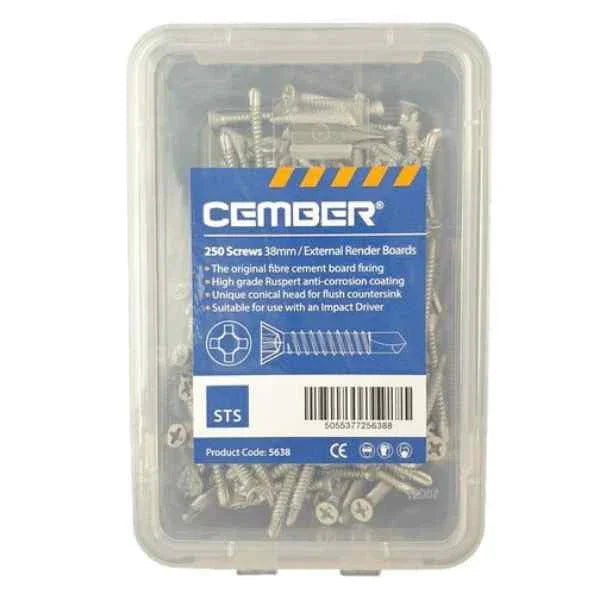
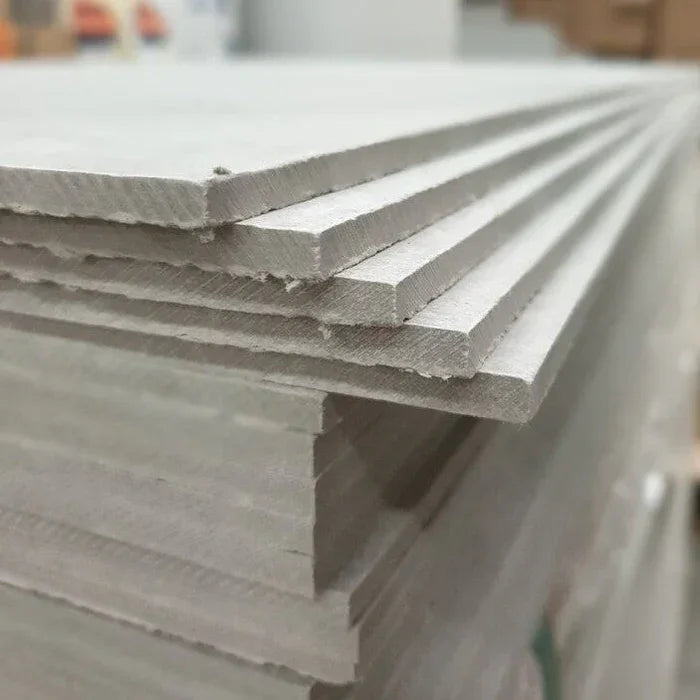
Within our rendering materials range, the rendering cement boards collection covers the dimensionally stable, non-combustible carrier boards required when render is applied onto timber-frame, steel-frame or SIP-panel construction — three components in total: an STS render board at 2,400 × 1,200 × 12 mm, a half-size board at 1,200 × 800 × 12 mm, and the matched Ruspert-coated 38 mm fixing screws that complete the system on UK facade projects. All three are stocked for trade collection or next-day UK dispatch from our Southampton warehouse, and the range is sized to handle storey-height panels, spandrel infills, and the fixing schedule together as one substrate package.
What Render Carrier Boards Do in a UK Timber-Frame or Steel-Frame System
A render carrier board is a heavy-duty fibre-cement panel fixed to the structural frame of a building to create a rigid, weatherproof substrate ready to accept basecoat, mesh, and render topcoat. Fibre cement is rot-proof, dimensionally stable through UK seasonal moisture cycling, and Euroclass A1 non-combustible — the property profile that timber-frame, steel-frame, and SIP construction needs when the facade specification calls for a rendered finish over a non-combustible carrier. Each full-size board weighs approximately 45 kg, providing the mass and rigidity that suppresses panel flex and the joint cracking that follows.
The 12 mm thickness is the working specification for external rendering: thick enough to accept fixings reliably at any point on the board face, and substantial enough that the textured surface presents a high-strength mechanical key for cementitious basecoat adhesives. Both board sizes are stocked to support efficient cutting patterns on complex elevations — full-size for storey-height runs, half-size for spandrel and infill panels around openings — and both share the same Ruspert-coated screw specification, so the fixing schedule is consistent across the range.
What Makes a Render Carrier Board Worth Specifying
- Non-combustible Euroclass A1 substrate: the fibre-cement composition delivers an A1 reaction-to-fire classification — the property typically required where project fire strategy specifies a non-combustible carrier behind the render, subject to current Approved Document B guidance.
- Dimensionally stable through wet/dry cycling: fibre cement does not expand, contract, or warp like timber-based sheathing under UK seasonal moisture loading, holding the substrate plane that the render system depends on.
- Rot-proof and mould-resistant: the inorganic cement matrix supports no fungal growth and does not degrade under prolonged dampness — a meaningful working-life advantage on driving-rain elevations.
- High mechanical key for basecoat: the textured face creates a strong bond with cementitious basecoat adhesives, anchoring the reinforcement layer and topcoat reliably against thermal and wind loading.
- Matched fixing system stocked alongside: the Ruspert-coated 38 mm screws are engineered for these boards specifically, providing corrosion resistance that prevents rust tracking through to the render finish over the long term.
- Render-finish ready as supplied: the boards accept standard primer plus basecoat plus mesh plus topcoat build-ups directly, integrating cleanly with thin-coat finishes from our premium silicone render range once the carrier is in place.
Selection Guide — Find Your Render Carrier Board or Fixing in 30 Seconds
Identify the panel area or fixing requirement, read across to the matched component, and order quantities for a 300 mm fixing centre. Use full-size boards for storey-height runs and half-size for infill panels around openings — both share the same 12 mm thickness and Ruspert-coated screw specification.
| Your Project | Best Component | Standout Spec |
|---|---|---|
| Storey-height panels | STS full-size render board | 2,400 × 1,200 mm · 12 mm · ~45 kg |
| Spandrel and infill panels | STS half-size render board | 1,200 × 800 mm · 12 mm · ~15 kg |
| Mechanical fixing across both board sizes | STS render board screws | 38 mm · Ruspert coated · 250 pcs |
How Render Carrier Boards Install in a Render Build-Up
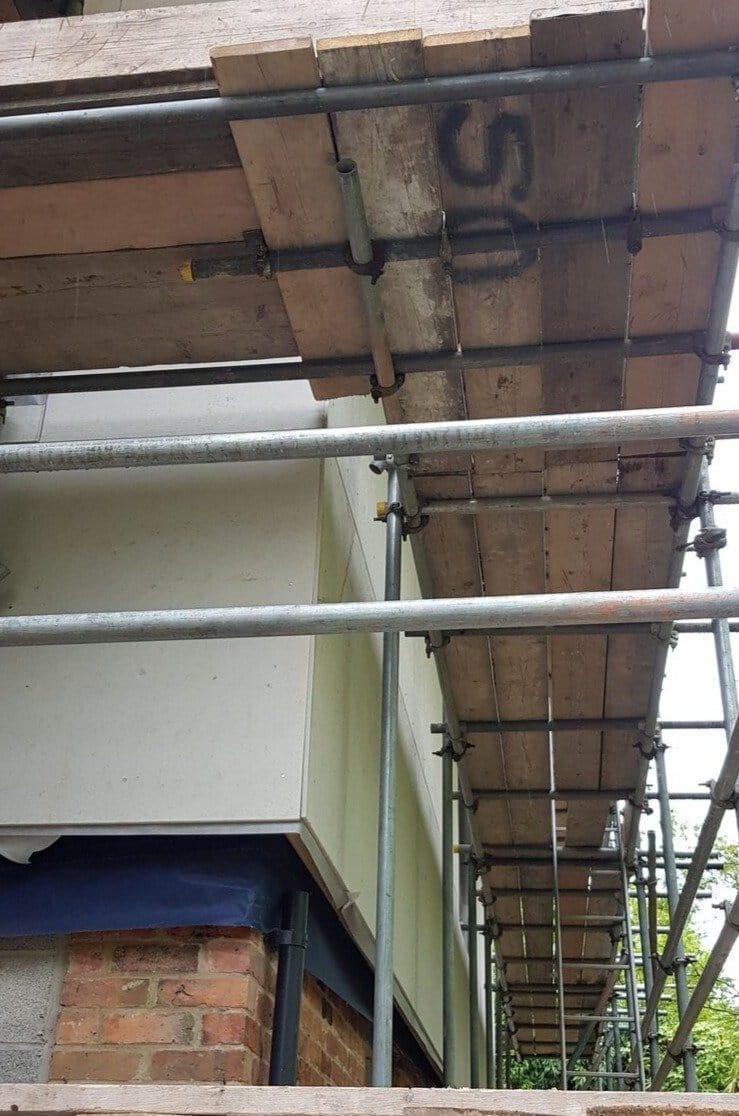
Render carrier boards fix directly to the structural frame before any render layers are applied, with the boards staggered across the elevation rather than aligning to the underlying stud pattern. Fix to timber or steel studs at 300 mm centres using the matched Ruspert-coated screws, countersunk flush with the board surface — flush is the target, since over-driving fractures the fibre-cement matrix around the screw head and creates a localised weak point beneath the render. Leave a 3–5 mm expansion gap at every board joint, bridged by the fibreglass mesh reinforcement layer embedded in the basecoat.
The full jointing, priming, and mesh reinforcement sequence — including primer selection, basecoat working thickness, and movement-joint detailing — is covered in the cement boards for rendering guide with worked site examples. Window and door junctions involve coordinated sequencing with stop beads, corner beads, and oversills as a profile set: the render detailing around windows and doors guide walks through that sequence. For projects within NHBC warranty scope — the majority of UK new-build housing — the NHBC render detailing guide covers the warranty inspection points relevant to board-fixing and movement-joint detailing. Where insulation is fixed over the carrier board to form a hybrid build-up, the fixing accessories range supplies the matched plugs and anchors.
What UK Installers Do Differently With Render Carrier Boards
- Plan the lift sequence before scaffolding day: full-size boards at 45 kg each are two-person handling, and pre-cutting on the ground before the boards go up reduces cutting at height, keeps offcuts manageable, and clears the working platform faster.
- Score and snap before reaching for the saw: work on the smooth face with a tungsten-carbide scoring tool and snap over a straight edge for square cuts. Circular saws with diamond blades produce cleaner shapes on complex profiles but generate silica dust that requires RPE and on-tool extraction under current HSE construction-site guidance.
- Treat the primer step as a defect-elimination move: a high-adhesion exterior render primer regulates the suction rate of the fibre-cement face, letting the basecoat cure uniformly across the panel. Skipping the primer leaves basecoat curing unevenly at the very edges where joint stress is highest, and that is the most common single defect we see on unprimed substrates.
- Order screws to a 300 mm grid, not by metre: count the panel area, multiply by stud-line frequency at 600 mm centres, then by screw count at 300 mm along each stud — that calculation lands the right pack count first time, where ordering by linear metre routinely under-counts on storey-height panels.
- Confirm scaffold storage before delivery: a typical detached house facade in carrier boards runs to several full pallets, and tight-access urban sites benefit from a phased delivery schedule that matches the lift programme rather than landing the full quantity on day one.
Is the Render Carrier Board Range Right for Your Project?
- Timber-frame or steel-frame new build with rendered finish: the fibre-cement carrier provides the A1-rated, dimensionally stable substrate that frame construction needs for a long-lasting, crack-free rendered facade.
- Projects where fire strategy specifies non-combustible substrate: the Euroclass A1 classification supports facade specifications where combustible sheathing is restricted, subject to design verification under current Approved Document B guidance.
- Hybrid carrier-plus-insulation build-ups: where insulation is fixed over the boards as part of a system, the fixing accessories range supplies the matched plugs, anchors, and base tracks that complete the build-up.
- Render finish to complete the elevation: once the carrier is fixed, primed, and reinforced with basecoat and mesh, the premium silicone render range covers the topcoat options that complete the system in a wide colour set.
- Masonry-only substrates: where the wall is solid brick or block and no frame carrier is required, this range is not the relevant product family — render goes directly onto a primed masonry substrate via the standard primer-and-basecoat sequence covered in the rendering menu.
FAQ — Render Carrier Board Installation and Compatibility
Do cement boards need priming before basecoat is applied?
Priming with a high-adhesion exterior render primer is strongly recommended on render carrier boards. The primer regulates the suction rate of the fibre-cement face, allowing the basecoat to cure uniformly across the full panel area. Uneven suction leads to differential curing at board edges — the typical first failure point in unprimed substrates — and the primer step is the simplest single intervention that eliminates that defect class before it appears.
What screw spacing is required, and which screws should be used?
Fix to timber or steel studs at 300 mm centres using the Ruspert-coated 38 mm screws supplied in this range. Screw heads should sit flush with the board surface — countersunk but not over-driven. Over-driving fractures the fibre-cement matrix around the head, reducing pull-out resistance and creating a localised weak point beneath the render finish.
How do these boards compare to plywood or OSB sheathing for rendering?
Cement boards are non-combustible, rot-proof, and dimensionally stable through moisture cycling — properties that timber-based sheathing does not match. Plywood and OSB carry combustibility and moisture-movement liabilities that are significant on rendered facades, particularly on driving-rain elevations and where project fire strategy restricts combustible carriers. Cement board is the substrate to specify when those liabilities matter to the project.
Can these boards be used for internal wet-room applications?
The A1 fire rating and moisture resistance make these boards a strong substrate for internal wet rooms, shower enclosures, and swimming-pool surrounds. The boards typically accept direct tile adhesive application, though project-specific tanking and waterproofing requirements should be confirmed against the membrane and adhesive manufacturer's current recommendations for the use case.
How heavy are the boards, and what handling is required on site?
The full-size board (2,400 × 1,200 × 12 mm) weighs approximately 45 kg — two-person handling on scaffold, with pre-cutting at ground level wherever practical. The half-size board (1,200 × 800 × 12 mm) weighs approximately 15 kg and is single-person handling on most sites. Plan delivery access and scaffold storage capacity for the board count required before ordering, especially on tight-access urban sites where phased delivery may match the lift programme better than a single drop.
Are there NHBC considerations for render carrier board projects?
For projects within NHBC warranty scope — most UK new-build housing — board fixing, joint detailing, and movement-joint provision are standard inspection points. The NHBC render detailing guide covers the warranty inspection criteria relevant to render carrier board work, and the detailing approach is straightforward to verify when board joints are staggered, expansion gaps are maintained at 3–5 mm, and the mesh reinforcement bridges every joint inside the basecoat.