
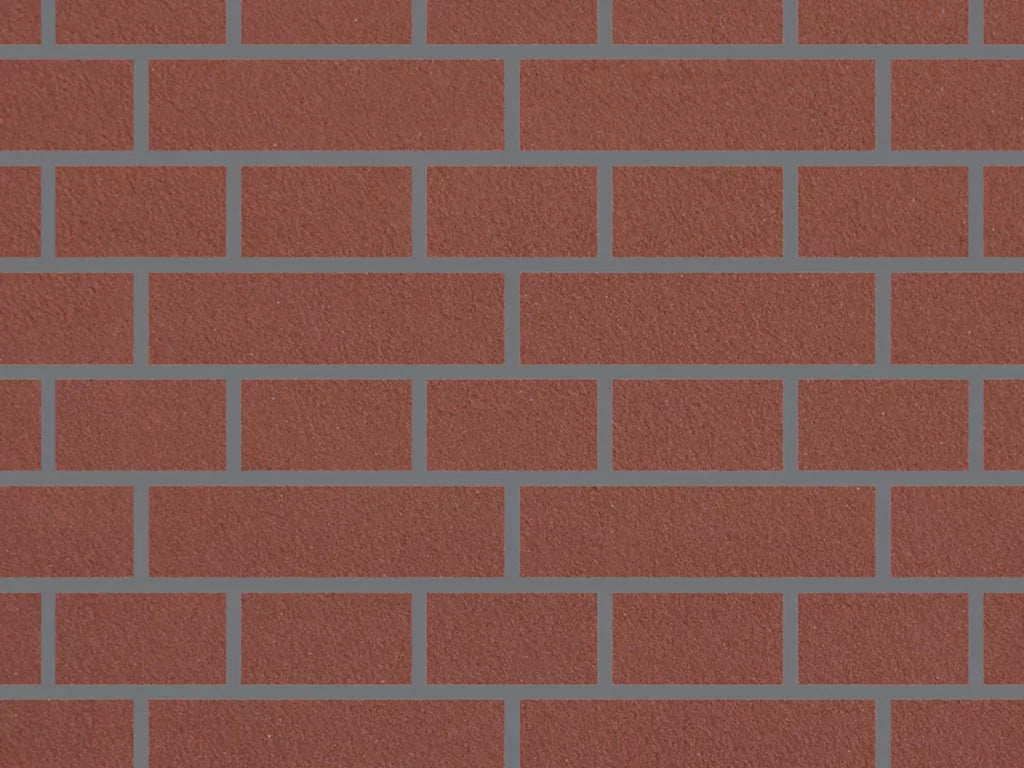
Description
The Visage Stencil Boston Brick set is the contemporary-bond pattern within our concrete effect render collection — 15 reusable polymer sheets cover approximately 15 m² at ~88 × 104 cm per sheet, producing crisp linear mortar-joint detail when paired with Ceresit CT60 Visage 0.5 mm acrylic render across full elevations, gable panels, or feature garden walls.
Where the Boston Brick Stencil Performs Best — UK Brick-Effect Facades and Feature Walls
The Visage Stencil Boston Brick set is a 15-sheet reusable polymer template pack that delivers a linear contemporary brick bond across approximately 15 m² of rendered facade, designed to pattern Ceresit CT60 Visage 0.5 mm acrylic render within the Ceresit Ceretherm Visage system on EWI build-ups, directly rendered masonry, concrete, cement plaster, and gypsum board substrates. In plain terms: the stencils produce the recessed mortar joints that make the finished render look convincingly like real brickwork once peeled — at 2–3 mm total system thickness rather than the 15–25 mm and structural weight of real brick slips.
Typical UK use sits in four places: modern front elevations on new-build and renovation projects where a contemporary clinker-brick aesthetic suits the architectural brief; gable panels and accent bays where a brick-effect zone differentiates the facade from neighbouring properties; garden walls and boundary features where the lightness of stencilled render avoids the foundation and weight implications of real masonry; and EWI retrofits where the brick character is wanted on an insulated build-up that could not carry true brick slips. Specify it where the brief calls for brick character without the masonry weight.
Why Installers Choose the Boston Brick Stencil Over Real Brick Slips
- 15 m² coverage in a single pack: Fifteen sheets at approximately 1 m² each cover a complete feature wall, gable end, or standard front-elevation panel — order the right quantity in one purchase without converting brick-slip counts into square metres.
- Sharp contemporary bond pattern: Boston Brick produces clean geometric mortar lines with consistent joint widths across every sheet, delivering the linear aesthetic that suits modern facades — noticeably crisper than the stretcher-bond irregularity of the companion London pattern.
- Reusable polymer template: Each sheet is moulded from durable polymer that cleans and repositions across the wall, so 15 sheets keep workflow continuous on a full elevation while earlier sheets are recovered for the next pass — no separate stencil needed per square metre.
- Fraction of the weight of real brick: A stencilled render facade adds 2–3 mm of material to the wall compared to 15–25 mm and significant structural weight for brick slips — no additional lintels, foundations, or structural calculations even over lightweight EWI insulation systems.
- 12 colours from one stencil pattern: The same Boston Brick template produces a warm cottage character in Ravenna Red, a modern industrial edge in Java Graphite, or a coastal elegance in Dominicana Beige — choose colour independently of pattern across the factory-mixed Visage palette.
- Compatible across any prepared substrate: The stencils work over EWI build-ups (EPS or mineral wool with cured reinforced basecoat), directly rendered masonry, concrete, cement plaster, and gypsum board — usable on new builds, retrofits, garden walls, and boundary fences alike.
- Sealable for 8–12 year maintenance-free interval: Finishing the completed pattern with an Atlas Bejca sealer locks colour depth and adds long-term UV and weather protection, extending the maintenance-free interval to 8–12 years on sheltered elevations — a programme advantage real brick slips cannot match without joint repointing cycles.
Technical Specifications — Boston Brick Stencil Set
| Property | Value |
|---|---|
| Product type | Reusable polymer brick stencil |
| Pattern | Boston Brick (linear contemporary bond) |
| Pack contents | 15 stencil sheets |
| Coverage per pack | ~15 m² |
| Sheet size | ~88 × 104 cm (≈ 1 m² per sheet) |
| Material | Durable polymer |
| Reusable | Yes — clean and reposition after each use |
| Compatible render | Ceresit CT60 Visage 0.5 mm acrylic render |
| Required primer | Ceresit CT 16 quartz primer |
| Optional sealer | Atlas Bejca (extends maintenance-free interval to 8–12 years) |
| Application temperature | +5 °C to +25 °C (governed by render curing conditions) |
| Compatible substrates | EWI basecoat (EPS / mineral wool), concrete, cement plaster, gypsum, masonry |
| Available Visage colours | 12 factory-mixed shades (Hawaii Cream, Ravenna Red, Java Graphite, and 9 others) |
How to Apply the Boston Brick Stencils — Five-Step Render Workflow
The stencils work within a two-layer rendering process that produces realistic recessed mortar joints without any cutting, pointing, or adhesive — the pattern emerges when the stencil is peeled away from the partially set topcoat. The full brick and timber stencil methods guide covers every stage from substrate preparation through to final sealing; the summary below is the SKU-specific sequence for this Boston pattern.
- Base render (mortar colour): Apply the first coat of Ceresit CT60 Visage 0.5 mm in the colour that will represent the mortar joints — typically a lighter shade such as Dominicana Beige or Hawaii Cream. Allow this layer to reach a firm, tack-free surface before proceeding.
- Fix the stencils: Press each Boston Brick sheet firmly onto the tacky base coat, aligning the linear pattern across adjacent sheets so the brick bond continues seamlessly from one panel to the next. The polymer template adheres to the tacky render without additional fixings.
- Topcoat render (brick colour): Apply the second coat of CT60 Visage 0.5 mm over the stencils in the chosen brick colour — Ravenna Red for a warm terracotta, Java Graphite for a modern charcoal — and texture the surface with a stainless-steel float.
- Peel and reveal: Once the topcoat reaches initial set (firm enough to resist a light finger press but still pliable), peel each stencil section slowly downward to reveal the contrasting mortar joints beneath. The concrete effect render application guide covers timing and UK weather considerations for this stage.
- Seal and protect (recommended): Once the render has fully cured, applying an Atlas Bejca sealer in a matching or contrasting tint locks colour depth and adds long-term UV protection — the sealer application guide covers shade selection, application rates, and curing windows for plinth and elevation zones.
Installation Notes — Pattern Alignment, Peel Timing, and Stencil Care
Consistent pattern alignment is the detail that separates a professional-grade brick-effect facade from an amateur one. Before applying the first stencil, snap a horizontal chalk line across the wall at the base of the working area so the first course of bricks sits level — every subsequent sheet aligns from this datum, so two minutes invested at this stage prevents a visible drift across the full elevation.
For the cleanest mortar-joint edges, peel each stencil in one continuous downward motion rather than lifting from the centre. Clean any render residue from the stencil with a damp sponge immediately after removal while the material is still soft — this keeps the template in reusable condition and ensures the pattern stays crisp on every subsequent application. Sheets stored with cured render still bonded to the polymer face will degrade after the first reuse, so the seconds spent cleaning each peeled sheet pay off across the full stencil lifecycle.
Air and substrate temperature should sit between +5 °C and +25 °C throughout the base coat, stencil fix, topcoat, and peel stages, with relative humidity below 80 % — this is the curing window governed by the CT60 Visage acrylic binder and applies to the stencil workflow because peel timing depends on render set rate.
Pro Tips From UK Installers Using the Boston Brick Stencil
- Work in vertical bays on wide elevations: On elevations wider than 4–5 metres, work in vertical bays two stencil sheets wide rather than horizontal rows. Base-coat one bay, fix stencils, top-coat, then move to the adjacent bay while the first firms up — by the time the second is complete, the first bay's stencils are ready to peel. Continuous rotation keeps workflow moving and every stencil peels at the same firmness, producing uniform joint depth across the facade.
- Snap the datum line before opening the first pack: A level horizontal chalk line at first-course height is the single best insurance against pattern drift on a tall elevation; rely on the ground line as datum and any out-of-level error imports straight into the finished brick pattern.
- Choose mortar-joint colour two shades lighter than the brick: A subtle tonal contrast between mortar and brick reads as realistic depth in low sunlight; choosing colours too close in tone flattens the pattern, and choosing them too far apart drifts into a cartoon-brick look that homeowners notice at handover.
- Clean stencils immediately, store flat: Damp-sponge each stencil within minutes of peeling and stack the cleaned sheets flat (not rolled or folded) — bent polymer carries memory that produces visible misalignment on the next application.
- Order one extra pack for projects over 30 m²: On larger elevations, a spare pack lets you keep two crews continuously productive — one applying, one peeling and cleaning — rather than waiting for the same 15 sheets to recycle through each station.
Is the Boston Brick Stencil Right for Your Project?
- Yes — for contemporary linear brick-bond facades: The Boston Brick set delivers a sharp geometric pattern across approximately 15 m² per pack, paired with CT60 Visage 0.5 mm in any of 12 factory-mixed colours — the right specification for modern front elevations, gable panels, garden walls, and EWI retrofits targeting brick character without masonry weight.
- Traditional weathered brick look instead? The Visage Stencil London Brick set uses the same 15-sheet / 15 m² format but produces a classic stretcher-bond pattern with a softer, more rustic mortar-joint character — better suited to conservation areas, period renovations, and cottage-style facades.
- Smooth concrete or timber-stamped aesthetic instead? Where the brief calls for an industrial poured-concrete finish or a timber-grain effect rather than a brick pattern, the wider concrete effect render range covers smooth Atlas Silkon BA, Atlas Cermit WN with silicone timber stamps, and matching Bejca sealers — pick the system matched to the visual goal rather than retrofitting Boston Brick to a non-brick pattern.
- Complete the system at point of order: A 15 m² Boston Brick project typically needs the stencil pack plus 2 buckets of CT60 Visage in the mortar colour, 2 buckets in the brick colour, 1 bucket of CT 16 quartz primer, and 1 tin of Atlas Bejca sealer — ordering the five-item system together avoids the most common cause of programme delay on stencil projects.
FAQ — Boston Brick Stencil Coverage, Ordering, and Reuse
How many stencil packs does my project need?
Each pack contains 15 sheets covering approximately 15 m². Measure your wall area in square metres and divide by 15 to get the pack count — then add 10 % for reveals, cuts around windows, and pattern alignment wastage. For a typical UK semi-detached front elevation of 35–45 m², three packs give comfortable coverage with a working margin and a small reserve for any callback touch-ups.
What materials complete a 15 m² Boston Brick installation?
A complete 15 m² brick-effect facade typically needs five items: one Visage Stencil Boston Brick pack (15 sheets), two buckets of CT60 Visage 0.5 mm in the mortar colour, two buckets of CT60 Visage 0.5 mm in the brick colour, one bucket of Ceresit CT 16 quartz primer, and one tin of Atlas Bejca sealer to protect the finished facade. Each 25 kg CT60 bucket covers approximately 10 m², so two buckets per colour give comfortable coverage for 15 m² with margin for reveals and wastage.
Can the stencils be used over an EWI insulation system?
The stencils apply to the decorative render coat — the outermost layer that sits on the reinforced basecoat-and-mesh assembly — so the insulation type beneath (EPS, XPS, or mineral wool) does not affect the stencilling process. Provided the reinforced basecoat is fully cured and the surface is primed with Ceresit CT 16, the workflow runs identically over insulated facades and directly rendered masonry.
How reusable are the polymer sheets across a single project?
Each polymer sheet is designed to be cleaned and repositioned across the wall during the same project, which is what allows a 15-sheet pack to cover larger elevations. After peeling a stencil from the partially set render, wipe it down with a damp sponge to remove any residue before pressing it onto the next section — keeping the stencils clean between applications keeps the mortar-joint pattern crisp and consistent through the whole job.
How does the Boston Brick pattern compare to London Brick?
Boston Brick produces a linear, contemporary bond with clean geometric mortar lines — the right choice for modern facades, new-build extensions, and urban renovation projects. London Brick produces a classic stretcher-bond pattern with softer, more rustic joint character — the right choice for conservation areas, period renovations, and cottage-style facades. Both stencil sets use the identical 15-sheet / 15 m² format and pair with the same CT60 Visage render and CT 16 primer, so the decision is purely aesthetic, not system-level.
Is a stencilled brick-effect facade an environmentally responsible specification?
A stencilled render facade uses significantly less material per square metre than traditional brick slips — total system thickness is 2–3 mm of render compared to 15–25 mm and a heavyweight adhesive bed for slips. This translates to lower raw-material extraction, reduced transport weight, and faster installation with less scaffold hire and on-site energy. The CT60 Visage render paired with these stencils is a water-based low-VOC formulation, and the long-term colour stability of the cured finish eliminates the repainting cycles that conventional painted masonry facades demand every few years.


