
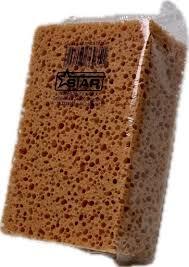
Description
At 187 cm² footprint with 60 mm depth, this 170 × 110 × 60 mm beige tiling sponge is the mid-format large-pore workhorse for tile grouting cleanup, render texture finishing, and general site clean-down — the size most trade tilers and renderers reach for on day-to-day work where format extremes are not needed.
Where This Mid-Format Sponge Earns Its Place
The 170 × 110 × 60 mm beige tiling sponge is a large-pore open-cell hand sponge that covers tile grout cleanup, render texture finishing, and site clean-down across UK trade work, with a 187 cm² footprint and 60 mm working depth that handles a continuous square metre of grout haze in a single rinse cycle. Renders World stocks the full hand-sponge range in the power floats and sponges range so installers can match format to job rather than forcing one sponge across every workflow. This mid-format is the default choice — large enough to move ground quickly on a full elevation, small enough to wring out one-handed without water running up the forearm.
The geometry sits deliberately between the large-format coverage sponges and the compact detail formats. Tilers running residential bathrooms, kitchens, and modest commercial work find this size handles 80% of grouting tasks without needing a bigger or smaller alternative. For renderers, the same footprint suits second-fix touch-up after machine work and the kind of bead-and-sill wipe-down that precedes the basecoat going on.
Why Trade Installers Choose This Format
- Large-pore cell structure — open cells release water cleanly and pick up grout residue without smearing the joint line on the return wipe.
- Mid-size 170 × 110 mm footprint — covers ground faster than compact formats while staying controllable in one hand on continuous wall runs.
- 60 mm working depth — real water capacity, so fewer trips back to the bucket across a full elevation of tile or render.
- Multi-trade utility — single sponge format covers tile grouting, render finishing, and general site clean-down without specialist alternatives.
- Even hand pressure across the wipe — the 60 mm depth resists collapse against the substrate, so pressure stays uniform stroke to stroke.
Technical Specifications — 170 × 110 × 60 mm Sponge Data
| Property | Value |
|---|---|
| Dimensions | 170 × 110 × 60 mm |
| Footprint area | 187 cm² |
| Working depth | 60 mm |
| Pore structure | Large open-cell foam |
| Colour | Beige (natural cellulose-blend foam) |
| Primary use | Tile grouting, render finishing, site clean-down |
| Recommended water | Clean potable water at ambient temperature |
| Working life | Typically 30–50 m² tile cleanup before edge wear |
How to Use This Sponge Effectively on Tile and Render
For tile grouting cleanup, time the work to the grout's initial set — typically 15 to 30 minutes after grouting on cement-based products, depending on grout type and ambient conditions. Wring the sponge out fully so it is damp rather than wet, then wipe in long diagonal strokes across the tile face. Diagonal strokes pull less material out of the joint than perpendicular wipes do, which is the difference between a clean haze removal and a re-cut joint line that has to be topped up.
Rinse frequently in clean water and rotate to a fresh sponge face every few wipes to keep pulled grout from being redeposited on adjacent tile. Always work with two buckets on a full wall: one for rinsing dirty, one with clean water for the final pass. Cross-contaminating the rinse water with grout slurry is the single most common reason for a hazy finish on what would otherwise be a clean job.
For render finishing, use the sponge on freshly textured silicone or acrylic surfaces to even out tool marks and rubbed-in patterns. The power floats for render finishing guide from Renders World covers the full sequence from machine work through to the hand-sponge final pass. For soiling beyond what a sponge alone will lift — algae, efflorescence, set cement haze — switch to a chemical solution from the cleaning products range.
How This Sponge Compares to Function-Overlap Siblings
The hand-sponge range covers the same general job through different geometries, so format choice comes down to the work pattern rather than the cleaning chemistry. The three siblings below sit nearest to this format by function and substrate — the same decision a tiler or renderer makes when picking a sponge off the shelf.
| Variant | Key Spec | When to Choose |
|---|---|---|
| 170 × 110 × 60 mm beige (this) | 187 cm² · 60 mm depth · single density | General day-to-day grouting and render |
| 165 × 100 × 80 mm double tile sponge | 165 cm² · 80 mm depth · dual-density two-sided | Mobile work where one tool covers both passes |
| KAEM 20 × 14 × 7 cm sponge | 280 cm² · 70 mm depth · large square | Bulk floor and large open-area tile work |
For specialist applications outside the three nearest neighbours, the wider sponge range covers more specific roles. The KAEM 23 × 11.5 × 7 cm elongated sponge suits linear-set tile and long-shift work, the KAEM 15 × 10 × 5 cm compact sponge handles detail and corners, and the cellulose sponge outperforms foam on the final residue lift on visible tile faces.
How Pros Get the Best Result From This Sponge
Soak the sponge thoroughly before first use to fully open the cell structure. Straight from packaging the foam can repel water for the first few seconds, which on a working site costs more time than the soak does. Renderers consistently report that the pre-soak step is the easiest one to skip and the one that most affects how the sponge performs on the first wall.
Replace the sponge when the cell structure starts to break down at the edges. Once the foam tears, fragments end up embedded in the grout line and have to be picked out individually before the joint can be re-finished — a few minutes of extra work that pays for the replacement sponge several times over. A working sponge typically gets through 30 to 50 m² of tile cleaning before edge wear becomes a problem, which on continuous work translates to roughly one sponge per substantial bathroom or kitchen job.
For trade accounts purchasing across multiple sites, Renders World ships hand sponges alongside machine pads and chemical cleaners in a single consolidated order, which is the practical advantage for installers and contractors running concurrent projects across the UK. Hand rinsing in clean water remains the recommended care method — machine washing accelerates cell breakdown and shortens the working life noticeably.
Is This Sponge Right for Your Project?
- General tile grouting and render finishing: ideal — the mid-format size suits day-to-day work across multiple trades.
- Heavy-duty grouting on large floors or commercial work: consider the larger KAEM 20 × 14 × 7 cm square format for faster coverage per wipe.
- Mobile single-installer residential work: the dual-density double tile sponge gives a complete two-pass workflow in one tool.
- Chemical cleaning of algae, mould, or efflorescence: pair with a product from the cleaning products range — sponges remove residue, chemicals remove growth.
FAQ — Sponge Use, Maintenance, Compatibility
Can the same sponge be used for tile grouting and render finishing?
Yes — the open-cell structure suits both surfaces. The practical rule is to keep one sponge for grout work and a second for render finishing, since cement grout residue can leave fine streaks on freshly textured render surfaces if the sponge has not been fully rinsed. Most working kits keep dedicated sponges for each trade rather than rotating one through both.
How long does one sponge last in trade use?
A typical working life is 30 to 50 m² of tile cleaning, after which the cell edges start to break down and foam fragments risk lodging in the joint. For render finishing the sponge usually lasts longer, since the rubbing pressure is lighter and the surface less abrasive than fired ceramic. Replace once edge wear becomes visible at the corners.
How often should the sponge be rinsed during use?
Rinse every 1 to 2 m² on grout cleanup work and rotate the sponge to a fresh face after each wring-out. For render finishing, rinse less often but change the bucket water as soon as it discolours — dirty rinse water is the most common reason for haze on what should be a clean finish.
Can the sponge be machine-washed?
Hand rinsing in clean water is the recommended method. Machine washing accelerates cell breakdown and shortens the working life, so the practical approach is fresh water rinses on site and replacement once edge wear sets in. Store damp on the same job rather than letting the sponge dry hard between sessions.
When does the larger format outperform this size?
On open floor runs and large commercial wall areas where bulk coverage is the productivity priority. The KAEM 20 × 14 × 7 cm square format covers around 50% more area per wipe than this mid-format. For everything below that scale — residential bathrooms, kitchens, individual elevations on small render jobs — this 170 × 110 × 60 mm size remains the faster choice through better one-handed control.

