
Description
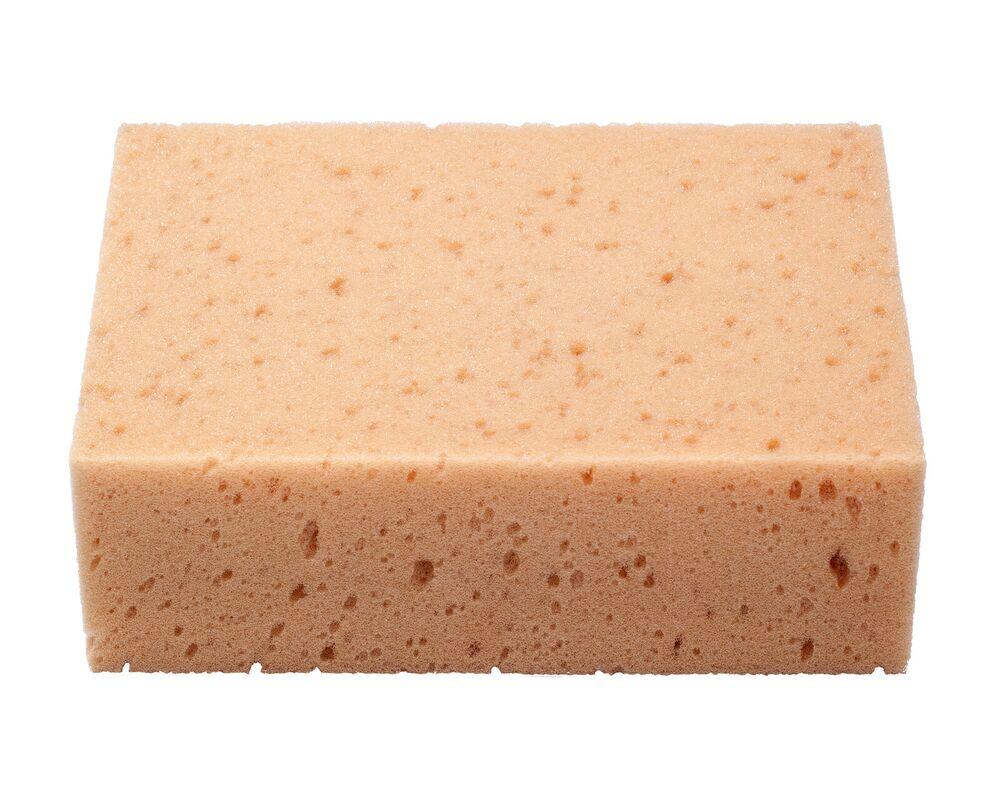
On mosaic, small-format tile, and detail work around reveals and switch boxes, bulk-coverage sponges lose contact precision and skip across joint lines they cannot track — the KAEM 15 × 10 × 5 cm tiling sponge solves the problem with a 150 cm² footprint and 50 mm depth that fit one-handed control to small joint geometry without sacrificing the foam volume needed for clean wipes.
Where the Compact KAEM Earns Its Place on Detail Tile and Render
The KAEM 15 × 10 × 5 cm tiling sponge is the compact detail format in the Renders World power floats and sponges range, built for mosaic, small-format tile (under 200 × 200 mm), and the kind of tight detail work — internal corners, reveal returns, around switches and sockets — where a larger pad collides with adjacent surfaces or misses the joint line altogether. The format earns its keep at this scale because the productivity logic of bulk sponges inverts on detail work: more area per wipe means less control per wipe, and on small joint grids control determines the finish.
The 50 mm depth distinguishes the compact KAEM from thinner pads in the same footprint class. Where a 30 mm cellulose pad gives precision but limited water volume, the 50 mm foam depth holds enough water for continuous tile-by-tile work while staying stable under pressure — the foam does not collapse against the substrate the way a thinner sponge would when working a vertical face or recessed area.
Why Installers Choose the Compact KAEM for Detail Work
- Compact 150 × 100 mm footprint — single-handed fingertip control on small joint grids, narrow reveals, and corner work where bulk sponges collide.
- 50 mm working depth — deeper than a thin pad, so the sponge holds shape under sustained pressure without collapsing on vertical face work.
- Open-cell foam structure — releases water cleanly and lifts grout haze without smearing the joint line on the return stroke.
- Sized for sub-200 mm tile — matches the joint geometry of mosaic, small-format porcelain, and decorative tile grids that bulk sponges overshoot.
- KAEM dimensional consistency — edge integrity and shape recovery hold up across many wash cycles when rinsed and stored properly.
Technical Specifications — KAEM 15 × 10 × 5 cm Sponge Data
| Property | Value |
|---|---|
| Dimensions | 150 × 100 × 50 mm |
| Footprint area | 150 cm² |
| Working depth | 50 mm |
| Pore structure | Large open-cell foam |
| Brand | KAEM |
| Primary use | Mosaic, small-format tile, detail render work, reveal cleaning |
| Working faces | Four (rotation between rinses) |
| Recommended water | Clean potable water at ambient temperature |
The footprint matches the SPONGE4 cellulose sponge at 150 cm², which is deliberate. The two products share hand position and target the same kinds of detail tile and render work, so the swap between them on a final-pass cleanup happens without the hand needing to relearn the tool — same grip, different surface response.
How to Use the Compact KAEM Effectively on Mosaic and Detail Work
Soak the sponge fully before first use to open the cell structure — fresh foam can briefly repel water until wetted through. Wring to a damp working state rather than dripping wet, so the sponge picks up grout residue without flooding the joint and softening the bedded material. On detail work the discipline matters more than on bulk wipes: a saturated compact sponge starts redepositing residue across the next stroke, and at this footprint the water reserve depletes quicker than on a larger pad.
For the cleanest result on mosaic and small-format tile, wipe diagonally across the joint grid rather than along it. Diagonal strokes pull grout out of the joint evenly without dragging bedded material from any single line, which is the difference between haze removal and a re-cut joint line that has to be topped up before sign-off. On internal corners and reveal returns, work the sponge edge into the angle rather than the face — the corner of the 150 × 100 mm footprint reaches into geometry the centre of the pad cannot.
Rotate the sponge to a fresh face every few wipes — the compact format gives four working faces before a rinse cycle. Rinse more often than the routine for bulk sponges; the smaller water reserve depletes faster, and a tired sponge undoes the precision the format was bought for. The power floats for render finishing guide from Renders World covers how compact hand sponges complete the surface after machine pad work.
How the Compact KAEM Compares to Same-Footprint and Step-Up Alternatives
The 150 cm² footprint class is the natural detail-work tier across the hand-sponge range, with this foam sponge and the cellulose pad as material alternatives at the same scale. The table sits this sponge between its closest same-footprint sibling and the next step-up in the KAEM line.
| Variant | Key Spec | When to Choose |
|---|---|---|
| KAEM 15 × 10 × 5 cm (this) | 150 cm² · 50 mm · foam open-cell | Mosaic, small-format tile, detail work |
| SPONGE4 cellulose 150 × 100 × 30 mm | 150 cm² · 30 mm · fibre matrix | Final-pass residue lift on same detail areas |
| KAEM 20 × 14 × 7 cm sponge | 280 cm² · 70 mm · foam open-cell | Floors, large-format tile, bulk render |
For the wider range outside the 150 cm² and 280 cm² tiers, the KAEM 23 × 11.5 × 7 cm elongated sponge suits linear-set tile and long-shift work, the 170 × 110 × 60 mm beige sponge sits in the mid-format general-purpose role, and the dual-density double tile sponge condenses a two-pass workflow into one tool for mobile installer work. Most professional kits carry the compact KAEM alongside at least one bulk format rather than as a stand-alone sponge.
How Pros Get the Best Result From the Compact Format
Treat the compact KAEM as a phase tool rather than a substitute for the bulk format. On any tile job of a few square metres or more, the productivity logic runs bulk-sponge first, compact second — the larger sponge moves water across the bulk haze quickly, and the compact closes out the detail areas and any joint lines the bigger pad oversteps. Trying to use the compact for the whole job is the most common reason a tile-setter finishes a small bathroom feeling slower than expected: the format is built for control, not for water-throughput, and using it outside its intended phase removes the productivity advantage the brand line is designed around.
Match the compact KAEM with a cellulose pad at the same footprint when the final visible faces need to read as cleanly finished under raked light. Foam at this scale handles the wipe and the joint lift; cellulose handles the residue capture on the visible tile face. The shared 150 × 100 mm footprint between the two products means the hand stays in the same position across the swap, which keeps wrist economy intact on detail work where stroke count adds up quickly.
Renders World ships the KAEM range alongside chemical cleaning products and the wider hand sponge family from UK trade stock, so kit refresh and chemical re-stock can be consolidated into a single dispatch — a working detail for installers running concurrent residential bathroom and kitchen jobs across multiple sites.
Is This Sponge Right for Your Project?
- Mosaic and small-format tile under 200 × 200 mm: ideal — the footprint matches the joint grid and tracks accurately.
- Internal corners, reveal returns, and detail around fittings: well suited — compact geometry clears adjacent surfaces a larger sponge would collide with.
- Bulk floor and large-format wall tile: consider the KAEM 20 × 14 × 7 cm large square format for area-led work — pair, do not substitute.
- Final residue lift on visible tile faces: pair with the cellulose sponge at the same 150 × 100 mm footprint — different material, same hand position.
FAQ — Compact KAEM Use, Compatibility, Care
Is this the right sponge for detail and corner work?
Yes — the compact 150 × 100 mm footprint and 50 mm depth are designed for fingertip control in tight spaces. Internal corners, narrow reveals, and small joint grids all benefit from the smaller format compared with bulk-coverage sponges. The corner of the pad reaches into geometry the centre cannot, which is how the format works on internal angles.
Can it be used as the only sponge on a job?
It can on small jobs of a few square metres, but on continuous floor or wall runs the smaller water capacity becomes a productivity drag. The compact KAEM saturates faster than a bulk format and starts redepositing residue rather than lifting it. Most professional kits pair this sponge with a larger format and use each for its intended phase.
How does the compact foam KAEM compare with the cellulose sponge of similar size?
The footprint is the same at 150 × 100 mm, but the behaviour differs. The foam KAEM releases water and lifts haze through pressure-and-rinse, while the cellulose pad pulls particulate into the fibre matrix. Foam works faster on the bulk wipe at this scale, cellulose finishes cleaner on the final pass. Most tile setters carry both as a same-footprint pair rather than picking one over the other.
How many working cycles does one compact sponge last?
The KAEM construction holds together for many cycles when rinsed properly between uses and stored damp on the same job, then allowed to dry between projects. Detail work tends to extend the working life relative to bulk-coverage use, because the pressure is lighter and the contact surface is smaller. Replace once the cell edges break down at the corners or the sponge no longer recovers its shape fully after wringing.
Can the compact KAEM be used for render finishing?
Yes, particularly for detail work around beads, window reveals, sill returns, and edge profiles where a larger sponge collides with adjacent surfaces. The compact format keeps contact pressure precise on small features without smearing the surrounding render texture. The render finishing guide covers where compact hand sponges complete the surface after machine pad work.

