


Description
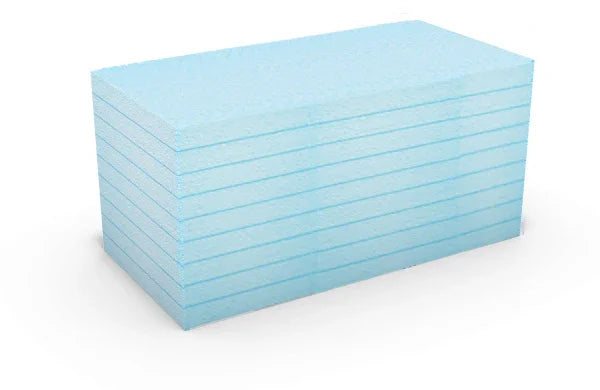
Within the XPS insulation boards range, Atlas Fundament 50 mm sits at the mid-range entry point where foundation insulation starts delivering meaningful thermal payoff. The board delivers a thermal conductivity of λ 0.038 W/mK in a closed-cell foundation-grade structure, measuring 600 × 1250 mm with rebated edges and covering 0.75 m² per board — purpose-built for floor insulation under screed, shallow foundation wraps, and plinth zones where the build-up has room for proper depth.
What Atlas Fundament 50 mm Does in a UK EWI System
Atlas Fundament 50 mm is the first thickness in the foundation range that delivers a thermal resistance most domestic projects can plan around — R 1.32 m²K/W in a closed-cell board engineered for permanent ground-contact conditions. The 50 mm depth opens up floor insulation under screed in cellars and ground-floor extensions, shallow foundation wraps on lighter domestic builds, and plinth zones where the facade detailing above DPC can absorb the extra projection without forcing the render line out of plumb.
Each board measures 600 × 1250 mm with rebated edges that lock together to form a continuous insulation plane without thermal bridging at the joints — so the moisture-resistant layer reads as a single membrane from one course to the next.
Why Specifiers Choose Atlas Fundament 50 mm for UK Walls
- First thickness with meaningful R-value: At R 1.32 m²K/W, the 50 mm board nearly doubles the thermal resistance of the 30 mm variant — the depth where foundation insulation starts contributing measurably to overall U-values.
- Closed-cell moisture protection: Permanent resistance to ground moisture and hydrostatic pressure keeps thermal performance constant for the life of the foundation.
- Rebated edges for joint integrity: Tight overlapping joints reduce the cold-bridge risk that flat-edge boards leave at every horizontal course.
- Freeze-thaw stable: Holds full R-value through repeated UK winter cycles in exposed ground-contact and splash-zone positions.
- Predictable take-off: 600 × 1250 mm covers 0.75 m² per board, so 1.33 boards per m² makes coverage calculations straightforward for shallow foundation runs and floor strips.
Thermal Specifications — Atlas Fundament 50 mm
| Parameter | Value | Notes |
|---|---|---|
| Thermal conductivity (λ) | 0.038 W/mK | Declared value for foundation board |
| Thickness | 50 mm | Mid-range Atlas Fundament thickness |
| Thermal resistance (R) | 1.32 m²K/W | At declared λ × thickness |
| Reaction to fire | Per EN 13501-1 | Confirm via current DoP at order |
| Water absorption | Low (closed-cell) | Suitable for permanent ground contact |
Physical Specifications — Atlas Fundament 50 mm
| Parameter | Value |
|---|---|
| Board dimensions | 600 × 1250 mm |
| Coverage per board | 0.75 m² |
| Edge profile | Rebated (lap joint) |
| Compressive strength | Foundation-grade (confirm via TDS at order) |
| Boards per m² | 1.33 (add 5–10% cutting waste) |
Where Atlas Fundament 50 mm Performs Best — Wall Types & Build-Up
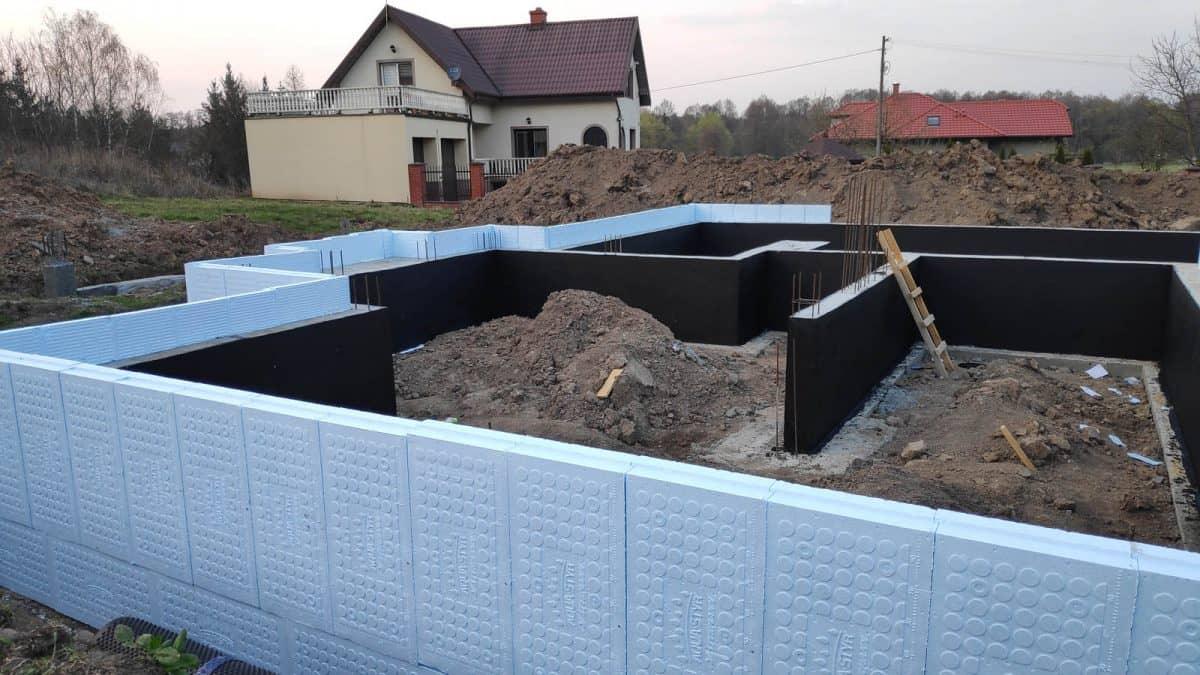
The 50 mm thickness sits at the point where foundation insulation transitions from "thin retrofit fix" to "specifiable thermal layer". Three application contexts make best use of it: floor insulation under screed where the slab build-up has 50 mm of headroom, shallow foundation wraps on lighter domestic builds where deeper backfill insulation would be over-specified, and plinth zones beneath DPC where the facade above can absorb the extra projection without disrupting the render line.
- Floor insulation under screed: Lay horizontally over a level slab in cellars, ground-floor extensions, and utility rooms. The 50 mm depth balances R-value with screed build-up height for typical domestic floors.
- Shallow foundation wraps: Fit vertically against the external face of foundation walls on lighter domestic builds where deeper boards would over-specify the thermal target.
- Plinth zones with render finish above: Position from ground level up to the DPC line on new-build projects where the facade detailing is being set fresh and can plan around the 50 mm projection.
- Garage and utility-room walls: Insulate unheated spaces where thermal performance matters but a deeper board is hard to justify on cost.
How Atlas Fundament 50 mm Fits Into a Full EWI System
In a full external wall insulation build-up, Atlas Fundament 50 mm typically handles the plinth or floor zone below DPC, while the main facade above is finished with graphite EPS boards bonded with adhesive-and-basecoat and finished with mesh-reinforced render. Bond the 50 mm board with a specialist polyurethane adhesive such as Ceresit CT84 XPS Foam, which cures fast in the cool, damp conditions typical of UK ground-level work.
Above ground level — particularly on plinth zones exposed to wind uplift — add mechanical fixings from the EWI fixing accessories range to lock long-term bond security. Below ground, backfill provides permanent mechanical restraint and the foam adhesive alone is typically sufficient for the 50 mm board.
How Atlas Fundament 50 mm Compares to Sibling Foundation Boards
| Board | Thickness | R-Value (m²K/W) | Best For |
|---|---|---|---|
| Atlas Fundament 30 mm | 30 mm | 0.79 | Screed underlay, thin plinth, reveal zones |
| Atlas Fundament 50 mm | 50 mm | 1.32 | Floor insulation, shallow foundation wrap, light-domestic plinth |
| Atlas Fundament 80 mm | 80 mm | 2.11 | Standard foundation and basement walls |
| Atlas Fundament 100 mm | 100 mm | 2.63 | Deep foundation wrap, highest thermal target |
For projects weighing closed-cell foundation insulation against graphite EPS for the main facade, the XPS vs EPS comparison guide walks through where each material wins across the build-up.
How Atlas Fundament 50 mm Performs in UK Weather — Moisture, Frost, Wind Loads
The closed-cell structure keeps long-term water absorption at near-zero, so freeze-thaw cycling across a typical UK winter does not progressively reduce R-value the way it can on open-cell boards exposed to ground moisture. In splash-zone and below-grade positions, the 50 mm board holds its thermal performance through saturation, drying, and re-saturation cycles for decades.
Wind-load exposure becomes a meaningful factor at the 50 mm depth above grade: the increased face area catches uplift on exposed plinth runs more readily than the 30 mm board does. On tall facades, coastal sites, or any plinth zone where wind exposure is significant, add mechanical fixings at 6–8 plugs per m² per the project's fixing layout.
Handling & Storage on Site
- Keep dry and shaded: Stack boards flat on a clean, level surface. Cover with sheeting if outdoor storage exceeds a few weeks — prolonged UV softens the closed-cell surface.
- Score, don't snap: Cut with a fine-tooth saw or sharp blade rather than snapping the rebated edge. A clean cut keeps the bonding face true and protects the closed-cell surface.
- Brush the rebate before adhesive: Dust on the lap joint breaks the foam adhesive seal; a quick brush gives a full-face bond.
- Stack flat, not on edge: Storing 50 mm boards on edge can cause bowing over time — flat storage preserves the rebated geometry.
Certifications & Compliance — Atlas Fundament 50 mm
Atlas Fundament boards are manufactured to recognised European foundation insulation standards. Reaction to fire is classified under EN 13501-1, and the declared thermal conductivity (λ 0.038 W/mK) appears on the manufacturer's current Declaration of Performance. For projects requiring specific compressive strength values, water absorption test results, or Approved Document L 2021 calculation inputs (current at time of writing), request the latest DoP at order — exact certified values can vary between production batches and the current Atlas Fundament datasheet is the authoritative reference.
Is Atlas Fundament 50 mm Right for Your Project?
- Choose this thickness if your project needs foundation insulation that contributes meaningfully to U-value calculations without requiring deep backfill — typically floor insulation under screed, shallow foundation wraps on lighter domestic builds, or new-build plinth zones where the facade can plan around 50 mm of projection.
- Working with restricted build-up depth? The Atlas Fundament 30 mm handles screed underlay and thin plinth retrofits where 50 mm would clash with adjacent EPS courses.
- Targeting modern U-value standards? The Atlas Fundament 80 mm at R 2.11 m²K/W is the standard specification for foundation and basement walls on Part L 2021 projects.
- Detailing the plinth-to-facade transition? The plinth thermal-bridge guide walks through the 100 mm overlap detail that keeps the DPC line condensation-free.
What to Order Next — Pack Sizes, Lead Times, Compatible Components
Atlas Fundament 50 mm is supplied as a single board (0.75 m² coverage). For project calculations, allow 1.33 boards per m² plus 5–10% cutting waste. To complete the foundation build-up, order Ceresit CT84 XPS Foam for bonding and a fixing pattern of 6–8 plugs per m² above grade for wind-uplift resistance.
FAQ — Atlas Fundament 50 mm Coverage, Compatibility, Installation
How many 50 mm Atlas Fundament boards do I need per square metre?
Each board covers 0.75 m² (600 × 1250 mm), so 1.33 boards per m² is the base figure. For typical foundation-wrap and floor-insulation runs, add 5–10% cutting waste for corners, openings, and rebated overlaps, then round up to the nearest full board.
Is 50 mm enough for a domestic foundation wrap?
For lighter domestic builds and retrofit projects where the thermal target is modest, 50 mm delivers a workable R 1.32 m²K/W that contributes meaningfully to overall foundation U-values. For new-build projects aiming at current Part L 2021 targets (current at time of writing), 80 mm to 100 mm is the more common specification — confirm the required thickness through a project-specific U-value calculation.
Can I use 50 mm Atlas Fundament under a domestic screed?
Yes — the closed-cell structure tolerates the wet trade without water uptake, and the foundation-grade compressive strength supports standard domestic floor loads without additional reinforcement. Lay the boards horizontally over a level slab, butt the rebated edges tight, then pour screed directly above to the specified depth.
What adhesive bonds Atlas Fundament 50 mm to a foundation wall?
A specialist polyurethane adhesive such as Ceresit CT84 XPS Foam is the standard route — it cures fast in cool, damp UK ground-level conditions and bonds reliably to closed-cell board surfaces. Apply in continuous beads around the perimeter plus a central bead, brush dust from the rebated edge before placement, and press firmly to spread the foam across the full bonding face.
Does 50 mm need mechanical fixings as well as adhesive?
Below ground level, backfill provides permanent mechanical restraint and the polyurethane foam adhesive alone is typically sufficient. Above grade on exposed plinth runs, add mechanical fixings at 6–8 plugs per m² per the project's fixing layout to resist wind uplift — the 50 mm board catches more wind load than thinner variants, so this is the depth at which mechanical fixings become standard practice on exposed elevations.
How does 50 mm compare thermally to 80 mm Atlas Fundament?
At the same declared λ of 0.038 W/mK, the 50 mm board delivers R 1.32 m²K/W and the 80 mm Atlas Fundament delivers R 2.11 — a 60% uplift in thermal resistance for an extra 30 mm of depth. Where the build-up can accommodate 80 mm and the project targets current Part L thresholds, the 80 mm version is typically the stronger specification.