


Description
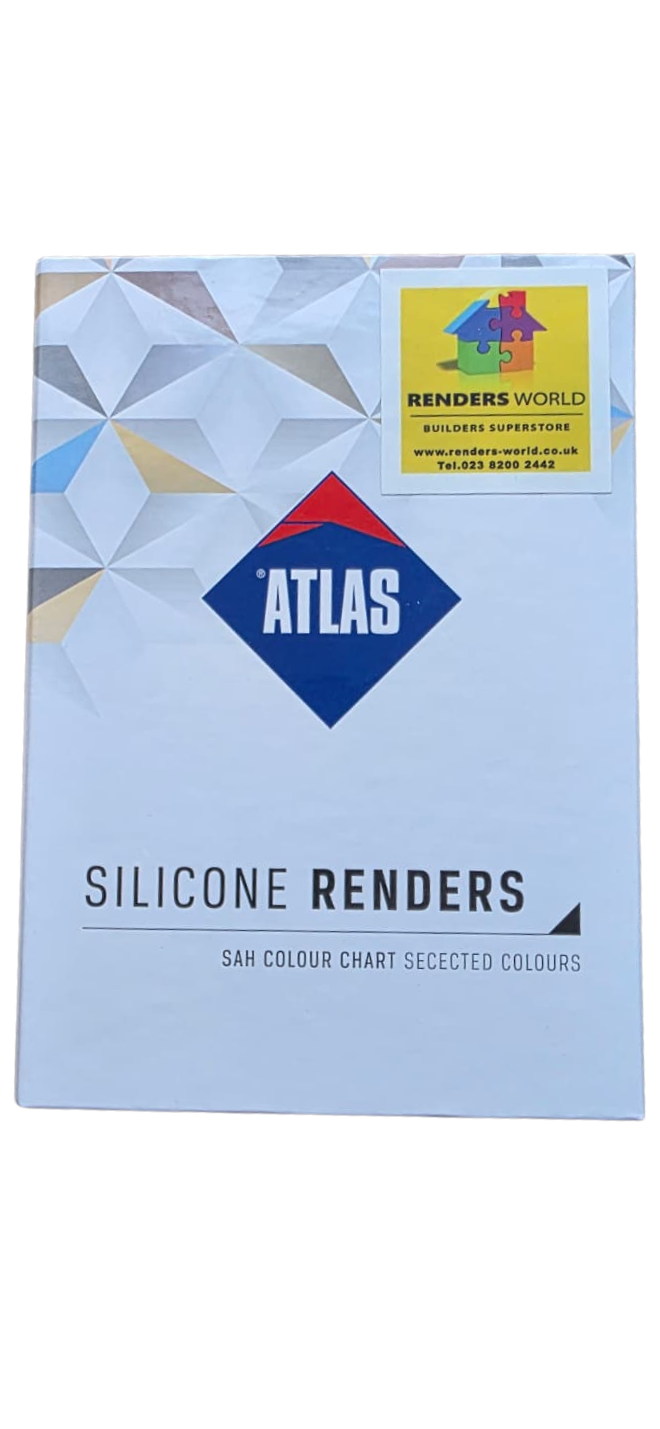
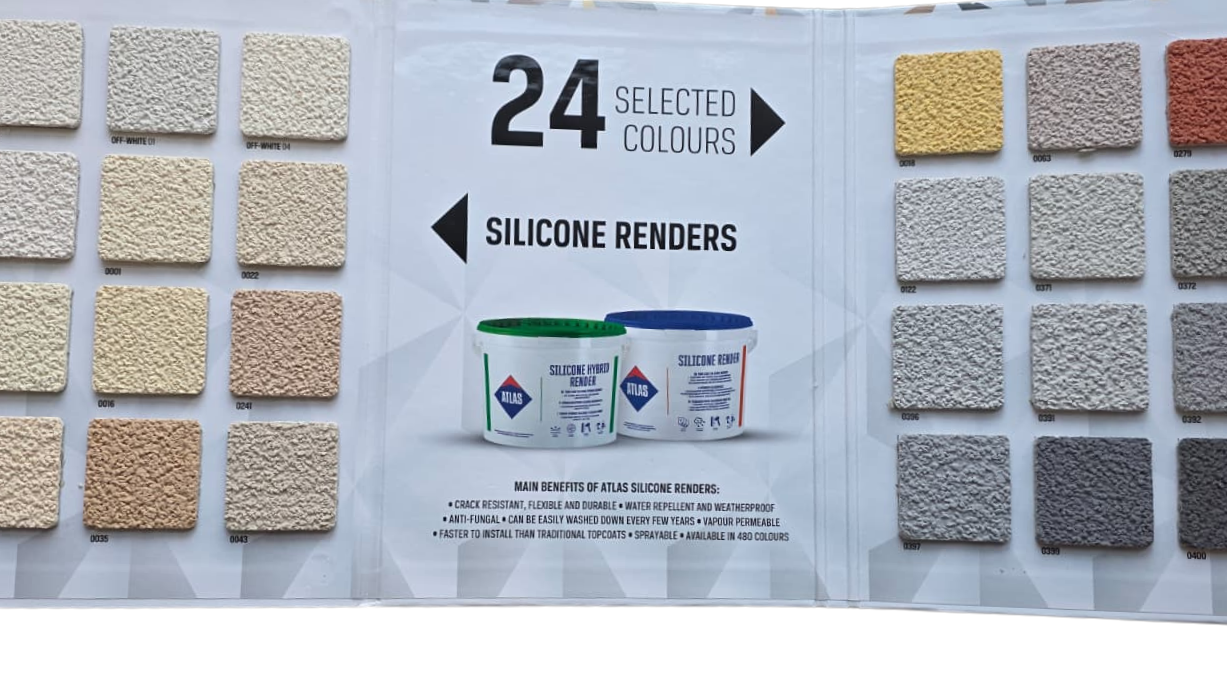
The render colour charts and catalogues collection at Renders World includes the Atlas 24-colour sample set as the most popular starting point for facade colour decisions. Each card carries real Atlas silicone render applied at its standard grain size, so the swatch you approve is the finish you receive on the wall. The 24-shade selection is curated from the wider Atlas SAH palette to cover the tones most often specified on UK residential and commercial projects.
When the Atlas 24-Colour Sample Saves Time on UK Projects
The Atlas Render Sample is a card-mounted set of 24 physical swatches produced with real Atlas silicone render at the SAH colour scheme reference, giving installers, architects, and homeowners a tactile facade reference that printed brochures and screens cannot match. It is the right tool when a project has not yet committed to a specific Atlas shade and the team needs a manageable shortlist to compare in daylight before ordering full buckets — that single comparison removes the most common cause of remix charges on UK render orders.
Specifiers reach for the 24-set ahead of the full 480-colour catalogue when the project sits within the popular cream, white, light-grey, and earth-tone bands, because the curated selection closes most domestic decisions without overwhelming the client. For projects requiring a specific architect-led tone outside the 24, the full Atlas 480-colour catalogue is the correct next step.
Why Specifiers Order This Sample Set Up Front
- True-to-finish accuracy: Every swatch is prepared with applied Atlas render at the correct grain, so texture, light reflection, and pigment depth match the final wall result.
- Daylight comparison on site: Holding a real swatch against the building reveals how the shade reads against brickwork, roofing, and landscaping under British overcast light.
- Faster client sign-off: Physical cards close conversations that drag on when colours are debated from phone screens, getting render orders confirmed sooner.
- Three Atlas render systems, one reference: The swatches correspond to colours available across Atlas silicone, acrylic-silicone, and silicate-silicone ranges, covering several product decisions in one set.
- Planning and conservation evidence: A swatch submitted with the SAH code provides planning officers with an unambiguous colour reference for conservation areas and listed-building consents.
Selection Guide — Find Your Atlas Colour Reference
| Your Situation | Right Reference | Why |
|---|---|---|
| Domestic facade, popular shade band | Atlas 24-Colour Sample (this product) | 24 curated swatches cover most cream / white / grey / earth choices · fast shortlist |
| Architect has specified a precise SAH code outside the 24 | Atlas 480-Colour Catalogue | Full SAH palette · all bespoke and specialist tones |
| Project uses Ceresit CT74, CT174, or CT76 renders | Ceresit Colour Sample Book 1 | Correct palette for the Ceresit thin-coat range |
| Mosaic plinth or decorative aggregate finish | Ceresit Mosaic Sample | Mosaic-specific colour and aggregate reference |
Technical Specifications — Atlas 24-Colour Sample Data
| Property | Detail |
|---|---|
| Sample type | Physical render swatches (real applied finish) |
| Number of colours | 24 |
| Colour system | Atlas SAH Colour Scheme for Renders and Paints |
| Render types represented | Silicone, acrylic-silicone, silicate-silicone |
| Texture shown | Spotted (aggregate) finish at standard grain size |
| Format | Card-mounted swatch set |
| Intended users | Homeowners, architects, contractors, specifiers |
| Lighting recommendation | Assess outdoors at the project site under natural daylight |
How to Use the Atlas 24-Colour Sample Effectively
The sample set is most useful when a structured comparison method is followed rather than a quick glance under indoor light. Start by viewing the swatches outdoors at the project site, holding the card flat against the wall surface at chest height and stepping back two to three metres — that mirrors how the finished facade reads to passers-by and reveals undertones a close-up inspection misses.
Check the chosen swatch at different times of day, because morning light on an east-facing elevation and afternoon sun on a south-facing wall can shift the same colour noticeably.
For a deeper walk-through of the comparison process, the guide to using colour charts for render projects sets out the staged approach used on professional specifications, and the silicone render colour selection guide covers how grain size, surface texture, and adjacent materials all influence final appearance. Once the shade is chosen, photograph the card taped to the wall with the SAH code visible — that becomes the definitive reference when the Atlas silicone render is mixed and ordered, and it avoids any "that's not what I picked" exchange at sign-off.
Practical Tips From UK Renderers
- Take two or three cards to the first client meeting. Real swatches in hand close decisions faster than colour conversations on a phone screen.
- Tape the chosen swatch to the wall during the quote visit. Photographing it with the SAH code visible creates an audit trail that protects everyone at final inspection.
- Compare adjacent shades side by side. Two cream tones that look identical in the box often read very differently against the building's brick or stone returns.
- Check the planning brief before committing. Conservation areas and listed-building settings frequently restrict the acceptable tone range, and an early swatch submission with the planning officer saves later resampling.
Is the Atlas 24-Colour Sample Right for Your Project?
- Ideal for your project if you are selecting a facade colour for an Atlas silicone, acrylic-silicone, or silicate-silicone render project and want a curated set of the most popular shades to compare on site before placing a full render order.
- Need the complete Atlas palette? The Atlas 480-Colour Catalogue provides every shade in the SAH system, including specialist and bespoke tones — the right choice when a specific colour code has already been issued by an architect.
- Specifying Ceresit renders instead? The Ceresit Colour Sample Book 1 is the correct reference for CT74, CT174, and CT76 thin-coat finishes.
- Want to see live colour options? Browse the premium silicone render range to see available finishes alongside the swatch set.
FAQ — Ordering, Use, and Practical Notes
How much does the Atlas 24-colour sample set cost, and is it refundable against a render order?
The sample set is a low-cost reference designed to be accessible to homeowners and trade specifiers alike. Ordering it before purchasing full buckets of render delivers far greater value than the cost of receiving a colour that looks different on the wall than expected. The product page at Renders World displays current pricing and any active promotions or credit offers against subsequent render orders — factoring the small sample cost into project budgeting is straightforward, and the confidence it provides in the final colour choice typically pays back many times over on a single facade.
Are the sample colours accurate in all lighting conditions?
The swatches are produced with real Atlas render at the correct grain, so they replicate the actual pigment and texture of the finished facade with high fidelity. Colour perception still shifts between lighting conditions — a warm cream reads cooler under overcast skies and richer in direct afternoon sun. For the most reliable assessment, viewing swatches outdoors at the project site under natural daylight is recommended, ideally at the time of day when the elevation receives the most light.
Do these samples cover environmentally friendly or low-VOC render options?
The Atlas silicone render range represented in this set is water-based and low-VOC, with hydrophobic and self-cleaning properties that reduce long-term cleaning and chemical maintenance. Silicone renders resist biological growth naturally, so the facade typically stays cleaner for longer without biocide treatment. Choosing a lighter shade from the set further supports environmental goals, because lighter colours reflect more solar radiation and reduce thermal load on the wall — the solar heat risk guide for dark colours on render covers the physics behind this in more detail and explains when a heat-reflective formulation matters.
Can I use these samples to choose a colour for a conservation area project?
Physical swatches are often the most effective way to satisfy planning officers reviewing colour for conservation areas, because they demonstrate the actual finish rather than relying on a printed image or verbal description. Submitting the chosen swatch with its SAH colour code alongside the planning application provides a clear, unambiguous reference. For heritage projects requiring high vapour permeability, the Atlas silicate-silicone render range — whose colours are also represented in this set — offers breathability suited to older masonry while maintaining the colour consistency shown on the swatch.
What if the colour I want is not in the 24-shade set?
The Atlas SAH colour system extends to 480 shades, so the full palette covers virtually every tone a project could require. The 480-colour catalogue is the next step when the curated 24-shade set does not include the precise colour needed. Bespoke colour matching to a specific RAL or NCS reference may also be available on special order, subject to current guidance on minimum quantities — contacting Renders World with the target code confirms availability for the project.
How should I store the sample cards between client meetings?
Storing the cards flat in their original card-mounted format and away from direct sunlight keeps the swatches representative for repeated use across multiple projects. Sunlight over long periods can fade pigments on any printed reference, although the applied-render finish is more resistant than printed catalogues. Keeping the set in a project folder alongside the SAH colour codes makes it straightforward to return to a previously specified shade on follow-on phases or maintenance work.