
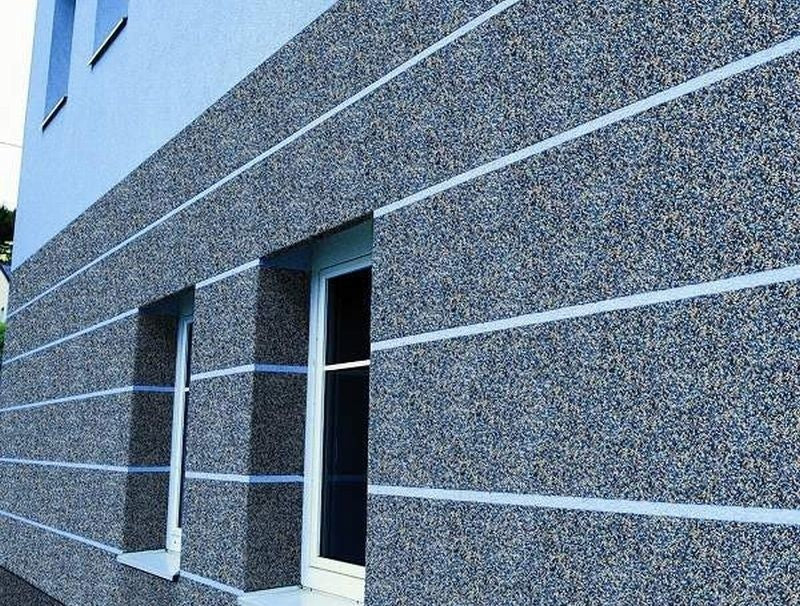


Description
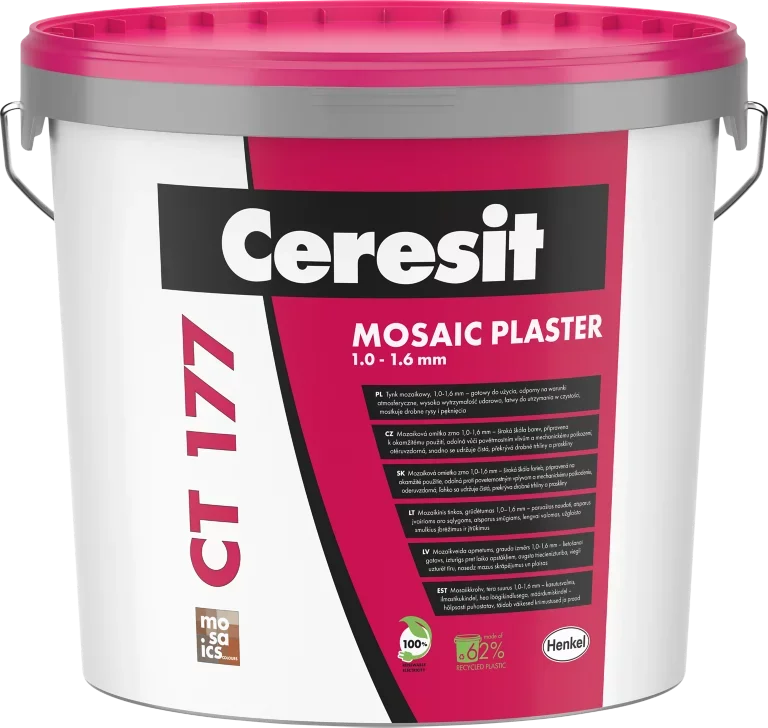
The bottom metre of a facade takes the knocks, the road spray and the muddy hands. The Ceresit CT177 mosaic render 25kg bucket is the pack for finishing that zone in one continuous run, with coloured stone set in clear resin as the finished face.
What the Ceresit CT177 Mosaic Render 25kg Is Made For
CT 177 is a decorative thin-layer plaster of coloured quartz grits, 1.0 to 1.6 mm, bound in transparent resin and finished smooth with a metal trowel. Ceresit declares it to EN 15824 as an outdoor plaster on an organic binder, under Declaration of Performance No. 00469.
- Outside: surfaces that get dirty quickly — plinths, balustrades, and window and door jambs.
- Inside: walls exposed to wear and dirt, such as entrances, corridors and staircases.
- Everyday wear: Ceresit describes it as easy to keep clean and resistant to scrubbing, and able to bridge hair-line substrate cracks so they stay hidden under the finish.
The sheet also sets one limit worth reading before the order. Moisture pushing through from behind can damage the finish, so CT 177 stays out of areas exposed to long-lasting moisture, and a plinth that stays wet gets its sealing and drainage sorted before the mosaic goes on.
How Far One 25 kg Bucket Goes
Ceresit gives an approximate yield of 4.0 kg/m² for the 1.0–1.6 mm grits. One 25 kg bucket therefore covers about 6 m² (25 ÷ 4.0 = 6.25). The coat is laid at least 1.5 times the grain size, which is why the figure sits above a thin-coat finish.
That difference matters when a job is priced from habit. Ceresit's 1.5 mm thin-coat renders CT 74 and CT 76 are declared at 2.1–2.5 kg/m², so CT 177 uses roughly 1.6 to 1.9 times as much material for the same square metre. Ordering mosaic by the tub count of a thin-coat finish leaves the plinth short.
- Worked example: a plinth 0.5 m high and 30 m long is 15 m². At 4.0 kg/m² that is 60 kg, which is three 25 kg buckets (75 kg), with the spare covering reveals and corners.
- One plane, one batch: Ceresit asks for material from the same production batch across a single plane, so order the full quantity for each plane at once.
CT 177 Technical Data and the Scope of Each Figure
Most values below belong to the plaster itself. The rows marked "system" come from ETAG 004 tests of a whole insulation system and do not describe the bucket on its own.
| Property | Value | Scope |
|---|---|---|
| Grain | coloured quartz, 1.0–1.6 mm | product |
| Binder base | synthetic resin dispersion with coloured mineral fillers | product |
| Density | approx. 1.75 kg/dm³ | product |
| Yield | approx. 4.0 kg/m² | product |
| Adhesion | 0.6 MPa, EN 15824 | product |
| Water absorption | W3, w ≤ 0.1 kg/m²h⁰·⁵, EN 15824 | product |
| Vapour permeability | V2, 0.14 ≤ Sd < 1.4 m, EN 15824 | product |
| Thermal conductivity | λ = 0.61 W/(m·K), EN 15824 | product |
| Working conditions | +10 °C to +25 °C, humidity below 80% | product |
| Preliminary drying | approx. 30 minutes | product |
| Rain resistance | after approx. 3 days | product |
| Impact resistance | category I, ETAG 004 | system |
| Vapour, ETAG test | Sd ≤ 1.0 m, ETAG 004 | system |
| Water absorption after 24 h | < 0.5 kg/m², ETAG 004 | system |
| Adhesion between layers after ageing | ≥ 0.08 MPa, ETAG 004 | system |
| Shelf life | up to 12 months, cool, frost-free | product |
Reaction to fire is given only for named Ceresit Ceretherm systems: B-s1, d0 in Ceretherm Visage, and B-s2, d0 in Ceretherm Popular, Classic and Premium. A wall carries one of those classes only when it is built as that system. All declared values assume +23 °C and 50% relative humidity, so a cold, damp day stretches every time on the list.
Substrates and the Quartz Primer Underneath
Every substrate on the sheet gets Ceresit CT 16 quartz primer before the mosaic, ideally in a colour close to the plaster so nothing shows through the clear binder. The CT 16 must be completely dry before CT 177 goes on. The quartz primer range carries CT 16 and CT 17.
- Cement and cement-lime plasters older than 28 days, and concrete older than 3 months at 4% moisture or less: CT 16.
- Mesh-reinforced basecoats such as Ceresit ZU, older than 3 days (the sheet also lists other Ceresit basecoat mortars): CT 16.
- Absorbent substrates: CT 17 first, then CT 16 after at least 2 hours.
- Indoors only: gypsum below 1% moisture, chipboard over 19 mm and gypsum boards take CT 17 then CT 16; sound paint coats take CT 16.
The substrate must be even, load-bearing, dry and free of grease, bitumen and dust, with hollows filled beforehand. Old weak paint and wallpaper come off.
Mixing and Applying Without a Break
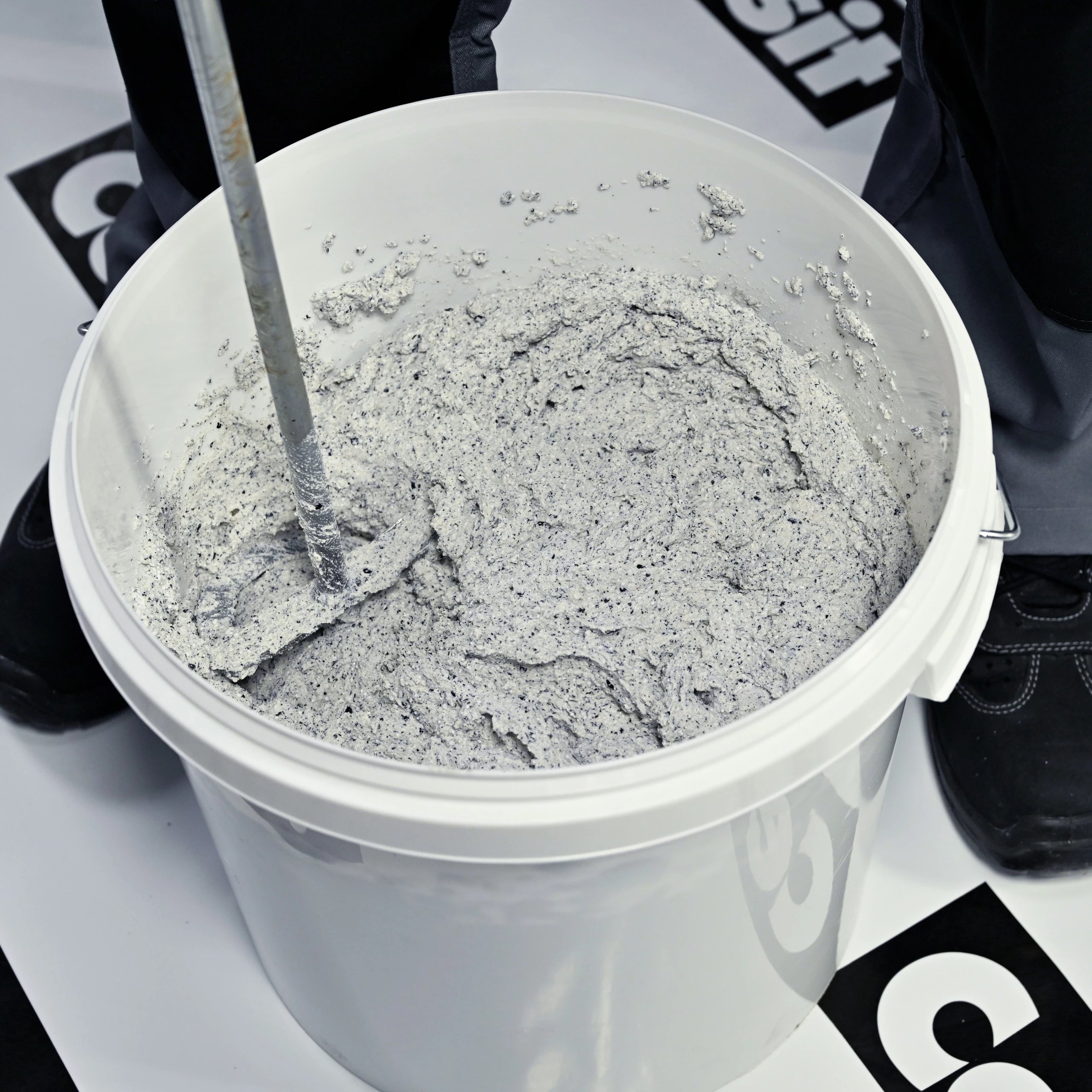
- Mix briefly. Stir with a slow-speed drill and basket paddle until even. Long, hard mixing can discolour the stone and trap air.
- Add water only if needed. No more than 250 ml per 25 kg bucket; too much makes the material unusable.
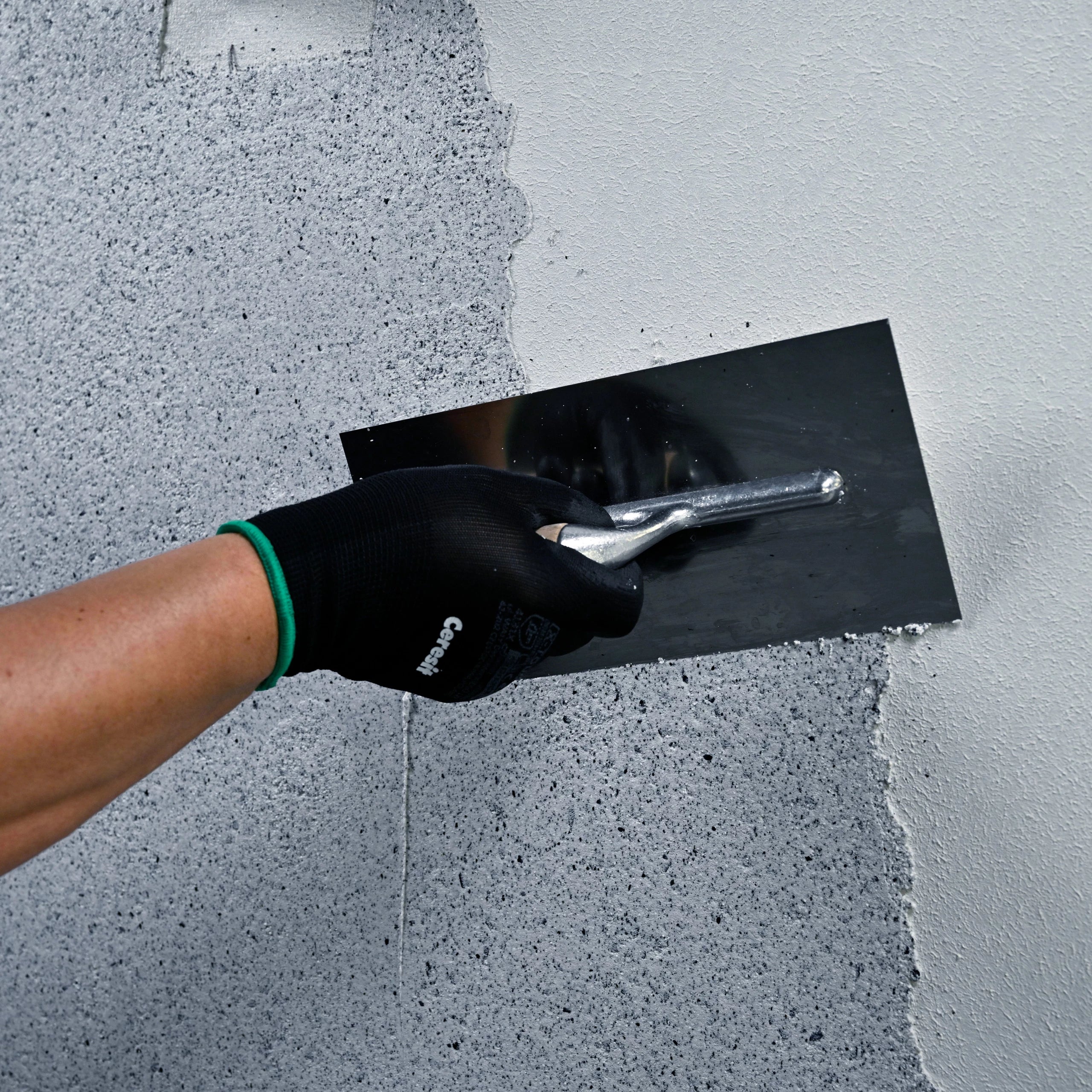
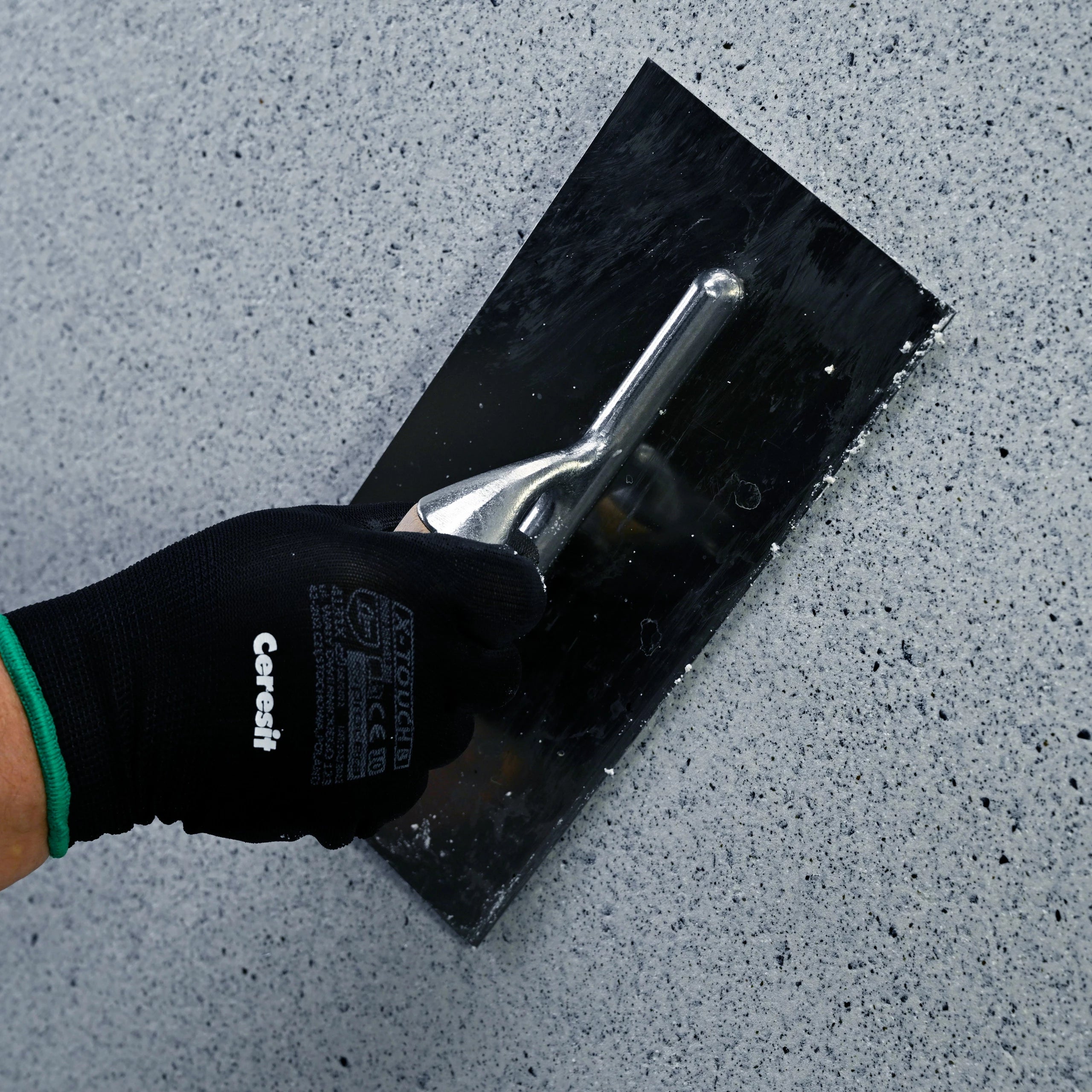
- Lay it on with a stainless steel trowel in a layer at least 1.5 times the grain size, wet-on-wet, and smooth it out. Do not sprinkle it with water.
- Finish each plane in one go. If work must stop, run tape along a straight line, finish to it, and pull the tape while the plaster is fresh.
- Protect the work. Keep nets or tarpaulins on the scaffold and plinth until it has hardened, and avoid walls in strong sunlight.
Fresh CT 177 looks milky and clears as it dries; long contact with water can bring the milky look back for a while. Do not mix it with other resins, plasters, dyes or binders. The step-by-step plinth guide follows the same sequence on site.
Colour, Light Reflectance and Dark Shades
Ceresit ties the choice of colour to the heat a facade takes from the sun.
- HBW 20 or above: the recommended light reflectance value, to keep the facade surface from overheating.
- Below HBW 20: a consultation with the Ceresit technical department to choose the insulation system.
- Intense dark colours: on a Ceretherm system, CT 177 should be limited to small areas such as plinths or architectural details.
The guide to dark render colours and solar heat explains why.
25 kg or 10 kg Bucket
Both buckets hold the same plaster under the same data sheet. The choice comes down to area and batch.
| Bucket | Covers about | Suits |
|---|---|---|
| 25 kg | 6 m² | continuous plinth runs, one batch per plane |
| 10 kg bucket | 2.5 m² | reveals, jambs, small repairs |
Ordering the 25 kg Bucket
Order the Ceresit CT177 mosaic render 25kg together with its CT 16 primer, and buy each plane's full quantity in one go so it comes from one batch. The decorative facade render range at Renders World holds both bucket sizes.
- Dispatch: Renders World processes orders the same day when the stock is there.
- Delivery: quoted by the team after the order is placed; every delivery is kerbside.
- Collection: Unit 9A, Central Trading Estate, Southampton SO14 5JP, Monday to Friday 7am to 5pm, Saturday 7am to 12pm.
Store buckets cool, frost-free and out of direct sun until they are opened, because heat in storage or transport can start the plaster setting.
FAQ — Ceresit CT 177 Mosaic Render
How many 25 kg buckets do I need?
Divide the area by 6. At about 4.0 kg/m², one bucket covers about 6 m², so 15 m² of plinth needs three buckets. Round up and keep each plane to one batch.
Is the CT 16 primer optional?
No. Ceresit names CT 16 for every substrate:
- in a colour close to the plaster,
- completely dry before the mosaic goes on,
- with CT 17 first, at least 2 hours earlier, on absorbent substrates.
What weather can it be applied in?
Dry weather, with air and wall between +10 °C and +25 °C and humidity below 80%. It needs about 3 days before it resists rain.
Can it go on a wall that stays damp?
Fix the damp first. Ceresit advises against areas exposed to long-lasting moisture, and asks for proper sealing layers wherever moisture could press on the plaster from behind.
What fire class does it have?
None of its own on the sheet. The classes belong to Ceretherm systems: B-s1, d0 in Visage and B-s2, d0 in Popular, Classic and Premium.
Technical Documentation — Ceresit CT 177