
The 2026 Shift: High-Performance Timber Envelopes under Future Homes Standard
Timber frame construction has emerged as a dominant method for sustainable UK housing in 2026, prized for its rapid speed of assembly and low embodied carbon. However, as the Future Homes Standard pushes wall U-values toward the $0.18\ W/m^{2}K$ target, the technical pressure on these structures has increased. Achieving high thermal efficiency while maintaining structural health requires a sophisticated approach to timber frame insulation UK 2026 strategies. The primary challenge this year is balancing the need for extreme airtightness—targeting $3\ m^{3}/(h\cdot m^{2})$ under the Home Energy Model (HEM)—with the critical requirement to manage moisture and prevent timber decay. For professional guidance on structural compliance, installers should refer to the latest NHBC Standards Chapter 6.2 for external timber framed walls.
Moisture Management: The Ventilated Cavity Requirement
In the damp and windy 2026 UK climate, moisture is the greatest threat to a timber building's longevity. Unlike masonry, timber frames cannot afford to trap water within the structure. To comply with modern warranty standards, a "drained and ventilated cavity" is mandatory between the timber frame and the external cladding or render. This cavity acts as a secondary line of defence, ensuring that any incidental water ingress or internal vapour can escape without saturating the frame. To facilitate this, professional installers now exclusively use high-performance rendering cement boards (carrier boards) fixed over timber battens, creating a stable, breathable substrate for modern render systems.
Achieving Airtightness Without "Suffocating" the Building
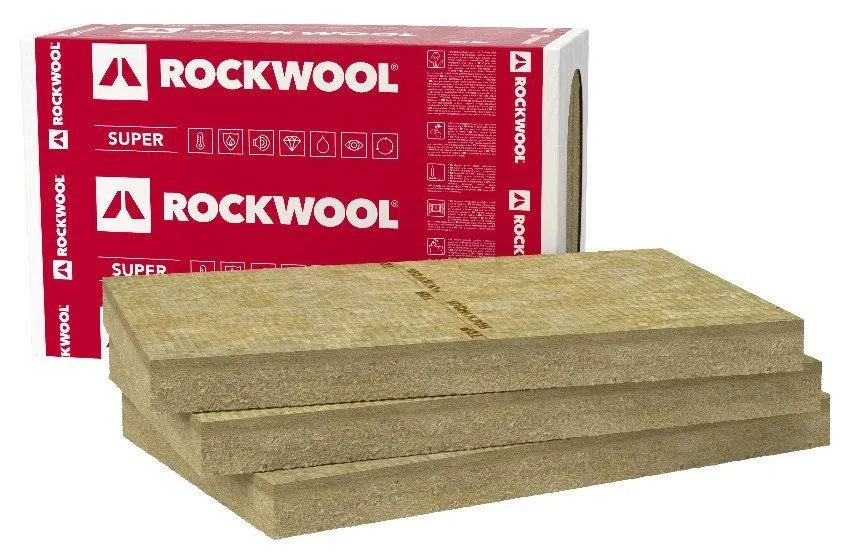
2026 energy audits increasingly highlight the "Performance Gap" caused by poor airtightness detailing. To meet the HEM benchmarks, the building must be sealed internally with a Vapour Control Layer (VCL) while remaining "vapour-open" on the exterior. This "Fabric First" logic ensures that warm air is retained while moisture can migrate out through the insulation layer. For these projects, specifying a mineral wool insulation slab is often the preferred technical choice, as it offers a natural A1 fire rating and high vapour permeability, ensuring the timber studs stay dry throughout the winter freeze-thaw cycles.
2026 Selection Matrix: Components for Timber Facades
| System Layer | 2026 Technical Requirement | Recommended Solution |
|---|---|---|
| Sheathing | Moisture-resistant & A1 Fire Rated | STS Fibre Cement Board |
| Bonding Agent | High-adhesion for OSB/Timber | Atlas Ultra-Grunt |
| Thermal Layer | Vapour-permeable & Non-combustible | Rockwool Frontrock Slabs |
| Finish | Flexible & Self-cleaning | thin-coat silicone render |
Fire Safety and Boundary Regulations
Under the Building Safety Act 2026 updates, fire spread across timber facades has come under intense scrutiny, particularly for buildings located within 1 metre of a boundary. In these scenarios, the external finish must be non-combustible. Combining an A1-rated carrier board with a silicone-silicate render ensures that the facade resists flame spread while protecting the underlying timber structure. It is also critical to ensure that all service penetrations are sealed with intumescent fire stops that do not compromise the building's airtightness barrier.
Expert Verdict: The Integrated Approach
Modern moisture management for timber buildings in 2026 is about system continuity. You cannot specify the insulation in isolation from the render carrier board or the VCL. By using a fully tested, BBA-certified kit, you ensure that every layer works in harmony to protect the timber frame for its 60-year design life. For technical support on cavity detailing, airtightness tapes, or bespoke material specifications for your 2026 timber frame project, contact our specialist technical hub today.