
The regulatory landscape for high-rise residential properties has reached a critical stage in 2026. Following the full implementation of the Building Safety Act 2026 facade requirements, the oversight provided by the Building Safety Regulator (BSR) has intensified. For any property measuring between 11 and 18 metres in height—often referred to as "relevant buildings"—specifying the correct insulation and render system is no longer just a matter of performance; it is a strict legal mandate to ensure life safety. This guide explores the 2026 standards for non-combustible materials and the mandatory "Golden Thread" of documentation required for compliance with Approved Document B.
The 11-Metre Rule: Why Materials Matter in 2026
As of 2026, Regulation 6 of the UK Building Regulations has been further clarified to remove any ambiguity regarding external wall construction for buildings over 11 metres. For these structures, all insulation and cladding materials must achieve a European Classification (Euroclass) of A2-s1, d0 or better. In practical terms, this has led to a major industry shift away from combustible foam-based products in mid-to-high-rise elevations. To meet these non-combustible standards, architects and specifiers are now primarily selecting mineral wool insulation slabs, which provide a natural fire barrier and do not contribute to the spread of flame.
Meeting A1 Standards with Stone Wool
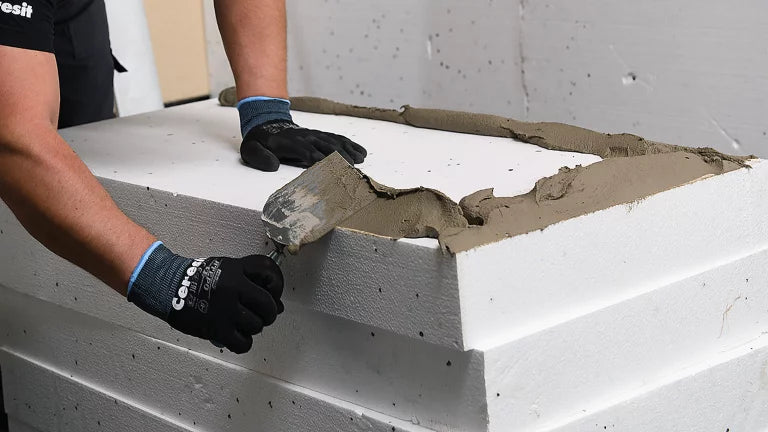
For projects requiring the highest level of assurance, particularly in 2026-registered Higher-Risk Buildings (HRBs), the industry benchmark has become the Euroclass A1 rating. Utilizing high-density stone wool, such as a mineral wool slab, ensures that the building envelope can withstand temperatures exceeding 1,000°C. These systems are not only fire-safe but also highly vapour-permeable, which is essential for the long-term health of the building fabric in the damp UK climate. When installing these heavy-duty slabs, it is critical to use a system-compatible adhesive like Roker U, which is specifically formulated to maintain the breathability and structural bond required for mineral-based facades.
The Golden Thread and Digital Records
One of the most significant changes in 2026 is the BSR's requirement for a digital "Golden Thread" of information. This means that for every facade project on a relevant building, developers must maintain an accessible, accurate record of every material used, its fire certification, and photographic evidence of correct installation. UK high-rise rendering fire compliance now requires that every fire break, cavity barrier, and insulation fix is documented before being concealed by the final render coat. Failure to provide this evidence at Gateway 3 (the pre-occupation stage) can lead to significant delays in building sign-off and potential legal action under the Building Safety Act.
Economic Impact: The Building Safety Levy 2026
Installers and developers should also be aware that as of 1 October 2026, a new Building Safety Levy is charged on all new residential developments requiring building control approval in England. This levy is intended to fund the remediation of historical safety defects across the country. Ensuring your facade is "right first time" by using BBA-certified, non-combustible systems is the only way to mitigate the long-term financial risks and insurance premiums associated with high-rise property management in the current market.
Expert Verdict: Specifying for Safety
In 2026, the era of "value engineering" at the expense of safety has ended. For any building over 11 metres, a non-combustible system combining mineral wool with a silicone-silicate finish is the professional recommendation. This approach ensures your property remains compliant with the Building Safety Act, uPVC fire spread limits, and the rigorous demands of UK building insurers. For a full technical review of your high-rise project or to request a fire safety compliance report for your facade, contact our expert technical hub today.